
City moss growing is less about misting schedules and more about what lands on the plant all day. If you want reliable mats on walls, planters, and shade boards, you need to think in terms of moss air pollution tolerance.
Urban air carries grit, salts, and oily soot that would never show up in a forest ravine. Moss can handle a lot, but it reacts fast when particulate dust starts clogging the leaves.
I have seen the same species thrive on a sheltered courtyard brick and fail on an exposed balcony two blocks away. The difference usually comes down to deposition, drying winds, and whether you do any leaf surface cleaning at all.
This article gives you a practical checklist for choosing, placing, and maintaining moss where air is messy. You will get habitat clues, site distance rules, and gentle cleaning steps that keep the plants attached and photosynthesizing.
What “Air Pollution Tolerance” Looks Like in Moss
Moss air pollution tolerance is the ability to keep functioning while dirty particles and gases settle on the plant. In practice that means it still rehydrates evenly, stays green, and resumes growth after a dry spell instead of turning brittle and gray.
Moss has no roots and no cuticle like a typical houseplant leaf, so the whole surface is a sponge and a filter. That is good for capturing water, but it also means the plant collects whatever the city throws at it.
Tolerant mosses usually show quick recovery after wetting, with leaves opening within minutes and a springy texture returning by the next day. Sensitive mosses rehydrate in patches, with some shoots staying collapsed as if the plant forgot how to drink.
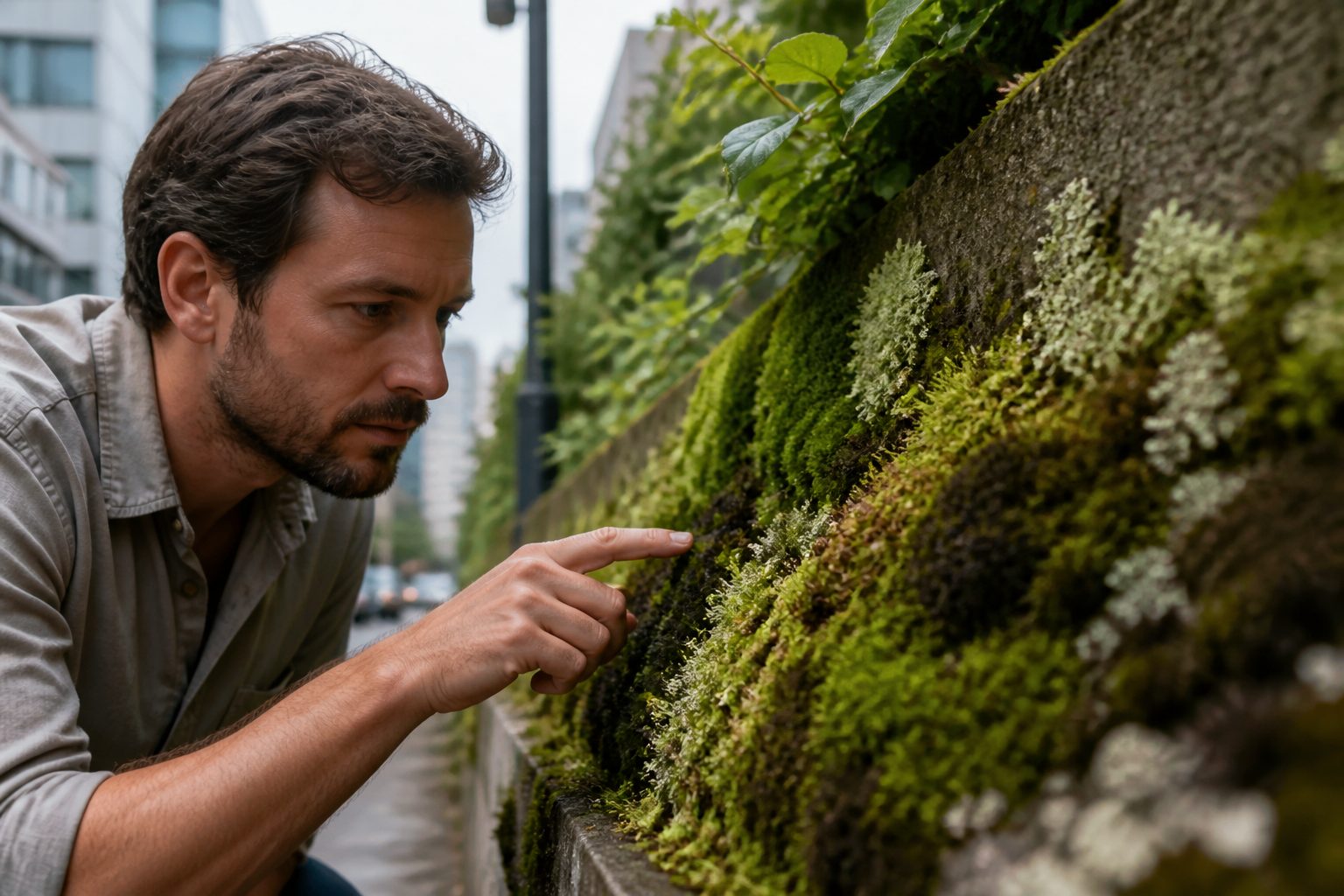
Another sign is how the tips behave, because new growth is where damage shows up first. If the tips keep extending and stay bright, the plant is coping, but if tips blacken or bleach while older parts look fine, pollution stress is often involved.
Do not confuse tolerance with liking pollution, because moss never benefits from grime. A tolerant patch just survives long enough for you to manage dust and placement, which is the real game in most city setups.
Common urban pollutants moss encounters (in plain terms)
The big one for growers is particulate dust, the mix of soil fines, tire wear, brake dust, and construction grit that settles on every horizontal surface. When it builds up on moss, it blocks light and physically plugs the tiny spaces where water spreads.
Roadside soot is another common problem, especially near busy intersections or diesel traffic. It acts like a thin black film that heats up in sun and can make a patch dry faster than you expect.
Salt shows up as a white crust after winter deicing or coastal aerosols, and it is rough on moss because it pulls water out of cells. Even if you do not see salt, you can get residue from splash, wind drift, or salty tap water that dries on the leaf surface.
Nitrogen compounds from vehicle exhaust can fertilize some urban plants, but moss reacts differently because it absorbs directly through the surface. Too much nitrogen can push algae growth on top of the moss, which looks like green slime and usually ends in dieback.
Ozone and other reactive gases are harder to notice, but they can show up as slow browning and reduced recovery even when watering is correct. If your site is downwind of heavy traffic corridors, assume gases add background stress and choose tougher species and better shelter.
Choosing species by habitat clues you can observe
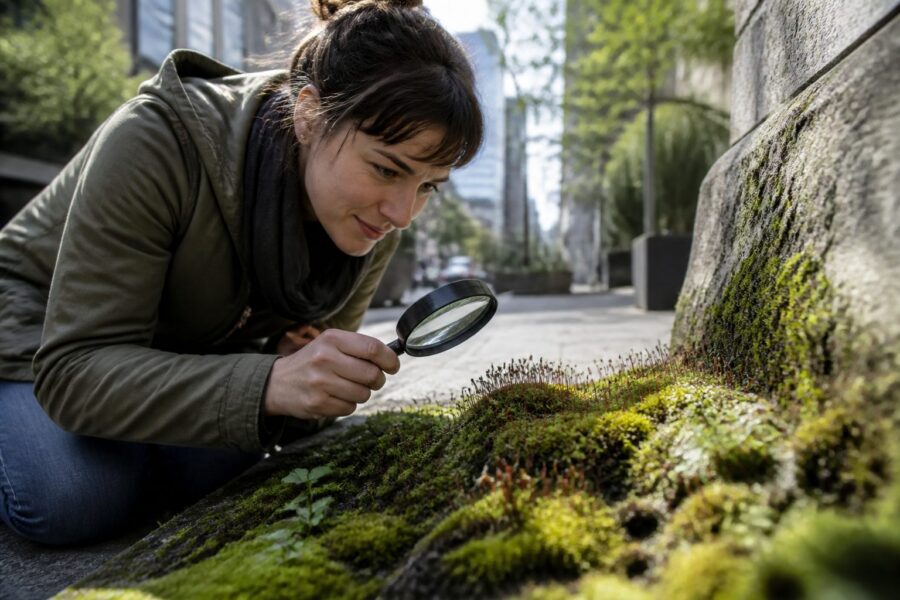
If you cannot name mosses by Latin, you can still choose well by copying what already survives nearby. Look for moss that naturally grows as roadside moss, on parking lot edges, bridge abutments, and old concrete, because those plants already live with dirty deposition.
Habitat clues beat catalog promises, because the city makes its own microclimates. A moss that thrives on a shaded stone wall under a tree canopy often handles particulate dust better than one that only appears deep in leaf litter.
| Where you find it | What that suggests | Good candidate moss types |
|---|---|---|
| Sidewalk cracks and curb edges | Handles grit, splash, and short wet windows | Small cushion mosses, compact acrocarps |
| Concrete walls and bridge stone | Tolerates alkalinity and dusty runoff | Wall mosses, silver tipped cushions |
| Tree bark in busy streets | Copes with soot but needs periodic rinsing | Feathery epiphytes, mat forming pleurocarps |
| Courtyard bricks away from traffic | Prefers cleaner air, steadier humidity | Sheet forming mats, delicate carpet mosses |
| Roof tiles and gravel roofs | Survives wind, sun, and fast drying | Tough cushions, haircap type clumps |
Site selection: distance from roads, vents, and exhaust
Distance is your cheapest filter, because every extra foot from a road usually means less brake dust and less soot. For most growers, placing moss 30 to 50 feet from steady traffic is a noticeable improvement, and 100 feet is better when you have the option.
Do not ignore height, because a patch at street level eats the worst spray and resuspended dust. A moss board on a second floor balcony can do better than one on a ground level planter, even if the balcony is closer to the road.
Building vents are a quiet moss killer, especially dryer vents and kitchen exhaust that carry heat, lint, and greasy aerosols. If you can smell cooking or feel warm air on your hand, your moss can feel it too, and the deposit will turn into a sticky dust trap.
Garage entrances and loading zones create a nasty mix of idling exhaust and turbulence that keeps particulate dust airborne. If you want roadside moss aesthetics, pick a spot that sees the light and humidity you want, then step it back from the churn of vehicles.
Wind corridors between buildings can dry moss faster than sun does, and that makes pollution damage worse because dry leaves cannot rinse themselves. I pick pockets with slower air, even if it means a little less light, because hydration stability is half of moss air pollution tolerance.
How dust changes moss hydration and photosynthesis
Particulate dust changes how water moves across moss, and that matters more than most people expect. Clean moss spreads water by capillary action, but dust disrupts that sheet flow and creates dry islands.
Dust also shades the plant, and shading is not always a gift because moss needs light when it is hydrated. A thin gray layer can cut photosynthesis enough that the patch survives but never thickens, which is the most frustrating kind of failure.
When soot darkens the surface, it can heat the moss in sun and speed up evaporation. That pushes the plant into more frequent dry cycles, and repeated fast drying can lead to tip dieback even in otherwise tough roadside moss species.
Dust can bring nutrients and metals, and moss absorbs what is available whether it wants it or not. A little nutrient input can trigger algae or cyanobacteria films on top of the moss, which blocks air and light and makes the mat slippery.
If you see water beading and rolling off instead of soaking in, suspect surface contamination. That is the moment when leaf surface cleaning is not cosmetic, it is basic plant care.
Gentle cleaning methods that don’t strip the plant
Cleaning moss is mostly about rinsing off particulate dust without blasting the shoots loose. If you use a hard spray, you can peel the living green layer off the older brown base, and the patch will look worse after your “help.”
I prefer frequent gentle rinses over rare aggressive washes, because moss responds better to small corrections. A handheld pump sprayer on a soft setting usually gives enough force to move dust while keeping the mat intact.
- Rinse with a fine mist until runoff runs clear
- Use lukewarm water, not hot water
- Brush lightly with a soft watercolor brush on stubborn grit
- Blot oily spots with damp cotton swabs
- Rinse again after brushing to remove loosened particles
- Let the patch dry in shade, not in direct sun
Water quality matters: avoiding residue and salt buildup
If your water dries with a white ring on a black pot, it will leave the same residue on moss. That residue acts like dust glue, and it can turn leaf surface cleaning into a constant chore.
Hard tap water brings calcium and magnesium, and some moss handles it while other moss sulks. If you see crusty tips or a dull, chalky look after watering, switch to rainwater or filtered water for a few weeks and watch the recovery.
Salt buildup is common on balconies near winter roads, because salty spray dries and concentrates. A periodic deep rinse with low mineral water helps flush salts down and away, especially if your moss grows on a board or fabric where runoff can exit.
Avoid water softener output, because it swaps hardness for sodium, and sodium is rough on moss tissues. If softened water is your only option, dilute it with collected rainwater and rinse more often to prevent residue layers.
Fertilizer is usually a mistake for urban moss, since the city already supplies nitrogen and dust nutrients. If you insist on feeding, use extremely weak solutions and test on a small corner, because overfeeding often looks like sudden algae rather than faster moss growth.
Monitoring health: color, texture, and recovery after dry spells
Moss health monitoring is simple if you watch the same patch at the same time of day. The best indicator is recovery speed after wetting, because that reflects hydration pathways and surface cleanliness.
Green that turns olive or bronze during dryness can be normal, but green that turns gray and stays gray after watering is a warning. When the plant cannot rehydrate evenly, particulate dust and salt crust are often part of the problem.
Texture tells you what color cannot, because a living mat has some bounce when damp. If it feels papery or crunchy even after a soak, check for a dirty surface layer or for airflow that dries the patch too fast.
Look closely at the tips, because tips show stress first and they also show regrowth first. New tips that appear smaller, paler, or deformed can mean chronic exposure, even when the patch still looks green from a distance.
Keep a quick photo log after storms, after street sweeping days, and after heat waves. You will start seeing patterns, and those patterns help you match moss air pollution tolerance to your actual site instead of an idealized one.
Designing buffers: screens, placement, and micro-shelter
Buffers work because most pollution damage starts with deposition, not with mysterious chemistry. If you can reduce how much particulate dust lands on the moss, you reduce the cleaning burden and the stress load.
A simple shade cloth panel or lattice can act as a dust screen if you place it upwind. You do not need to block all airflow, you just want to slow the gusts that carry grit and dry the mat.
Placement under an overhang is underrated, because it reduces direct fallout and keeps rain from splashing dirty runoff onto the patch. The tradeoff is less natural rinsing, so you need a routine of gentle leaf surface cleaning with clean water.
Micro-shelter can be as small as a planter lip, a recessed brick, or a board mounted a couple inches off a wall. That small offset creates a calmer boundary layer where moss stays damp longer and resists soot bake-on.
If you are growing moss panels for display, build them like you would protect a camera lens. A little roof edge, a side screen, and a spot out of direct vent exhaust can turn a finicky species into a dependable one.
When to replace vs. rehab a struggling patch
Some moss problems are fixable with better rinsing and better placement, and some are not worth the time. If the base layer has turned to loose brown fibers and the green layer lifts off like felt, replacement is usually faster than rehab.
Rehab makes sense when you still see green shoots anchored and you can restore hydration. Start with a thorough gentle rinse to remove particulate dust, then keep the patch evenly moist for a week in shade so it can rebuild capillary flow.
If the patch smells sour or looks slimy, you may have algae dominance from nitrogen and stagnant moisture. In that case, reduce standing water, increase gentle airflow, and clean the surface carefully, because scrubbing too hard just removes the remaining moss.
Replace when the site itself is the problem, like a wall next to a dryer vent or a planter in constant road spray. You can keep swapping species forever, but moss air pollution tolerance has limits when the deposition rate is extreme.
When you do replace, keep a small sample from the old patch if any shoots still look healthy. That survivor tissue is often your best local strain for roadside moss conditions, and it can outperform anything shipped in from a cleaner region.
Conclusion
Urban moss success comes from matching species and placement to what the air is actually doing at your site. If you treat particulate dust as a normal input and plan for leaf surface cleaning, your moss will stay greener and thicker.
Choose mosses with real-world city habitat clues, then give them distance from roads, vents, and churn zones when you can. When you cannot, build buffers and rinse with clean water so moss air pollution tolerance does not get tested every single day.
Watch recovery speed after wetting, because it tells you more than any label or care sheet. When a patch keeps bouncing back, keep it and refine your routine, and when it stops recovering, replace it and adjust the site so the next patch has a fair shot.