
Moss fails in cities for a boring reason, heat. Most urban moss problems trace back to how sun and shade move across a spot, so a simple moss shading coefficient can save you weeks of trial and error.
You do not need a lab meter to get useful numbers. You need a repeatable way to describe solar exposure mapping, shade duration, and rough light intensity so you can compare one wall, planter, or roof corner to another.
I like a shading coefficient because it forces you to stop arguing about “part shade” and write down what you see. Once you have a score, you can pick moss types that match the site instead of trying to bully a delicate carpet moss into full afternoon sun.
What a “shading coefficient” means in everyday terms
A moss shading coefficient is a simple number that describes how shaded a spot is during the parts of the day that matter. Higher numbers mean more shade, lower numbers mean more sun hitting the moss surface.
Think of it as a shortcut for describing your microclimate to your future self. If you can say “this bed is 0.75,” you can compare it to a “0.45” bed without relying on memory.
In urban sites, shade comes from buildings, trees, railings, HVAC units, and even parked vehicles. That is why a moss shading coefficient should reflect real obstacles, not a generic compass direction like “north facing.”
The coefficient is not a law of physics, it is a practical score you build from observations. The goal is consistency, so your scoring method stays the same when you move to a new site.
When people ask for a single “ideal light level” for moss, I push back a little. Moss care is more about patterns of drying and heating than about one perfect number at noon.
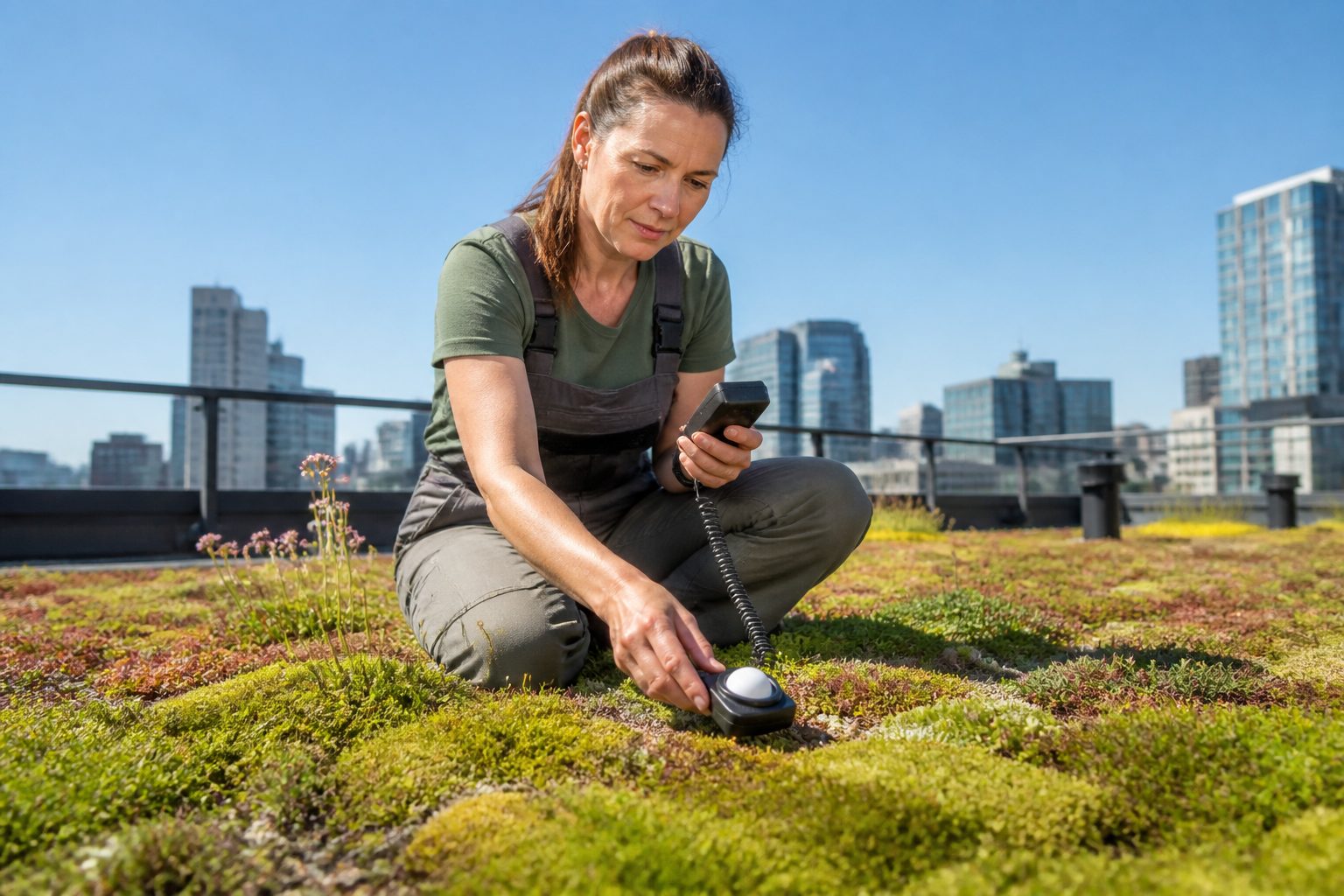
Why moss heat performance depends on shade timing, not just shade amount
Morning sun and afternoon sun do different kinds of damage. Afternoon sun stacks on top of already warm air and hot surfaces, so the same light intensity can cook a moss mat faster at 4 pm than at 9 am.
Shade duration alone can mislead you if it ignores when the shade happens. Two sites can both get four hours of sun, but the one that gets sun from 1 pm to 5 pm usually runs hotter and dries harder.
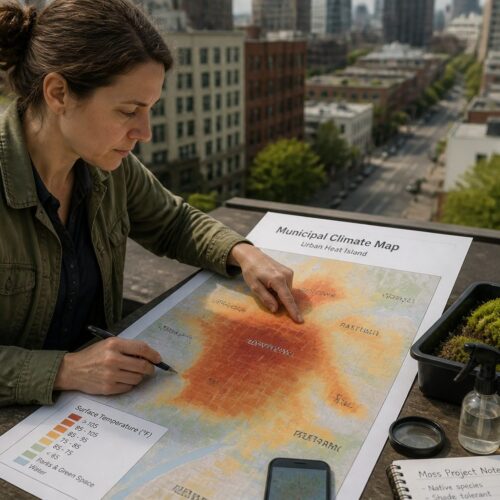
Urban heat is mostly about surfaces, not air temperature on a weather app. A dark brick wall, black roof membrane, or metal planter can radiate heat into moss even after direct sun moves away.
Timing matters because moss hydration is a moving target across the day. If your site gets sun right after you water in the morning, the moss may dry quickly but recover, while late day sun can hit when the moss is already stressed.
Solar exposure mapping should always include a note about the hottest window of the day for your city. In many US cities, that window is roughly 2 pm to 6 pm in summer, and it is the window I weight most heavily in a shading score.
Map your site’s sun path with quick observations
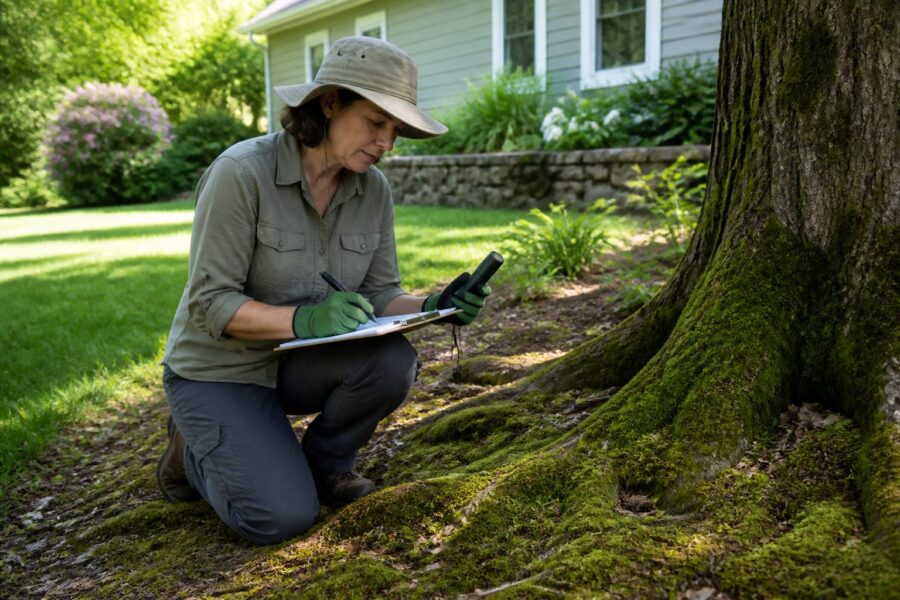
Start with a simple site sketch and label true north, even if you only use a phone compass. Then mark the big shade makers, like a neighboring building edge, a fence line, a street tree canopy, or a balcony above.
Do three short checks in a day, morning, midday, and late afternoon, and write where the sun line falls. This is solar exposure mapping at the scale moss actually experiences, which is often a strip of light that slides across a wall or paver.
| Observation time | What to record | Why it matters for moss |
|---|---|---|
| 8–9 am | First direct sun on the site | Shows whether morning drying starts early |
| 12–1 pm | Sun angle and any overhead shade | Reveals if noon sun is blocked by balconies or trees |
| 3–4 pm | Strongest sun band and surface glare | Predicts hottest stress window on walls and pavers |
| 6–7 pm | Last direct sun and lingering heat | Hints at evening recovery time and heat storage |
Measure shade duration across a week (simple log method)
Pick one “reference patch” on your site, even if it is only a 12 inch square. Put a small piece of tape or a stone marker at the edge so you always look at the same spot.
For seven days, log whether that patch is in direct sun or shade at set times. I like hourly checks from 9 am to 6 pm, but three hour blocks also work if your schedule is tight.
Write it down as S for sun and H for shade, and do not trust your memory. Shade duration becomes obvious when you see strings like H H H S S S H H instead of vague phrases like “some afternoon sun.”
Include weather notes because clouds can trick you into thinking a spot is safe. If you log a cloudy week, repeat one clear day later so your shading coefficient does not reflect temporary overcast.
At the end of the week, count the hours of direct sun and the hours of shade for each day. Keep the daily totals because weekend patterns in cities can change, like a loading area that stays open and reflective only on weekdays.
Estimate relative light intensity without specialized gear
You can estimate light intensity by comparing your moss site to a nearby open reference that you know is full sun. The goal is relative intensity, so you can say “this wall is about half of open sun” and use that consistently.
One method I trust is the shadow edge test on clear days. Crisp, hard edged shadows usually mean high intensity, while fuzzy shadows and light gray shade under trees usually mean lower intensity even if the sun is technically present.
Phone camera apps can help if you use them carefully and consistently. Lock exposure, point the camera the same way each time, and compare the brightness of the ground in sun versus your site rather than chasing perfect numbers.
Reflections matter in cities, so look for glare off windows, white walls, and light colored paving. A site can have short shade duration but still high light intensity because reflected light hits from the side.
Canopy shade is not the same as building shade, and moss reacts differently. Tree shade often flickers, which gives repeated micro bursts of sun that raise leaf temperature, while a solid building shadow can keep a patch cooler all afternoon.
Build a practical shading score you can reuse
A reusable moss shading coefficient needs two ingredients, shade duration and a rough intensity factor. I use a simple 0 to 1 scale where 0 is full sun all day and 1 is full shade all day.
First calculate the shade fraction for your observation window, like 9 am to 6 pm. If you logged 9 checks and 6 were shade, your base shade fraction is 6 divided by 9, which is 0.67.
- Choose a daily observation window, like 9 am to 6 pm
- Count shade checks and divide by total checks
- Assign an intensity factor, 1.0 open sun, 0.7 tree shade, 0.4 deep building shade
- Weight late afternoon checks more heavily in summer
- Write the final moss shading coefficient on your site sketch
Match shading levels to moss growth forms and textures
Different moss growth forms handle sun and heat in very different ways. Cushions and turfs often tolerate brief sun better than thin sheet mosses because they hold water deeper in the clump.
If your moss shading coefficient is low, think about species that naturally live on exposed rock or compacted soil edges. In cultivation, those often look like tighter, shorter textures that do not collapse into slime when they get hot.
Higher shading scores favor pleurocarpous sheet mosses that spread like a thin carpet. These can look amazing on shaded concrete or brick, but they punish you fast if late day sun hits and the surface dries in minutes.
Texture is a clue to water storage and airflow. A fluffy, feathery mat can trap humidity under tree shade, while a very flat mat on a wall can overheat if the wall stores heat and radiates it back.
When you do solar exposure mapping, also map where rain actually lands. A spot with a high shading coefficient under an eave may still fail because it stays dry for weeks, which is a different problem than too much light intensity.
Use shading to reduce watering demand without stalling growth
Shade can cut watering demand, but only if you avoid the damp, stagnant corner trap. Moss likes moisture, yet it also likes airflow, and deep shade in a tight alley can stay wet and grimy.
If your site has moderate shade duration and lower afternoon sun, you can water less often and still keep active growth. If your site has high shade duration and low light intensity, you may need to water less but also accept slower spread.
Use shade structures like lattice, reed fencing, or a simple shade cloth panel to block the late day sun first. Blocking morning sun can backfire because it reduces drying too much and can encourage algae on nutrient rich urban dust.
When you water, do it to match the heat pattern you mapped. A small mist at 1 pm can protect a patch that gets a short blast of sun, while a big soak at dusk can keep a wall wet all night and invite biofilm.
The best sign your shading coefficient is working is stable color through heat waves. If the moss browns every hot week even with watering, your shade timing is wrong and the site probably needs afternoon protection.
Seasonal shifts: how to update your shading score
Your moss shading coefficient is not permanent because the sun path changes. A wall that stays shaded in December can get hammered in June, especially on the west side of buildings.
Trees also change the math because leaf out increases shade duration and reduces light intensity. If you grow moss under a maple, your solar exposure mapping in March can be wildly wrong by late May.
I update scores at least twice a year, once near the summer solstice and once in late fall. If you only do one update, do the summer one because heat stress is what kills moss fastest in cities.
Keep the same observation window so your numbers stay comparable. Changing the window every season makes your shading coefficient feel precise while it becomes useless for decisions.
If you add new objects, like a pergola, a solar panel, or a new fence, treat it like a new site. One new reflective surface can raise effective light intensity even if shade duration stays the same.
Common mistakes when “designing for shade” in cities
The biggest mistake is treating shade as a single condition instead of a schedule. People build a shade screen that blocks noon sun, then they ignore the late day sun that actually drives the hottest surface temperatures.
Another mistake is ignoring reflected light, especially near glass and light colored walls. Your shade duration log can say “shaded,” but the moss still gets blasted by sideways brightness and heats up anyway.
Many growers overwater to compensate for low shading coefficients, then they create runoff that strips fragments off walls and pavers. If the site is too sunny, you usually get better results by changing shade timing than by dumping more water.
People also mix mosses with very different preferences in the same tray because they like the texture contrast. In practice, the patch that matches the moss shading coefficient wins, and the rest fades out or turns into a crispy border.
Finally, city dust and nutrients skew everything because they push algae and cyanobacteria in deep shade. If your shading design creates constant damp shade with little airflow, you may grow green slime faster than you grow moss.
Conclusion
A simple moss shading coefficient gives you a shared language for shade duration, light intensity, and heat risk. Once you track it, you can stop guessing and start choosing moss and watering patterns that fit the site.
Do the quick solar exposure mapping, run the one week log, and write your score on your sketch. When summer hits, you will know which patches need afternoon protection and which ones can handle a brighter spot.
The point is repeatability, not perfection. If your score helps you predict which planter will brown out first in a heat wave, it is doing its job.