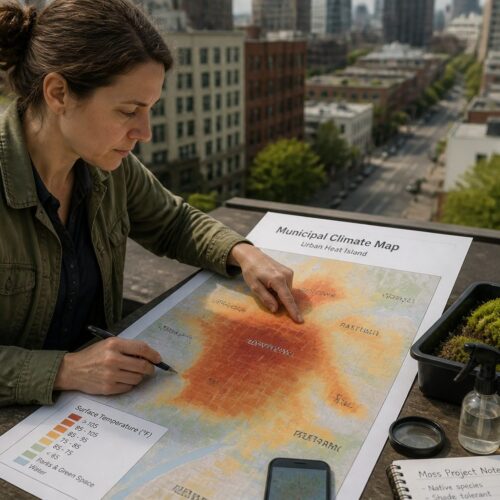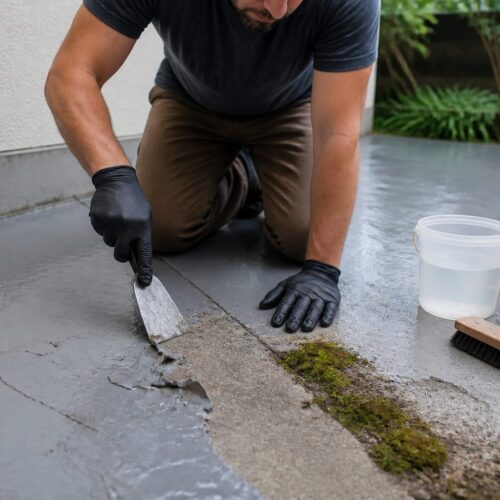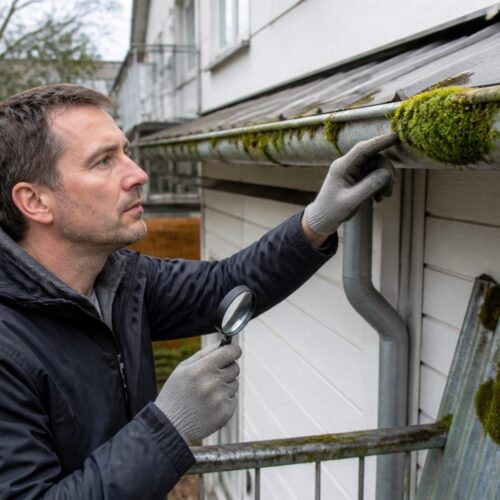


Cities make moss look easy until you try to grow it on a balcony wall or a courtyard stone and it turns crisp in a week. The fix is not a better misting schedule, it is moss microclimate mapping so you can place moss where the city already stays cool and damp.
Urban blocks create tiny weather systems that change by the hour and by the foot. A recessed doorway can stay wet while the sunny sidewalk two steps away bakes dry.
If you want moss to hold on, you need to read your site the way moss reads it, by light, wind, and how long moisture lingers. Once you start doing that, shade mapping, wind exposure checks, and dew formation notes turn into a practical planting map.
Why microclimates decide moss success in urban areas
Moss does not have roots that chase water, so it lives or dies by what happens on the surface it touches. In a city, that surface can swing from damp to bone dry faster than most people notice.
Microclimates form when buildings block sun, funnel wind, and trap heat in ways that do not match the general forecast. Your weather app can say 72 degrees while the south facing brick wall is closer to 95 at the surface.
The most common urban moss failure is placing it where you like the look instead of where the moisture lasts. A shaded corner that gets morning drip from an AC line often outperforms a “nice bright spot” that never holds dew.
Moss microclimate mapping shifts your effort from constant rescue watering to smart placement. You can still irrigate, but you will not be fighting physics every afternoon.
Urban moss work also benefits from honesty about limits. Some sites are simply too hot, too windy, or too reflective, and the map tells you that before you waste time and material.
The key variables: light, wind, moisture, and heat
Moss cares about light intensity and duration more than most people think, because light drives drying. A spot that gets two hours of hard sun can be worse than a spot that gets six hours of bright shade.
Wind exposure is the silent killer in urban courtyards and rooftops. A steady breeze strips boundary layer humidity off the moss surface and turns a damp site into a drying rack.
Moisture is not only rain, it is the time water stays on the surface after rain, fog, irrigation, or condensation. A rough concrete block can hold a film of water longer than smooth glazed tile, even in the same shade.
Heat is the variable people ignore because air temperature feels fine. Dark membranes, metal flashing, and brick store heat and push surface temperatures high enough to dry moss even at moderate air temps.
These variables stack, so a little extra sun plus a little extra wind often explains a total wipeout. When you document them together, moss microclimate mapping becomes less mystical and more like troubleshooting.
Doing a shade map with simple observations
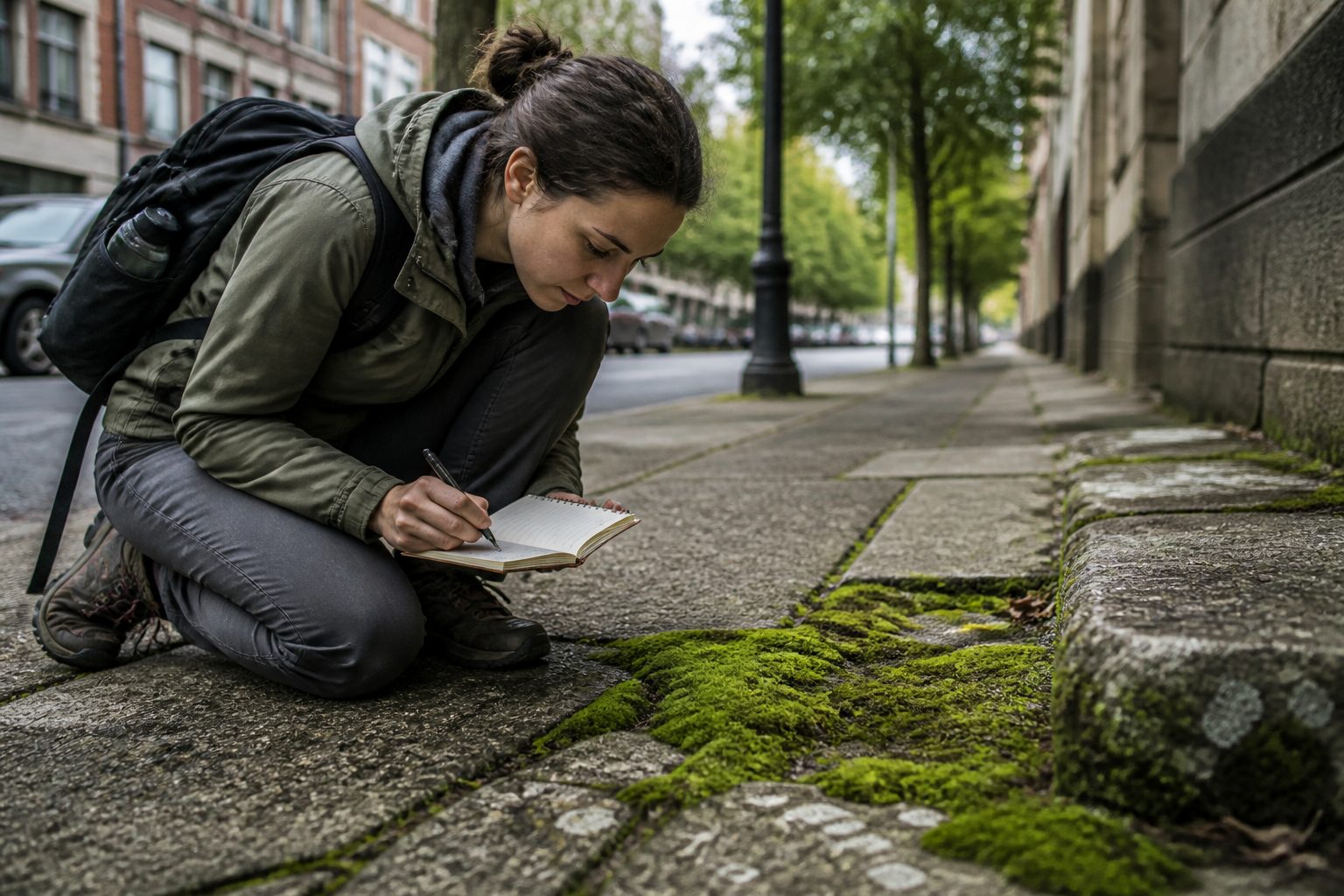
Shade mapping does not require software if you pay attention at the right times. Pick two clear days, one in the morning and one in the afternoon, and walk the site with a notebook.
Mark where direct sun hits and when it leaves, because timing matters as much as total hours. Late afternoon sun is often hotter and drier than early morning sun, especially near reflective windows.
| Observation point | What to record | What it means for moss |
|---|---|---|
| 8:00 AM check | Direct sun or full shade | Early sun can be fine if wind is low and surfaces cool |
| 12:30 PM check | Sun patches and reflected glare | Midday glare often dries thin moss mats fast |
| 4:30 PM check | How long sun lingers on walls | Long wall exposure can create a heat reservoir into evening |
| After a cloudy day | Brightness level in “shade” zones | Bright shade can still dry moss if air is moving |
| Winter angle check | New sun paths on low angle days | Winter sun can hit spots that stay shaded in summer |
Spotting dew and condensation patterns
Dew formation is free irrigation, and cities create it in weird pockets. You will often see dew on car roofs and metal railings while nearby stone stays dry, so you need to look at your actual substrate.
Go out at sunrise for three or four mornings and take quick photos from the same angles. You are looking for surfaces that stay dark with moisture after the rest of the area has dried.
Condensation also shows up where warm, moist air meets a cooler surface, like shaded concrete near a basement vent. If you see recurring dampness at the base of a north wall, do not write it off as “bad drainage” until you track it for a week.
Air conditioners and high efficiency boiler vents can create localized humidity that boosts moss survival. The same equipment can also blast hot dry air in winter, so note season and direction.
For moss microclimate mapping, I treat dew like a repeating event that can offset low rainfall. A site that gets light dew five mornings a week often outperforms a site that gets one heavy watering and then bakes dry for days.
Identifying heat traps: walls, pavement, and dark surfaces
Heat traps show up where the city stores energy and releases it slowly. South and west facing masonry is the classic example, but black planters and rubber roof membranes can be worse.
Touch tests work if you do them at the right time, which is late afternoon and again two hours after sunset. If a wall still feels warm after dark, moss on that wall will struggle to rehydrate overnight.
Pavement heat matters even if you are planting on a wall, because warm air rises and keeps the whole pocket dry. A narrow alley with asphalt can run like a heater duct between buildings.
Dark surfaces create a double problem because they heat up and they often shed water quickly. A painted black steel panel can go from wet to dry in minutes, which is brutal for thin moss colonies.
If you have to work near a heat trap, use the map to find the boundary where conditions flip. Often the best moss zone is one foot to the side where shade and a cooler substrate start to dominate.
Using low-cost sensors without getting bad data
Cheap sensors can help, but only if you treat them like field tools instead of truth machines. A ten dollar thermometer in direct sun reads nonsense, and that nonsense can ruin your planting plan.
Place temperature and humidity sensors in shade and at the same height as the moss will grow, because ground level air can be very different from head height air. If you can, log data for at least a week that includes one hot day and one breezy day.
- Shade the sensor with a small white card
- Mount at moss height, not on a railing top
- Log at 10 to 15 minute intervals
- Keep sensors away from exhaust vents
- Note irrigation times and rainfall in the same log
- Compare two locations at once, not one after the other
Turning your notes into a planting plan
Your notes become useful when you stop treating the site as one condition and start dividing it into micro-zones. I like simple labels like “cool shade,” “bright shade,” “windy shade,” and “heat wall edge.”
Take your shade mapping notes and draw the sun patches as shapes on a printed photo or a hand sketch. Then add arrows where you felt consistent wind exposure, because wind direction often matches alley and corridor geometry.
Next, mark where dew formation or condensation repeats, and mark where it never happens. Those dew pockets are where you can push your ambition, like thinner moss sheets or more exposed placements.
Heat trap zones should get a different strategy, like tougher species, more texture, or even a decision to skip moss and use a different groundcover. A planting plan that includes “do not plant moss here” is a mature plan.
Finally, assign each zone a maintenance level based on how quickly it dries after rain. If you cannot reliably water, only plant in zones that stay damp on their own, because moss does not forgive neglect.
Choosing moss types for each micro-zone
Moss choice depends on your microclimate map, not on what looks best in a photo. A species that thrives on a forest rock can fail on a windy balcony even if the light looks similar.
In cool, consistently shaded pockets, many pleurocarpous mosses do well because they like steady moisture and can spread into a mat. In bright shade with occasional drying, acrocarpous types that tolerate short dry spells often hold better.
If you are sourcing locally, pay attention to where you found the donor moss, because that is your best clue about tolerance. Moss from a sidewalk crack already passed a heat and drought test that a streamside moss has not.
For vertical surfaces, prioritize species that naturally cling to bark, stone, or mortar, since they handle drainage and thin water films. If your wall is painted or sealed, you may need a textured backing or a pocket system, because many mosses cannot anchor on slick coatings.
Do not ignore algae and liverworts when the site stays wet, because they can outcompete slow establishing moss. Your moss microclimate mapping should include where green film shows up first after rain, since that often predicts competition pressure.
Designing small interventions: baffles, screens, and mulch edges
Once you know the weak point in a zone, you can fix it with small physical changes instead of constant watering. The best interventions are boring, like blocking wind or reducing splash, because boring changes microclimate fast.
Wind baffles can be as simple as a perforated screen mounted a few inches off a railing to slow airflow. Solid barriers can create turbulence, so I prefer something that leaks air and cuts speed.
Mulch edges help when moss sits next to soil or planters that splash grit onto the colony during rain. A narrow band of fine gravel or leaf mold can reduce splash and keep the moss surface cleaner.
On hot walls, a light colored shade cloth hung with an air gap can drop surface temperatures a surprising amount. If you cannot change the wall, you can still change what the wall “sees” in terms of sun and airflow.
Small drip lines and wicks work better than sprayers because they wet the substrate without blasting the colony off. If you do mist, do it early so the moss can hydrate before the day’s drying peak.
Re-mapping after installation to improve performance
After you install moss, the microclimate changes because the surface changes. A moss mat holds water, cools the substrate, and slightly roughens airflow, so your original map is a starting point, not the final word.
Revisit your shade mapping and dew formation checks after two weeks, then again after two months. You are looking for new wet zones created by drip, new dry edges created by wind, and any surprise heat coming off nearby materials.
Take repeat photos from the same spots and compare color and texture, because moss tells you what it experienced. Pale tips, crispy margins, and patchy retreat often point to wind exposure, while dark slimy patches can point to stagnant moisture and poor drainage.
If one section fails, do not replant immediately with the same approach. Update your moss microclimate mapping notes, then change one variable, like adding a screen, moving the colony six inches, or switching to a rougher substrate.
Over time you build a site specific playbook that beats generic advice. That is the real payoff, because the city keeps changing, and your observations keep you ahead of it.
Conclusion
Moss microclimate mapping is the difference between hoping and knowing, because it ties moss survival to repeatable site conditions. When you track shade mapping, wind exposure, and dew formation, you start choosing locations that already match how moss lives.
The city will always have harsh spots, and you should skip them without guilt. Put your effort into the cool, damp pockets, then use small interventions to expand what is possible.
Keep your notes, re-map after you install, and treat every failure as a clue about the microclimate, not as a personal mistake. Moss rewards patience, but it rewards good placement even more.