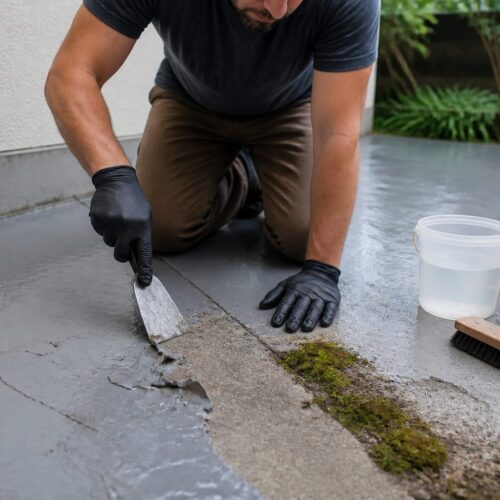


Hot-city moss growing is mostly a water management problem, not a fertilizer problem. When pavement and stucco throw heat back at your wall or courtyard, your moss dries faster than you expect.
A moss irrigation misting schedule works when it matches your site, your gear, and your weekly bandwidth. If the routine is annoying, you will skip it, and moss punishes skipped days quickly in extreme heat.
This article focuses on misting for urban shade gardens, balcony trays, green walls, and roof corners where reflected heat is real. The goal is steady hydration with less waste, using evapotranspiration cues and a few simple checks.
How moss uses water differently than vascular plants
Moss does not pull water up from roots the way a tomato or a shrub does. Most mosses take in water across the leaf surface and stem, so a damp surface matters more than a wet pot.
That surface-based drinking means moss responds fast to misting and also dries fast. In a hot city, you can watch it shift from plump to crispy in a single afternoon.
When moss dries, it can pause metabolism and wait, which sounds convenient until you repeat that cycle daily. Frequent dry downs increase brittleness and make the colony easier to peel off a wall or tray.
Vascular plants often tolerate deep, infrequent watering because their roots store access to moisture. Moss tolerates brief drought, but it grows best with repeated light wetting that keeps the canopy active.
Think of moss hydration like keeping a sponge barely damp rather than soaking a bucket. Your schedule should aim for consistent surface moisture without leaving standing water for hours.
Moss also has a different relationship with the substrate because it is often just anchored, not fed. In practice, that means you can have a saturated backing board and still have a dry moss canopy on a windy day.
In containers, moss can sit on top of soil that stays moist while the top millimeter dries into a crust. That is why surface checks beat finger-in-the-soil checks for moss.

Many common mosses in trays and walls are happiest when they get frequent wetting followed by a quick return to damp, not a long soggy period. If the mat stays wet and glossy all day, you are usually pushing toward rot and algae.
Because moss is small, tiny microclimate shifts matter a lot, like a dryer vent, a heat pump exhaust, or a bright white wall next door. A schedule that works on the north side of a courtyard can fail on the west side even with the same species.
The good news is that moss gives quick feedback because it changes texture and sheen fast. If you learn what “healthy damp” looks like in your light, you can tune misting without guessing for months.
Matching misting frequency to heat, wind, and shade
Heat drives water loss directly, but wind often matters more than temperature on the label. A breezy 92°F day can strip a moss mat faster than a still 100°F day tucked in shade.
Evapotranspiration is the combined pull of evaporation and plant water loss, and it is your best mental model for scheduling. When local evapotranspiration forecasts spike, your misting intervals usually need to tighten.
Shade is not a single condition, it is a moving pattern across the day. If your moss gets sun from 3 to 5 p.m. on a west wall, treat it like partial sun even if mornings are dim.
Reflected heat from concrete, brick, and metal railings creates a small furnace effect around planters. If you can hold your hand near the surface and it feels like a warm radiator, the moss is losing water fast.
Start by observing dry-down time after a normal mist, then set frequency so the moss never stays bone-dry for long. In many hot cities, that means a short morning mist and a second light pass in late afternoon during heat waves.
Instead of thinking in “once a day” or “twice a day,” think in hours of acceptable dryness. If your moss dries to a pale, crunchy look within three hours, you need either more shade, more wind protection, or another cycle.
Morning misting is efficient because surfaces are cooler and wind is often lower. It also gives the moss time to hydrate before the hottest part of the day hits.
Late afternoon or early evening misting is about recovery, not soaking. You want the mat to go into the night comfortably damp, not dripping wet with stagnant water sitting in crevices.
Midday misting can help in extreme heat, but it is easy to waste water if the mist evaporates before it settles. If you do a midday cycle, keep it short and targeted, and make sure it is not just feeding the sidewalk.
Wind tunnels between buildings are a special case because they create constant drying even when the air temperature is moderate. In those corridors, increasing frequency alone may not work until you also reduce airflow around the moss.
Shade from trees can be deceptive because it changes with pruning, leaf drop, and seasonal sun angle. If your moss looks great in June and struggles in August, check whether the shade pattern shifted rather than assuming the moss “got picky.”
Also pay attention to the thermal mass near the moss, because warm stone keeps drying the mat after sunset. If the wall stays warm to the touch at 9 p.m., your moss will keep losing water long after the sun is gone.
Choosing a misting system: hand spray vs. timers
Your system choice sets the ceiling on consistency, and consistency is most of the battle. Hand spraying works for small trays and bonsai accents, but it tends to fail when summer errands pile up.
Timers and a micro-sprayer line can keep moss alive through a brutal week, but they can also waste water if you do not tune duration and nozzle placement. I prefer automation for anything mounted vertically because walls dry unevenly and punish missed days.
Hand systems shine when you are still learning your microclimate because you can respond in real time. If you are experimenting with a new species or a new wall panel, manual control helps you avoid overcorrecting with automation.
Manual misting also lets you aim into corners, under ledges, and behind small stones where automated spray patterns sometimes miss. Those missed pockets are often where moss starts to thin first.
Automation is less about convenience and more about protecting the moss from your own inconsistency. Even a simple timer that runs a 15-second cycle can prevent the repeated dry-downs that weaken attachment.
If you live in a place with water restrictions, automation can still be a win because it prevents panic overwatering. A tuned micro-sprayer can use less water than a rushed hand soak that creates runoff.
When you choose a timer, prioritize reliability and ease of adjustment over fancy app features. You want something you can change in 30 seconds when the forecast shifts, not something you fight with while the moss dries.
For balcony setups, think about where overspray lands, because neighbors and railings change what is practical. Sometimes the “best” mist pattern is the one that stays inside your space and does not create a constant wet drip line below.
| Option | Best for | Watch-outs |
|---|---|---|
| Hand pump mister | Small trays, spot fixes, travel-friendly setups | Uneven coverage, skipped sessions in heat |
| Trigger spray bottle | Indoor windowsills, tiny patches, quick touch-ups | Large droplets, runoff, wrist fatigue |
| Battery misting wand | Balcony racks, multiple trays, daily rounds | Over-misting edges, inconsistent droplet size |
| Timer plus micro-sprayer | Green walls, courtyard beds, roof corners | Clogs, wind drift, needs seasonal retuning |
If you use a hand pump mister, keep it dedicated to clean water and rinse it occasionally so it does not develop biofilm. A funky mister can turn a simple schedule into a constant clog-and-sputter situation.
Trigger bottles are fine for tiny patches, but they often produce big droplets that bounce and roll. If you only have a trigger bottle, back up and spray upward so the droplets fall softer onto the canopy.
Battery wands are underrated for medium setups because they reduce fatigue and encourage you to mist evenly. The risk is that they make it too easy to keep spraying until everything is dripping.
Micro-sprayer systems work best when you accept that they need maintenance like any irrigation. A five-minute monthly check is usually the difference between a crisp green wall and a patchy one.
For rooftop corners, consider that wind can blow spray back onto the building surface or away from the target entirely. In those spots, nozzle placement and shielding matter as much as the timer settings.
Water droplet size and coverage: what you’re aiming for
Moss wants a fine mist that coats the canopy, not a shower that flattens it. If you see beads rolling off immediately, your droplets are too large or your angle is wrong.
Coverage matters more than volume because moss drinks where the water lands. A thin, even film across the mat beats a heavy soak in one corner and dryness in another.
Micro-sprayer heads vary a lot, even within the same brand, so test them in place. I like to mist for 10 to 20 seconds, then step back and look for dull, evenly darkened moss with no puddles.
Vertical surfaces need special attention because gravity steals your work. Aim slightly upward so droplets settle onto leaf tips before they run down the wall.
Wind turns fine mist into waste, so droplet size has to match the site. In a breezy corridor, a slightly heavier mist with closer nozzles often beats ultrafine fog that drifts away.
You are aiming for a surface that looks uniformly refreshed, not glossy and flooded. Healthy coverage looks like the moss darkened evenly and then slowly lightened over the next hour as it dries down.
If the top looks wet but the mat still feels stiff, you may be wetting only the tips and not the deeper canopy. In that case, do two short passes a minute apart instead of one long pass that creates runoff.
On stone and concrete, water can sheet away before the moss absorbs it, especially if there is mineral film. Adjusting droplet size and spraying angle often fixes this faster than increasing total water.
On soil-based trays, too much mist can compact the surface and splash fine particles onto the moss. If you see grit accumulating on the tips, reduce pressure or mist from farther away so the droplets land gently.
For green walls with multiple panels, treat each panel like its own target because edges dry faster. It is normal to need slightly different nozzle angles or distances across the same wall.
If you are not sure whether you are getting even coverage, look at the mat from the side under low light. Uneven misting shows up as patchy sheen and isolated dark spots that stay wet too long.
Also remember that “fine mist” does not mean “invisible fog” in outdoor heat. If you cannot see where it lands, you may be watering the air, not the moss.
Creating a weekly schedule you can actually maintain
The best moss irrigation misting schedule is the one you can repeat on your worst week, not your best week. Build it around your mornings, your commute, and your sleep, because moss does not care about your calendar.
For hand misting, pick a default time that happens anyway, like right after coffee or right before you feed a pet. If you tie misting to a habit you already keep, you will miss fewer sessions.
For automated systems, set short cycles and adjust by adding a cycle, not by doubling runtime. Doubling runtime often creates runoff and encourages algae film, especially on smooth stone or concrete.
Use one day a week as your reset day to check nozzles, wipe overspray, and look for dry corners. I prefer Sunday because I notice problems before the workweek starts, but any consistent day works.
If you travel, plan for it instead of hoping the moss will wait. A cheap timer plus a small reservoir can bridge three to five days, while a neighbor with a spray bottle usually fails by day two.
A workable schedule usually has a default mode and a heat-wave mode. Default mode is what you do most weeks, and heat-wave mode is what you switch to without debating it.
Write your heat-wave trigger down so you do not second-guess it, like “ET high for two days” or “over 100°F with wind.” When you have a trigger, you switch early and avoid the damage that takes weeks to reverse.
If you are hand misting multiple trays, do them in the same order every time. That habit makes it easier to notice when one tray is drying faster than the rest.
Keep a small backup sprayer filled and ready, because the easiest session to skip is the one where you have to hunt for gear. When the sprayer is already there, you are more likely to do a quick 20-second rescue mist.
For timers, avoid the temptation to set long daily runs “just in case.” A better approach is two or three short pulses that you can turn on and off seasonally.
Try to build in a visual check that takes five seconds, like glancing at the moss color when you open a curtain or step onto the balcony. That tiny check catches failures early, like a clogged nozzle or a shifted spray head.
If your schedule feels fragile, simplify it by reducing the number of zones you maintain. One thriving moss wall beats three struggling patches that constantly demand attention.
Also consider your own tolerance for morning versus evening tasks, because consistency matters more than the “perfect” time. A reliable evening mist can outperform an ideal dawn mist that you only do half the time.
Signs you’re overwatering (and underwatering)
Moss rarely dies from one mistake, it dies from repeated wrong signals. Your job is to read the mat and correct early, before the colony thins and exposes the substrate.
Underwatering shows up first as dull color and a papery texture, then as curling tips and a crunch when you press lightly. Drought stress signs also include edges lifting, brittle fragments, and a slow fade to gray-brown after repeated hot afternoons.
Overwatering is less dramatic at first, and that is why it sneaks up on people. The mat can stay green while it slowly loses structure, then suddenly sloughs off when you touch it.
A constant wet surface encourages algae and biofilm that make the moss look shiny in a bad way. If the moss looks slick instead of velvety, treat that as a warning sign.
Smell is an underrated indicator because healthy moss smells clean and earthy, not sour. If you notice a musty odor, your schedule is likely keeping the mat wet for too long between dry-downs.
Uneven watering can mimic both problems at once, with one corner crispy and another corner slimy. When you see that pattern, fix coverage and airflow before you change frequency.
Pay attention to attachment, because moss that is well hydrated and healthy tends to grip its surface better. If you can lift an edge easily, it is often a sign of repeated dry-down stress or a slick film underneath.
Color changes are useful, but they are not universal because different mosses shift differently in heat. Use texture and resilience as your primary cues, especially in mixed plantings.
- Crispy, noisy texture when touched lightly
- Edges lifting or peeling from the substrate
- Color shift to gray, tan, or dusty green
- Persistent puddles or slimy surface after misting
- Green algae sheen on stone or soil surface
- Musty smell from the mat or backing
- New growth only in one damp corner
When you see crispy texture, do not respond with a long soak that floods everything. Respond with more frequent light misting and better shade, because that is what fixes the underlying pattern.
When you see persistent puddles, do not respond by skipping misting for days unless the mat is truly waterlogged. Respond by shortening cycles, improving drainage, and making sure the mist is not hitting one spot too hard.
If new growth only appears in one corner, that corner is telling you what the moss wants. Use it as a map for adjusting nozzle placement, wind breaks, or shade so the rest of the mat gets the same conditions.
In hot cities, underwatering damage often shows up first at edges and high points because they dry first. Overwatering issues often show up first in low spots and seams where water collects.
Try to diagnose with a quick touch test after misting, because timing matters. If the moss is still stiff five minutes after misting, it may not be absorbing well due to mineral film or hydrophobic dust.
Saving water with better placement and wind breaks
You can cut water use without starving moss by fixing where the water goes. Most waste comes from wind drift, overspray onto pavement, and runoff down a wall.
Move moss into deeper shade before you increase misting frequency. A spot that gets bright reflected light at noon may need twice the water of a spot two feet back under an overhang.
Wind breaks can be simple and still look good, like a slatted cedar screen or a row of tall pots on the windward side. Even a clear acrylic panel on a balcony railing can calm airflow enough to make misting effective.
Place micro-sprayer nozzles closer to the target and lower the pressure if your system allows it. Shorter throw reduces drift, and it also improves coverage on vertical mats.
Use physical edges to catch runoff, like a shallow tray lip or a thin strip of capillary matting at the base of a wall panel. When the bottom stays slightly damp, the whole mat stays hydrated longer with fewer cycles.
Think in terms of microclimates you can create, not just water you can add. A small overhang, a relocated tray, or a screen can reduce water demand more than any misting tweak.
On balconies, railings and open corners often act like fans, so moving moss inward can be a big water saver. Even a shift of one foot away from the edge can cut drying dramatically.
Use darker, moisture-friendly surfaces behind moss when possible, because they reduce glare and reflected heat. Bright white walls look clean, but they can behave like mirrors that bake the canopy.
If you have a choice, mount moss where it gets morning light and afternoon shade rather than the reverse. West exposure is where reflected heat and low-angle sun combine into the harshest drying conditions.
For micro-sprayers, add a simple filter upstream if your water has grit, because clogged heads waste water by spraying unevenly. Uneven spray forces you to run longer just to hit the dry spots.
Also consider catching and reusing runoff for non-moss plants if your setup allows it. Even a small tray under a wall panel can collect drips that would otherwise disappear into concrete.
Finally, reduce evaporation from nearby surfaces by keeping surrounding areas shaded or covered. A bare, sun-blasted patio radiates heat upward and increases the amount of mist you need to maintain dampness.
Seasonal changes: spring setup and summer survival
Spring is when you set the rules, and summer is when those rules get tested. If you wait until the first 105°F week to tune your system, you will end up chasing damage.
In spring, start with lighter misting and watch how quickly the mat dries on windy days. This is also the time to position shade cloth, move trays, and decide whether you need a timer.
As summer arrives, increase frequency before the moss shows drought stress signs. A preemptive second mist on high evapotranspiration days often keeps color stable and prevents edge lift.
Heat waves change everything because nights stay warm and the moss never fully rehydrates. During these stretches, I favor short pulses at dawn and again near sunset, with a quick midday check if the site is windy.
Monsoon or humid spells can trick you into backing off too far. Humidity helps, but hot wind still dries leaf surfaces, so keep misting based on dry-down time, not the weather app icon.
Spring is also the best time to clean and test your equipment before you depend on it. A timer battery, a cracked hose, or a half-clogged nozzle is a small problem in April and a disaster in July.
As the sun angle changes, places that were safely shaded can start getting direct light. Do a monthly shade check by looking at the moss at different hours, especially in late afternoon.
Early summer is when moss often looks its best, which can make you complacent. Use that healthy period to dial in droplet size and coverage, because you will not have time to experiment during a heat emergency.
During heat waves, prioritize keeping the canopy active rather than trying to force growth. Survival mode is about preventing repeated full dry-downs, not about making the mat expand.
If your city has wildfire smoke or heavy dust periods, expect the moss to wet less efficiently. In those weeks, a gentle weekly rinse can restore wetting and reduce the temptation to overwater daily.
In late summer, salt and mineral residue often become more visible because of repeated evaporation. That is a good time to do a controlled low-mineral flush and reset your surface conditions.
When fall arrives, do not keep the summer schedule out of habit. Cooler nights and lower evapotranspiration usually mean you can reduce cycles and avoid keeping the mat overly wet.
If you get winter rain, it can do some of your work for you, but only if the moss is positioned to receive it. Under deep overhangs, winter can still be dry, so do not assume rain equals hydration.
Preventing mineral buildup and leaf surface film
Hard water leaves a mineral crust that blocks wetting and makes moss look dusty. If your city water is loaded with calcium, you will see white specks first on stone, then on the moss tips.
That crust changes how droplets spread, so you end up using more water for less hydration. A good moss irrigation misting schedule includes water quality planning, not just timing.
If possible, use rainwater, distilled water, or reverse osmosis water for routine misting. If you must use tap, do an occasional flush with low-mineral water to dissolve and carry off residue.
Leaf surface film can also come from dust, pollution, and fertilizer overspray from nearby planters. Rinse gently with a slightly longer mist once a week, then return to short cycles so the mat does not stay soggy.
Clean micro-sprayer nozzles on a schedule because partial clogs create big droplets and uneven coverage. I soak nozzles in vinegar and rinse well, then run clean water through the line before putting them back.
Mineral buildup is not just cosmetic, it changes the physics of wetting. Once the surface becomes less wettable, you can mist longer and still watch water roll off like it is on wax.
If you notice that water suddenly starts beading more than it used to, suspect residue before you assume the moss is “thirstier.” This is especially common after a few weeks of heavy summer misting with hard tap water.
Collecting rainwater can be simple if you have even a small balcony, like a clean bin under a downspout or a wide container during a storm. Just keep it covered between rains so it does not become a mosquito nursery.
If you use distilled or RO water, you still need to keep your reservoir clean because algae can grow in any standing water. A quick rinse and refill routine prevents slime that can end up sprayed onto the moss.
Fertilizer drift from nearby pots is a common hidden problem in mixed balcony gardens. If you feed tomatoes or ornamentals nearby, spray carefully and avoid misting fertilizer over the moss by accident.
Urban dust can be oily, especially near busy roads, and that film can block absorption. A gentle rinse that actually wets the surface can restore performance without increasing daily water use.
When you do a flush, do it early in the day so the mat can return to normal dampness by evening. Leaving the moss soaked overnight is how you trade mineral problems for fungal and algae problems.
Also check the spray pattern after cleaning nozzles, because reinstalled heads can shift angle slightly. A small angle change can turn good coverage into constant runoff down one seam.
Logging results: a simple grower’s notebook method
If you do not write anything down, you will keep repeating the same guessing game each summer. A notebook turns your moss irrigation misting schedule into a small experiment you can improve.
Keep it simple, date, temperature range, wind notes, shade notes, and what you changed. Add one line about how long the moss stayed visibly damp after misting, because that number is your real feedback loop.
Track drought stress signs with plain language, like “edges crisp” or “center stayed dark green.” Photos help, but a quick written note is faster and easier to compare week to week.
Record nozzle changes and water source changes, especially if you switch to distilled or rainwater. Mineral buildup problems often show up two to four weeks after you change something, so you need a timeline.
After a month, look for patterns tied to evapotranspiration spikes, wind events, or that one wall that cooks at sunset. Then adjust one variable at a time, like adding a 20-second morning cycle or moving a micro-sprayer six inches closer.
Your notes do not need to be scientific, they just need to be consistent. Even a simple “looked great” or “looked stressed” plus weather context is enough to guide next week’s changes.
Include a line for maintenance because maintenance affects hydration as much as weather does. A clogged nozzle can look like a heat problem until you realize only half the mat is getting mist.
It helps to record your misting duration in seconds rather than vague terms like “quick spray.” When you write “15 seconds” you can repeat it, and when you write “quick” you cannot.
If you are using a timer, write down the exact program, including start times. When something goes wrong, you want to know whether you changed the schedule or the weather changed around you.
Note unusual events like power outages, construction dust, or a week of strong wind. Those one-off events often explain sudden declines that do not match your usual patterns.
Use your notebook to identify your true weak points, like “west edge dries first” or “top panel stays too wet.” Once you know the weak points, you can target fixes instead of increasing water everywhere.
If you want one simple metric, track “time to pale” after misting on a typical day. When that time shortens, something changed, and it is usually heat, wind, or surface wetting quality.
Over time, your notes become a personal reference that beats generic advice. Hot-city moss care is local, and your notebook is how you make it specific to your wall, your balcony, and your water.
Conclusion
Hot-city moss care gets easier when you stop treating it like a houseplant and start treating it like a surface that needs regular re-wetting. Once you match droplet size, placement, and timing, the moss stays stable even when the sidewalk is sizzling.
Build your moss irrigation misting schedule around dry-down time, wind exposure, and shade, then lock it into a routine you will keep. When problems show up, use the drought stress signs and your notebook notes to make small corrections instead of dramatic changes.
Choose a system that supports consistency, even if it is simple, because missed days are where hot-city moss setups collapse. A small amount of automation or a strong daily habit can be the difference between a lush mat and a patchy one.
Focus on getting water to land as an even film, then let the moss breathe between cycles. With steady, repeatable misting and a little attention to wind and minerals, moss becomes one of the most forgiving green surfaces you can grow in the city.
Hot-city moss growing is mostly a water management problem, not a fertilizer problem. When pavement and stucco throw heat back at your wall or courtyard, your moss dries faster than you expect.
A moss irrigation misting schedule works when it matches your site, your gear, and your weekly bandwidth. If the routine is annoying, you will skip it, and moss punishes skipped days quickly in extreme heat.
This article focuses on misting for urban shade gardens, balcony trays, green walls, and roof corners where reflected heat is real. The goal is steady hydration with less waste, using evapotranspiration cues and a few simple checks.
How moss uses water differently than vascular plants
Moss does not pull water up from roots the way a tomato or a shrub does. Most mosses take in water across the leaf surface and stem, so a damp surface matters more than a wet pot.
That surface-based drinking means moss responds fast to misting and also dries fast. In a hot city, you can watch it shift from plump to crispy in a single afternoon.
When moss dries, it can pause metabolism and wait, which sounds convenient until you repeat that cycle daily. Frequent dry downs increase brittleness and make the colony easier to peel off a wall or tray.
Vascular plants often tolerate deep, infrequent watering because their roots store access to moisture. Moss tolerates brief drought, but it grows best with repeated light wetting that keeps the canopy active.
Think of moss hydration like keeping a sponge barely damp rather than soaking a bucket. Your schedule should aim for consistent surface moisture without leaving standing water for hours.
Moss also has a different relationship with the substrate because it is often just anchored, not fed. In practice, that means you can have a saturated backing board and still have a dry moss canopy on a windy day.
In containers, moss can sit on top of soil that stays moist while the top millimeter dries into a crust. That is why surface checks beat finger-in-the-soil checks for moss.
Many common mosses in trays and walls are happiest when they get frequent wetting followed by a quick return to damp, not a long soggy period. If the mat stays wet and glossy all day, you are usually pushing toward rot and algae.
Because moss is small, tiny microclimate shifts matter a lot, like a dryer vent, a heat pump exhaust, or a bright white wall next door. A schedule that works on the north side of a courtyard can fail on the west side even with the same species.
The good news is that moss gives quick feedback because it changes texture and sheen fast. If you learn what “healthy damp” looks like in your light, you can tune misting without guessing for months.
Matching misting frequency to heat, wind, and shade
Heat drives water loss directly, but wind often matters more than temperature on the label. A breezy 92°F day can strip a moss mat faster than a still 100°F day tucked in shade.
Evapotranspiration is the combined pull of evaporation and plant water loss, and it is your best mental model for scheduling. When local evapotranspiration forecasts spike, your misting intervals usually need to tighten.
Shade is not a single condition, it is a moving pattern across the day. If your moss gets sun from 3 to 5 p.m. on a west wall, treat it like partial sun even if mornings are dim.
Reflected heat from concrete, brick, and metal railings creates a small furnace effect around planters. If you can hold your hand near the surface and it feels like a warm radiator, the moss is losing water fast.
Start by observing dry-down time after a normal mist, then set frequency so the moss never stays bone-dry for long. In many hot cities, that means a short morning mist and a second light pass in late afternoon during heat waves.
Instead of thinking in “once a day” or “twice a day,” think in hours of acceptable dryness. If your moss dries to a pale, crunchy look within three hours, you need either more shade, more wind protection, or another cycle.
Morning misting is efficient because surfaces are cooler and wind is often lower. It also gives the moss time to hydrate before the hottest part of the day hits.
Late afternoon or early evening misting is about recovery, not soaking. You want the mat to go into the night comfortably damp, not dripping wet with stagnant water sitting in crevices.
Midday misting can help in extreme heat, but it is easy to waste water if the mist evaporates before it settles. If you do a midday cycle, keep it short and targeted, and make sure it is not just feeding the sidewalk.
Wind tunnels between buildings are a special case because they create constant drying even when the air temperature is moderate. In those corridors, increasing frequency alone may not work until you also reduce airflow around the moss.
Shade from trees can be deceptive because it changes with pruning, leaf drop, and seasonal sun angle. If your moss looks great in June and struggles in August, check whether the shade pattern shifted rather than assuming the moss “got picky.”
Also pay attention to the thermal mass near the moss, because warm stone keeps drying the mat after sunset. If the wall stays warm to the touch at 9 p.m., your moss will keep losing water long after the sun is gone.
Choosing a misting system: hand spray vs. timers
Your system choice sets the ceiling on consistency, and consistency is most of the battle. Hand spraying works for small trays and bonsai accents, but it tends to fail when summer errands pile up.
Timers and a micro-sprayer line can keep moss alive through a brutal week, but they can also waste water if you do not tune duration and nozzle placement. I prefer automation for anything mounted vertically because walls dry unevenly and punish missed days.
Hand systems shine when you are still learning your microclimate because you can respond in real time. If you are experimenting with a new species or a new wall panel, manual control helps you avoid overcorrecting with automation.
Manual misting also lets you aim into corners, under ledges, and behind small stones where automated spray patterns sometimes miss. Those missed pockets are often where moss starts to thin first.
Automation is less about convenience and more about protecting the moss from your own inconsistency. Even a simple timer that runs a 15-second cycle can prevent the repeated dry-downs that weaken attachment.
If you live in a place with water restrictions, automation can still be a win because it prevents panic overwatering. A tuned micro-sprayer can use less water than a rushed hand soak that creates runoff.
When you choose a timer, prioritize reliability and ease of adjustment over fancy app features. You want something you can change in 30 seconds when the forecast shifts, not something you fight with while the moss dries.
For balcony setups, think about where overspray lands, because neighbors and railings change what is practical. Sometimes the “best” mist pattern is the one that stays inside your space and does not create a constant wet drip line below.
| Option | Best for | Watch-outs |
|---|---|---|
| Hand pump mister | Small trays, spot fixes, travel-friendly setups | Uneven coverage, skipped sessions in heat |
| Trigger spray bottle | Indoor windowsills, tiny patches, quick touch-ups | Large droplets, runoff, wrist fatigue |
| Battery misting wand | Balcony racks, multiple trays, daily rounds | Over-misting edges, inconsistent droplet size |
| Timer plus micro-sprayer | Green walls, courtyard beds, roof corners | Clogs, wind drift, needs seasonal retuning |
If you use a hand pump mister, keep it dedicated to clean water and rinse it occasionally so it does not develop biofilm. A funky mister can turn a simple schedule into a constant clog-and-sputter situation.
Trigger bottles are fine for tiny patches, but they often produce big droplets that bounce and roll. If you only have a trigger bottle, back up and spray upward so the droplets fall softer onto the canopy.
Battery wands are underrated for medium setups because they reduce fatigue and encourage you to mist evenly. The risk is that they make it too easy to keep spraying until everything is dripping.
Micro-sprayer systems work best when you accept that they need maintenance like any irrigation. A five-minute monthly check is usually the difference between a crisp green wall and a patchy one.
For rooftop corners, consider that wind can blow spray back onto the building surface or away from the target entirely. In those spots, nozzle placement and shielding matter as much as the timer settings.
Water droplet size and coverage: what you’re aiming for
Moss wants a fine mist that coats the canopy, not a shower that flattens it. If you see beads rolling off immediately, your droplets are too large or your angle is wrong.
Coverage matters more than volume because moss drinks where the water lands. A thin, even film across the mat beats a heavy soak in one corner and dryness in another.
Micro-sprayer heads vary a lot, even within the same brand, so test them in place. I like to mist for 10 to 20 seconds, then step back and look for dull, evenly darkened moss with no puddles.
Vertical surfaces need special attention because gravity steals your work. Aim slightly upward so droplets settle onto leaf tips before they run down the wall.
Wind turns fine mist into waste, so droplet size has to match the site. In a breezy corridor, a slightly heavier mist with closer nozzles often beats ultrafine fog that drifts away.
You are aiming for a surface that looks uniformly refreshed, not glossy and flooded. Healthy coverage looks like the moss darkened evenly and then slowly lightened over the next hour as it dries down.
If the top looks wet but the mat still feels stiff, you may be wetting only the tips and not the deeper canopy. In that case, do two short passes a minute apart instead of one long pass that creates runoff.
On stone and concrete, water can sheet away before the moss absorbs it, especially if there is mineral film. Adjusting droplet size and spraying angle often fixes this faster than increasing total water.
On soil-based trays, too much mist can compact the surface and splash fine particles onto the moss. If you see grit accumulating on the tips, reduce pressure or mist from farther away so the droplets land gently.
For green walls with multiple panels, treat each panel like its own target because edges dry faster. It is normal to need slightly different nozzle angles or distances across the same wall.
If you are not sure whether you are getting even coverage, look at the mat from the side under low light. Uneven misting shows up as patchy sheen and isolated dark spots that stay wet too long.
Also remember that “fine mist” does not mean “invisible fog” in outdoor heat. If you cannot see where it lands, you may be watering the air, not the moss.
Creating a weekly schedule you can actually maintain
The best moss irrigation misting schedule is the one you can repeat on your worst week, not your best week. Build it around your mornings, your commute, and your sleep, because moss does not care about your calendar.
For hand misting, pick a default time that happens anyway, like right after coffee or right before you feed a pet. If you tie misting to a habit you already keep, you will miss fewer sessions.
For automated systems, set short cycles and adjust by adding a cycle, not by doubling runtime. Doubling runtime often creates runoff and encourages algae film, especially on smooth stone or concrete.
Use one day a week as your reset day to check nozzles, wipe overspray, and look for dry corners. I prefer Sunday because I notice problems before the workweek starts, but any consistent day works.
If you travel, plan for it instead of hoping the moss will wait. A cheap timer plus a small reservoir can bridge three to five days, while a neighbor with a spray bottle usually fails by day two.
A workable schedule usually has a default mode and a heat-wave mode. Default mode is what you do most weeks, and heat-wave mode is what you switch to without debating it.
Write your heat-wave trigger down so you do not second-guess it, like “ET high for two days” or “over 100°F with wind.” When you have a trigger, you switch early and avoid the damage that takes weeks to reverse.
If you are hand misting multiple trays, do them in the same order every time. That habit makes it easier to notice when one tray is drying faster than the rest.
Keep a small backup sprayer filled and ready, because the easiest session to skip is the one where you have to hunt for gear. When the sprayer is already there, you are more likely to do a quick 20-second rescue mist.
For timers, avoid the temptation to set long daily runs “just in case.” A better approach is two or three short pulses that you can turn on and off seasonally.
Try to build in a visual check that takes five seconds, like glancing at the moss color when you open a curtain or step onto the balcony. That tiny check catches failures early, like a clogged nozzle or a shifted spray head.
If your schedule feels fragile, simplify it by reducing the number of zones you maintain. One thriving moss wall beats three struggling patches that constantly demand attention.
Also consider your own tolerance for morning versus evening tasks, because consistency matters more than the “perfect” time. A reliable evening mist can outperform an ideal dawn mist that you only do half the time.
Signs you’re overwatering (and underwatering)
Moss rarely dies from one mistake, it dies from repeated wrong signals. Your job is to read the mat and correct early, before the colony thins and exposes the substrate.
Underwatering shows up first as dull color and a papery texture, then as curling tips and a crunch when you press lightly. Drought stress signs also include edges lifting, brittle fragments, and a slow fade to gray-brown after repeated hot afternoons.
Overwatering is less dramatic at first, and that is why it sneaks up on people. The mat can stay green while it slowly loses structure, then suddenly sloughs off when you touch it.
A constant wet surface encourages algae and biofilm that make the moss look shiny in a bad way. If the moss looks slick instead of velvety, treat that as a warning sign.
Smell is an underrated indicator because healthy moss smells clean and earthy, not sour. If you notice a musty odor, your schedule is likely keeping the mat wet for too long between dry-downs.
Uneven watering can mimic both problems at once, with one corner crispy and another corner slimy. When you see that pattern, fix coverage and airflow before you change frequency.
Pay attention to attachment, because moss that is well hydrated and healthy tends to grip its surface better. If you can lift an edge easily, it is often a sign of repeated dry-down stress or a slick film underneath.
Color changes are useful, but they are not universal because different mosses shift differently in heat. Use texture and resilience as your primary cues, especially in mixed plantings.
- Crispy, noisy texture when touched lightly
- Edges lifting or peeling from the substrate
- Color shift to gray, tan, or dusty green
- Persistent puddles or slimy surface after misting
- Green algae sheen on stone or soil surface
- Musty smell from the mat or backing
- New growth only in one damp corner
When you see crispy texture, do not respond with a long soak that floods everything. Respond with more frequent light misting and better shade, because that is what fixes the underlying pattern.
When you see persistent puddles, do not respond by skipping misting for days unless the mat is truly waterlogged. Respond by shortening cycles, improving drainage, and making sure the mist is not hitting one spot too hard.
If new growth only appears in one corner, that corner is telling you what the moss wants. Use it as a map for adjusting nozzle placement, wind breaks, or shade so the rest of the mat gets the same conditions.
In hot cities, underwatering damage often shows up first at edges and high points because they dry first. Overwatering issues often show up first in low spots and seams where water collects.
Try to diagnose with a quick touch test after misting, because timing matters. If the moss is still stiff five minutes after misting, it may not be absorbing well due to mineral film or hydrophobic dust.
Saving water with better placement and wind breaks
You can cut water use without starving moss by fixing where the water goes. Most waste comes from wind drift, overspray onto pavement, and runoff down a wall.
Move moss into deeper shade before you increase misting frequency. A spot that gets bright reflected light at noon may need twice the water of a spot two feet back under an overhang.
Wind breaks can be simple and still look good, like a slatted cedar screen or a row of tall pots on the windward side. Even a clear acrylic panel on a balcony railing can calm airflow enough to make misting effective.
Place micro-sprayer nozzles closer to the target and lower the pressure if your system allows it. Shorter throw reduces drift, and it also improves coverage on vertical mats.
Use physical edges to catch runoff, like a shallow tray lip or a thin strip of capillary matting at the base of a wall panel. When the bottom stays slightly damp, the whole mat stays hydrated longer with fewer cycles.
Think in terms of microclimates you can create, not just water you can add. A small overhang, a relocated tray, or a screen can reduce water demand more than any misting tweak.
On balconies, railings and open corners often act like fans, so moving moss inward can be a big water saver. Even a shift of one foot away from the edge can cut drying dramatically.
Use darker, moisture-friendly surfaces behind moss when possible, because they reduce glare and reflected heat. Bright white walls look clean, but they can behave like mirrors that bake the canopy.
If you have a choice, mount moss where it gets morning light and afternoon shade rather than the reverse. West exposure is where reflected heat and low-angle sun combine into the harshest drying conditions.
For micro-sprayers, add a simple filter upstream if your water has grit, because clogged heads waste water by spraying unevenly. Uneven spray forces you to run longer just to hit the dry spots.
Also consider catching and reusing runoff for non-moss plants if your setup allows it. Even a small tray under a wall panel can collect drips that would otherwise disappear into concrete.
Finally, reduce evaporation from nearby surfaces by keeping surrounding areas shaded or covered. A bare, sun-blasted patio radiates heat upward and increases the amount of mist you need to maintain dampness.
Seasonal changes: spring setup and summer survival
Spring is when you set the rules, and summer is when those rules get tested. If you wait until the first 105°F week to tune your system, you will end up chasing damage.
In spring, start with lighter misting and watch how quickly the mat dries on windy days. This is also the time to position shade cloth, move trays, and decide whether you need a timer.
As summer arrives, increase frequency before the moss shows drought stress signs. A preemptive second mist on high evapotranspiration days often keeps color stable and prevents edge lift.
Heat waves change everything because nights stay warm and the moss never fully rehydrates. During these stretches, I favor short pulses at dawn and again near sunset, with a quick midday check if the site is windy.
Monsoon or humid spells can trick you into backing off too far. Humidity helps, but hot wind still dries leaf surfaces, so keep misting based on dry-down time, not the weather app icon.
Spring is also the best time to clean and test your equipment before you depend on it. A timer battery, a cracked hose, or a half-clogged nozzle is a small problem in April and a disaster in July.
As the sun angle changes, places that were safely shaded can start getting direct light. Do a monthly shade check by looking at the moss at different hours, especially in late afternoon.
Early summer is when moss often looks its best, which can make you complacent. Use that healthy period to dial in droplet size and coverage, because you will not have time to experiment during a heat emergency.
During heat waves, prioritize keeping the canopy active rather than trying to force growth. Survival mode is about preventing repeated full dry-downs, not about making the mat expand.
If your city has wildfire smoke or heavy dust periods, expect the moss to wet less efficiently. In those weeks, a gentle weekly rinse can restore wetting and reduce the temptation to overwater daily.
In late summer, salt and mineral residue often become more visible because of repeated evaporation. That is a good time to do a controlled low-mineral flush and reset your surface conditions.
When fall arrives, do not keep the summer schedule out of habit. Cooler nights and lower evapotranspiration usually mean you can reduce cycles and avoid keeping the mat overly wet.
If you get winter rain, it can do some of your work for you, but only if the moss is positioned to receive it. Under deep overhangs, winter can still be dry, so do not assume rain equals hydration.
Preventing mineral buildup and leaf surface film
Hard water leaves a mineral crust that blocks wetting and makes moss look dusty. If your city water is loaded with calcium, you will see white specks first on stone, then on the moss tips.
That crust changes how droplets spread, so you end up using more water for less hydration. A good moss irrigation misting schedule includes water quality planning, not just timing.
If possible, use rainwater, distilled water, or reverse osmosis water for routine misting. If you must use tap, do an occasional flush with low-mineral water to dissolve and carry off residue.
Leaf surface film can also come from dust, pollution, and fertilizer overspray from nearby planters. Rinse gently with a slightly longer mist once a week, then return to short cycles so the mat does not stay soggy.
Clean micro-sprayer nozzles on a schedule because partial clogs create big droplets and uneven coverage. I soak nozzles in vinegar and rinse well, then run clean water through the line before putting them back.
Mineral buildup is not just cosmetic, it changes the physics of wetting. Once the surface becomes less wettable, you can mist longer and still watch water roll off like it is on wax.
If you notice that water suddenly starts beading more than it used to, suspect residue before you assume the moss is “thirstier.” This is especially common after a few weeks of heavy summer misting with hard tap water.
Collecting rainwater can be simple if you have even a small balcony, like a clean bin under a downspout or a wide container during a storm. Just keep it covered between rains so it does not become a mosquito nursery.
If you use distilled or RO water, you still need to keep your reservoir clean because algae can grow in any standing water. A quick rinse and refill routine prevents slime that can end up sprayed onto the moss.
Fertilizer drift from nearby pots is a common hidden problem in mixed balcony gardens. If you feed tomatoes or ornamentals nearby, spray carefully and avoid misting fertilizer over the moss by accident.
Urban dust can be oily, especially near busy roads, and that film can block absorption. A gentle rinse that actually wets the surface can restore performance without increasing daily water use.
When you do a flush, do it early in the day so the mat can return to normal dampness by evening. Leaving the moss soaked overnight is how you trade mineral problems for fungal and algae problems.
Also check the spray pattern after cleaning nozzles, because reinstalled heads can shift angle slightly. A small angle change can turn good coverage into constant runoff down one seam.
Logging results: a simple grower’s notebook method
If you do not write anything down, you will keep repeating the same guessing game each summer. A notebook turns your moss irrigation misting schedule into a small experiment you can improve.
Keep it simple, date, temperature range, wind notes, shade notes, and what you changed. Add one line about how long the moss stayed visibly damp after misting, because that number is your real feedback loop.
Track drought stress signs with plain language, like “edges crisp” or “center stayed dark green.” Photos help, but a quick written note is faster and easier to compare week to week.
Record nozzle changes and water source changes, especially if you switch to distilled or rainwater. Mineral buildup problems often show up two to four weeks after you change something, so you need a timeline.
After a month, look for patterns tied to evapotranspiration spikes, wind events, or that one wall that cooks at sunset. Then adjust one variable at a time, like adding a 20-second morning cycle or moving a micro-sprayer six inches closer.
Your notes do not need to be scientific, they just need to be consistent. Even a simple “looked great” or “looked stressed” plus weather context is enough to guide next week’s changes.
Include a line for maintenance because maintenance affects hydration as much as weather does. A clogged nozzle can look like a heat problem until you realize only half the mat is getting mist.
It helps to record your misting duration in seconds rather than vague terms like “quick spray.” When you write “15 seconds” you can repeat it, and when you write “quick” you cannot.
If you are using a timer, write down the exact program, including start times. When something goes wrong, you want to know whether you changed the schedule or the weather changed around you.
Note unusual events like power outages, construction dust, or a week of strong wind. Those one-off events often explain sudden declines that do not match your usual patterns.
Use your notebook to identify your true weak points, like “west edge dries first” or “top panel stays too wet.” Once you know the weak points, you can target fixes instead of increasing water everywhere.
If you want one simple metric, track “time to pale” after misting on a typical day. When that time shortens, something changed, and it is usually heat, wind, or surface wetting quality.
Over time, your notes become a personal reference that beats generic advice. Hot-city moss care is local, and your notebook is how you make it specific to your wall, your balcony, and your water.
Conclusion
Hot-city moss care gets easier when you stop treating it like a houseplant and start treating it like a surface that needs regular re-wetting. Once you match droplet size, placement, and timing, the moss stays stable even when the sidewalk is sizzling.
Build your moss irrigation misting schedule around dry-down time, wind exposure, and shade, then lock it into a routine you will keep. When problems show up, use the drought stress signs and your notebook notes to make small corrections instead of dramatic changes.
Choose a system that supports consistency, even if it is simple, because missed days are where hot-city moss setups collapse. A small amount of automation or a strong daily habit can be the difference between a lush mat and a patchy one.
Focus on getting water to land as an even film, then let the moss breathe between cycles. With steady, repeatable misting and a little attention to wind and minerals, moss becomes one of the most forgiving green surfaces you can grow in the city.