
City roofs soak up sun all day and then leak that heat back out at night, which is a big part of the urban heat island problem. A moss roof is one of the few green roof basics you can try on small areas without deep soil, big planters, or heavy irrigation.
People love to say moss “cools the building,” but the real question is how much cooling you get and under what conditions. If you want to talk about the moss roof cooling effect with a straight face, you need simple measurements you can repeat.
This article focuses on practical ways to measure temperature and comfort changes on a roof, using tools you can buy at a hardware store. You will track surface temperature, compare it to a bare roof area, and keep notes that explain what the numbers mean.
What “cooling effect” means for a moss roof
For a roof, “cooling effect” usually means the surface temperature drops compared to an exposed roof membrane or shingles. That matters because a cooler surface sends less heat into the roof assembly and radiates less heat into the air above it.
Comfort gains are trickier because you do not live on the roof, you live under it and around it. A moss roof can reduce heat transfer into the top floor, but the change indoors depends on insulation, attic ventilation, and how your HVAC runs.
When people cite the moss roof cooling effect, they often mix up air temperature with surface temperature. Air temperature can stay almost the same while the roof surface temperature swings wildly between sun and shade.
For urban heat island discussions, surface temperature is the first number to care about because it drives longwave radiation at night. A roof that stays cooler after sunset contributes less to that “city stays hot” effect.
Think of your measurements as three layers, roof surface, near surface air, and indoor ceiling temperature. If you can only measure one layer, measure the roof surface temperature consistently and write down the conditions.
When moss outperforms bare roofs (and when it doesn’t)
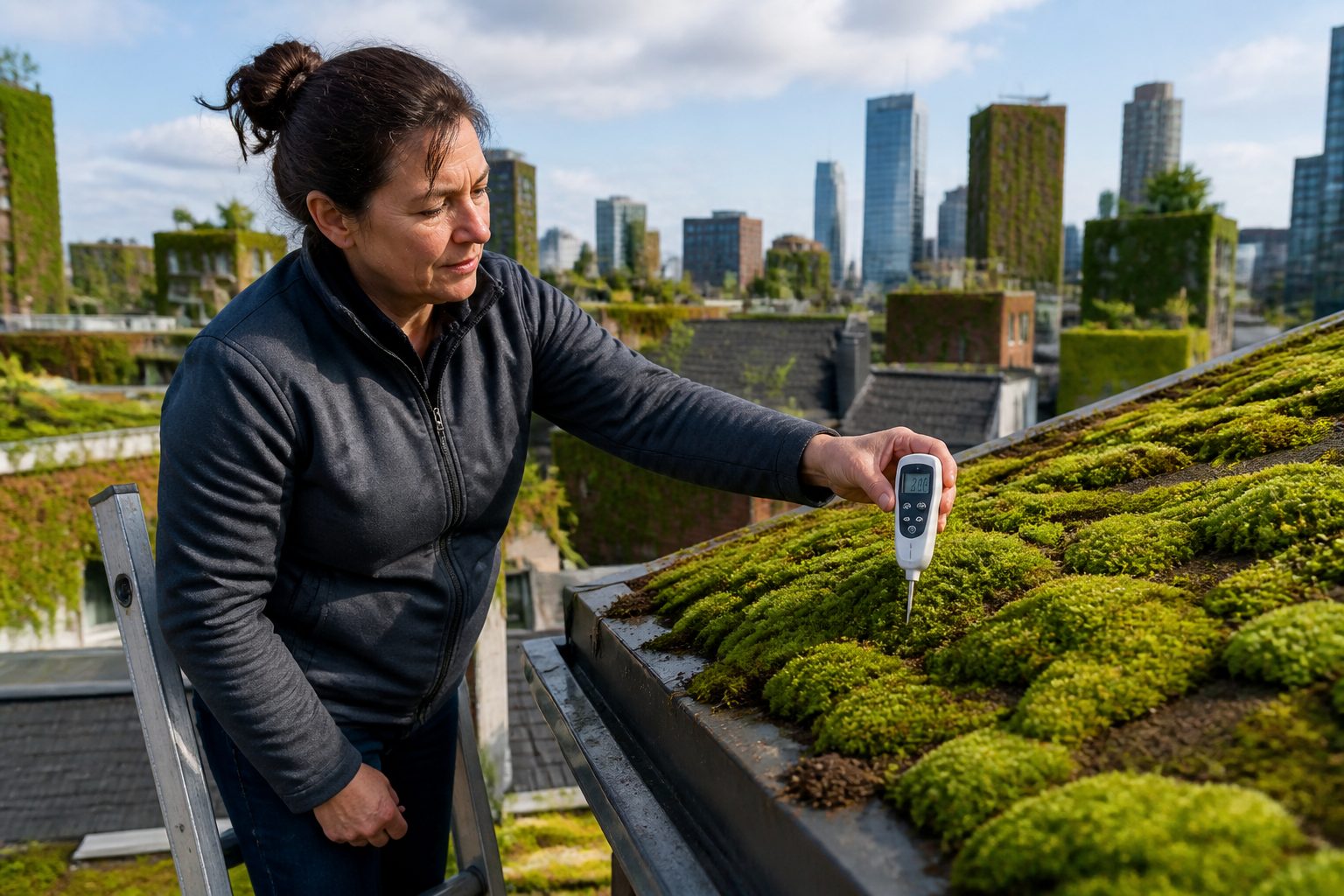
Moss can beat a bare roof on hot days because it shades the roof skin and keeps a damp micro layer that can evaporate. If the moss is crispy dry, it still shades, but the evaporative cooling part drops hard.
On a bright summer afternoon, a black membrane can get painfully hot while a moss patch stays closer to ambient. You will usually see the biggest surface temperature gap when the sun is strong and the moss has moisture from rain, fog, or a light rinse.
Moss does poorly on roofs that bake and dry for weeks, especially on steep slopes with fast runoff. In that situation, the moss thins out, dark roof shows through, and your “green roof basics” plan turns into a patchy biology experiment.
Winter results can surprise people because cooling is not always what you want. A moss layer can keep the roof surface slightly wetter and sometimes slightly cooler during sunny cold snaps, which may slow drying and affect durability on some materials.
Windy rooftops can erase gains because moving air strips moisture and warms or cools surfaces fast. If your roof is a wind tunnel, you may still measure a moss roof cooling effect, but it will be smaller and less consistent.
Choosing roof areas that actually stay moss-friendly
Pick locations that stay damp longer than the rest of the roof, because moss is stubborn but not magic. North and east exposures often work better, and spots near parapets or HVAC curbs can hold dew longer.
If you put moss where sun blasts it all day, you will spend your time watching it fade and flake off. Shade from taller buildings, chimneys, or solar panels can create a microclimate that keeps moss viable.
| Roof area type | Moss friendliness | Why it behaves that way |
|---|---|---|
| North-facing low-slope section | High | Less midday sun, slower drying after rain and dew |
| East-facing section near parapet | Medium to high | Morning sun only, parapet blocks wind and traps moisture |
| South-facing black membrane | Low | High surface temperature, fast drying, UV stress |
| Area under raised solar panels | Medium | Partial shade, but wind can increase and drip lines can concentrate flow |
| Near HVAC exhaust or kitchen vent | Low | Heat pulses and greasy deposits can kill or smother moss |
Simple tools to track cooling: thermometers, IR, and notes
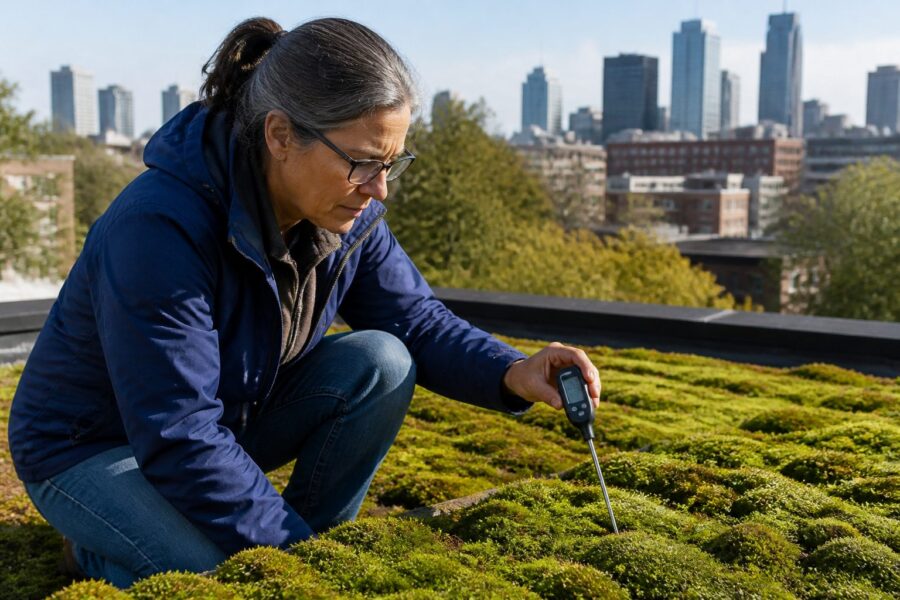
You can measure surface temperature with an infrared thermometer, and it is the fastest way to build a dataset. Buy one with adjustable emissivity if you can, because shiny membranes and metal flashing can throw off readings.
A basic probe thermometer helps when you want to check temperatures under the moss mat or in a thin substrate layer. Tape the probe in place for repeatable readings, because hand holding it changes contact and changes the number.
If you want indoor comfort context, use a cheap indoor sensor on the top floor ceiling line and log it at the same time each day. The point is not lab grade accuracy, it is seeing whether the roof changes show up indoors.
Take photos from the same angle every time, because moss condition explains temperature swings better than you think. A green, plump patch and a brown, dusty patch can be the difference between a strong and weak moss roof cooling effect.
Keep a paper notebook or a notes app log with weather details, because your memory will lie to you after a month. Write down cloud cover, wind, when it last rained, and whether the roof was wet from morning dew.
Setting up a before-and-after comparison you can trust
A good comparison needs a control area, which means a nearby bare roof patch with the same slope and roof material. If your moss patch sits in shade and the control sits in sun, you are measuring shade, not moss.
Mark your measurement points with small dots of paint pen or a bit of tape so you always shoot the same spot. Surface temperature can vary a lot across a roof, especially near seams, drains, and edges.
Collect at least a week of baseline readings before you add moss, even if you are impatient. Baseline data is boring, but it keeps you from attributing a seasonal cooldown to your new green roof basics project.
After installation, keep the same schedule, such as 9 a.m., 2 p.m., and 9 p.m. daily. Those times catch morning warmup, peak heating, and nighttime release, which connects directly to urban heat island behavior.
If you cannot do before-and-after on the same spot, do side-by-side on the same day. Side-by-side comparisons are often more honest than a month-apart comparison when weather shifts fast.
How moisture drives cooling (evaporation and shading)
Moisture is the engine behind most of the moss roof cooling effect, because evaporation carries heat away. When moss is damp, sunlight goes into evaporating water instead of heating the roof skin.
Shading still matters, even when moss is dry, because the moss canopy blocks direct sun from hitting the roof surface. That shading effect can reduce peak surface temperature, but it usually cannot match the cooling you get from evaporation.
Measure moisture in a simple way by noting “dry to touch,” “slightly damp,” or “wet sheen” at each reading time. If you want a number, a cheap soil moisture meter can work in thin substrate, but it is not reliable in pure moss mats.
Pay attention to dew, which can be a free irrigation system in some cities. A roof that gets heavy morning dew can show cooler surface temperature until late morning, even without rain.
If you decide to rinse moss during heat waves, log the time and how much water you used. You will learn quickly whether a light spray at sunrise buys you hours of lower surface temperature or only a short drop.
Wind, sun, and roof color: the hidden variables
Wind is a bully on rooftops, and it can make your data jump around day to day. A gusty afternoon can cool a bare roof by convection while drying moss so fast that evaporation shuts down.
Sun angle changes across the season, so a patch that was shaded in April might get full sun in July. If you track the moss roof cooling effect over months, note when nearby trees leaf out or when building shadows shift.
- Measure at the same clock times each session
- Record cloud cover as clear, broken, or overcast
- Log wind as calm, breezy, or gusty
- Note roof wetness, dew, or recent rain
- Write down roof color and material at each test spot
- Avoid readings within 3 feet of metal flashing
Reading your results without overclaiming
If you see moss at 95 F and the bare roof at 130 F, that looks dramatic and it often is. Still, that is surface temperature, and you should say that clearly instead of implying your whole building dropped 35 degrees.
Look for patterns across many days, not one perfect photo-op afternoon. A real moss roof cooling effect shows up as a repeated gap at similar weather conditions, especially on clear days.
Calculate simple stats you can explain, like average difference at 2 p.m. over two weeks. Skip fancy modeling unless you know what you are doing, because it can make weak data sound stronger than it is.
Connect your numbers to comfort carefully by checking indoor ceiling or attic temperatures during heat events. If indoor temperatures do not change, you may still be helping the urban heat island issue by lowering roof surface temperature and nighttime radiation.
Be honest about what failed, because moss patches die and sensors drift and roofs have weird microclimates. Readers trust you more when you say, “This spot baked,” and show the data that proves it.
Practical maintenance that keeps cooling consistent
Moss cooling depends on coverage and moisture, so maintenance is mostly about keeping the mat intact. If the mat breaks up, the exposed roof heats fast and your surface temperature readings climb.
Remove windblown leaves and grit, because they smother moss and create dry crusts. A soft brush and a gentle rinse work better than scraping, which tears rhizoids and peels patches off.
Watch for nutrient runoff from adjacent planters or bird droppings, because it can invite algae and fast weeds that shade moss the wrong way. If you see green slime, you are probably keeping the roof too wet without enough airflow.
During long dry spells, a light morning mist can keep the moss alive and extend evaporative cooling into midday. Avoid evening watering on roofs that already stay wet, because that can keep surfaces damp overnight and encourage rot on organic debris.
Inspect after storms, because uplift and scouring can shred edges first. If you patch, patch small and often, because waiting for a big repair usually means you lost the best microclimate window.
Common measurement mistakes and how to avoid them
The biggest mistake is measuring different spots each time and calling it a trend. Roofs have hot seams, cool puddle zones, and shaded corners, so you need fixed points to compare surface temperature.
Infrared thermometers can lie when you shoot at shiny material or at a steep angle. Stand in the same place, use the same angle, and avoid metal, because metal can read cooler or hotter than it really is.
Another common error is measuring right after you watered the moss and treating that as normal performance. If you irrigate, label those readings as “post wetting,” because they are real but they are not typical.
People also forget time lag, where the roof stays hot after the air cools at sunset. If you care about urban heat island impacts, add a night reading and see how long the bare roof holds heat compared to moss.
Do not mix gear without checking it, because two sensors can disagree by several degrees out of the box. Pick one IR thermometer, stick with it, and sanity-check it on a known surface like a shaded concrete wall.
Conclusion
A moss roof can reduce roof surface temperature, but the size of the moss roof cooling effect depends on moisture, sun, and wind. If you measure carefully, you can talk about cooling with numbers instead of guesses.
Start with a control patch, fixed measurement points, and a simple schedule that catches peak heat and nighttime release. Once you have that habit, you will see where green roof basics work on your roof and where the urban heat island wins.
Your best results will come from pairing temperature readings with honest notes about moss condition and wetness. That mix of surface temperature data and real-world observation is what makes your claims believable.