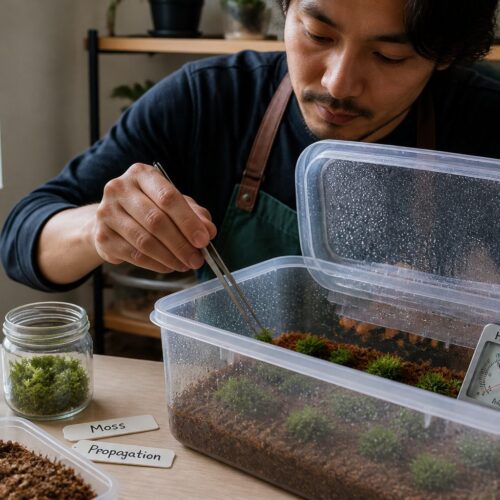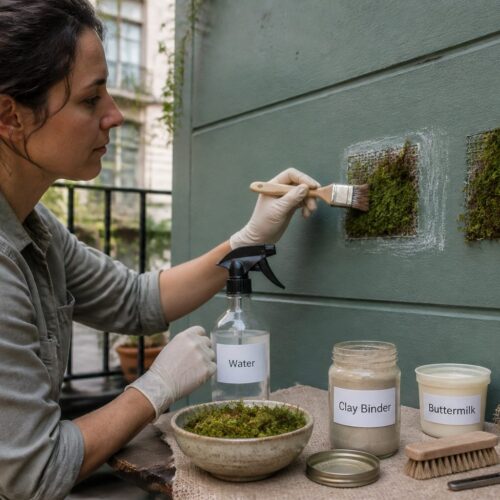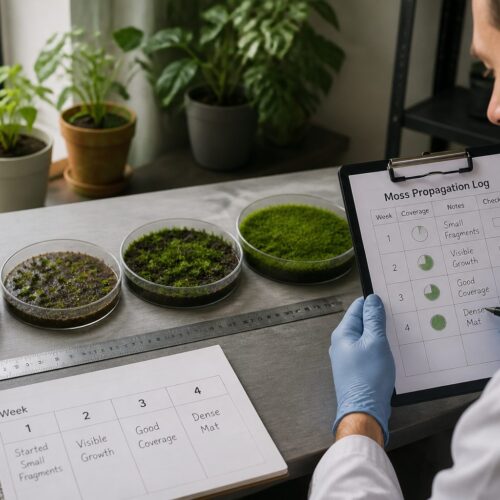


Moss is tough, but it is picky about temperature when you ask it to attach to a new surface and start growing again. If you are working in a terrarium, a tray, or a small balcony pot, temperature control is usually the difference between steady green progress and a patch that sits there looking annoyed.
Most propagation problems I see blamed on light or “bad moss” trace back to the moss propagation temperature range being off for long stretches. You can keep moisture perfect and still get slow attachment if the air and the substrate swing too hot or too cold.
This article focuses on practical ranges you can hit in apartments, classrooms, and tight urban setups. It also covers heat stress in moss, cold tolerance moss behavior, and how to build an indoor moss setup temperature plan that does not take over your life.
Why temperature affects attachment and regrowth
Moss propagation is mostly a recovery process, because you are asking a plant with no true roots to re-anchor and restart growth. Temperature sets the pace for cell repair, new rhizoid production, and the slow “grab” onto bark, stone, soil, or fabric.
When temperatures sit in a comfortable band, the moss stays hydrated internally without burning through its stored sugars too fast. When it runs hot, respiration speeds up and the moss uses energy faster than it can replace it under indoor light.
Attachment is also about the surface biofilm, the thin layer of moisture and microbes that forms where moss meets its new home. If the surface keeps drying from warmth, the moss has to keep rehydrating instead of settling in.
Cold slows everything down, and that can be fine for established mats, but new fragments need momentum. A chilly substrate can leave your pieces alive but basically “on hold,” which looks like failure even when it is not.
Different genera vary, but most common urban mosses behave similarly during propagation. If you learn how temperature drives the first month, you can adjust almost any setup without buying fancy equipment.
The most reliable temperature range for propagation
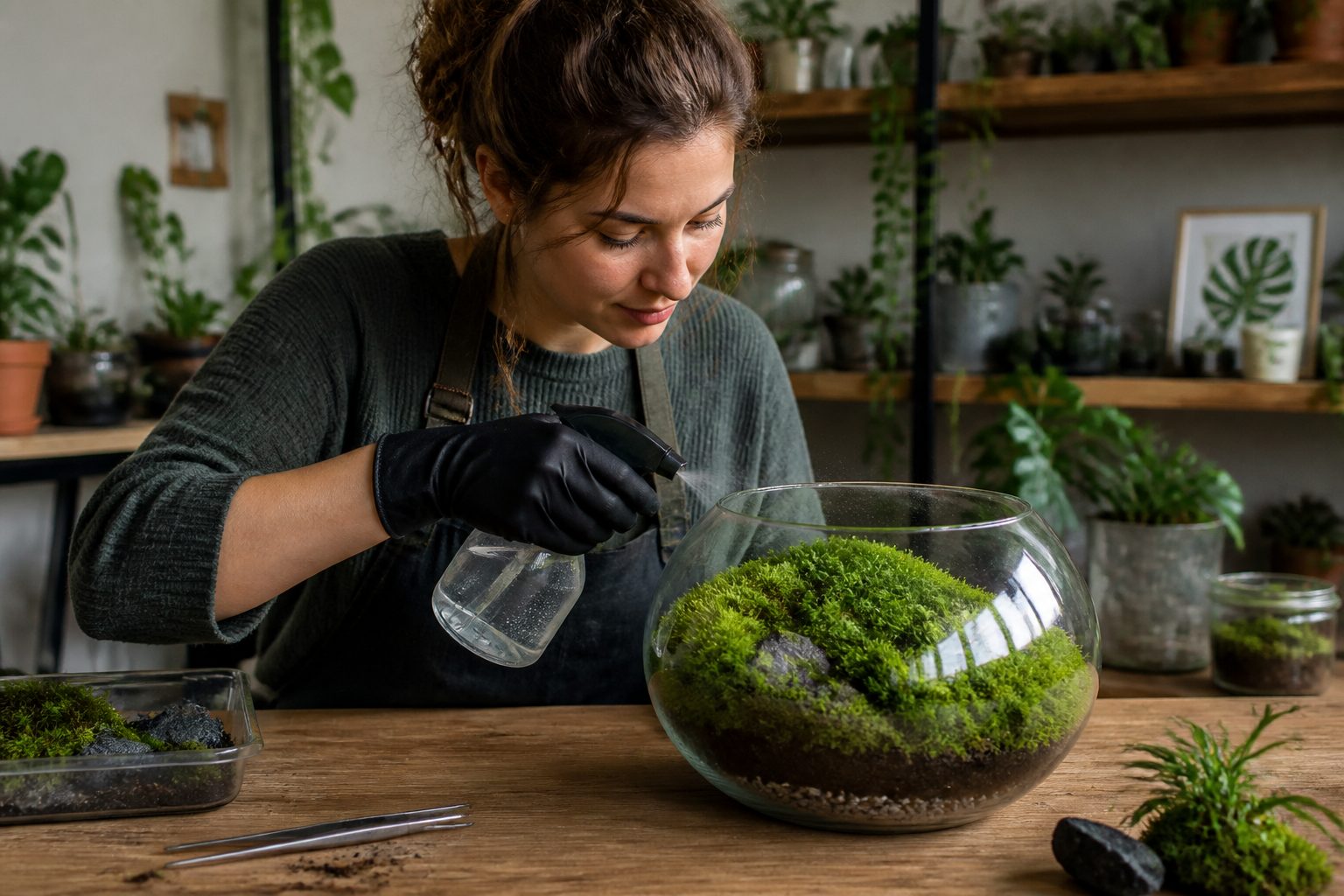
For most temperate mosses used in trays and terrariums, the most reliable moss propagation temperature range is 60 to 75 F. I aim for 65 to 72 F when I want attachment to happen without pushing growth into a stressed, leggy look.
In that band, you get steady metabolism without the fast dry downs that come with warmer air. You also reduce the chance that warm, stagnant humidity turns your propagation into a mold project.
If you are propagating sheet moss, cushion moss, or sidewalk tufts you collected legally from your own property, start with the same range and watch the response. When the tips stay green and the fragments stop shifting when misted, you are usually on track.
Once you creep above about 78 F for days at a time, heat stress in moss shows up as dulling color and a stubborn refusal to knit together. You can still keep it alive, but it often stops “grabbing” the surface the way it does in cooler air.
Below about 55 F, many mosses switch into slow mode and you should expect little visible change week to week. That is where cold tolerance moss traits matter, because survival stays high but progress becomes hard to measure.
Day vs. night swings: what moss tolerates and what slows it down
Moss can handle temperature swings better than many houseplants, but propagation likes consistency. A small daily swing is normal, and it often helps reduce mold pressure by giving surfaces time to dry slightly.
I treat a 5 to 10 F swing as fine, especially if daytime peaks stay under the mid 70s. When swings jump to 15 to 25 F, attachment slows because the substrate keeps cycling between “wet and warm” and “cool and damp.”
| Day and night pattern | What moss usually does | What to adjust |
|---|---|---|
| 70 F day, 64 F night | Steady attachment and tip growth | Keep moisture even, vent lightly |
| 76 F day, 60 F night | Slower knitting, more drying at edges | Shade midday heat, mist earlier |
| 82 F day, 70 F night | Heat stress in moss, color dulling | Move off windows, increase airflow |
| 62 F day, 48 F night | Pauses, stays alive but looks unchanged | Insulate container, warm the room slightly |
Managing heat indoors: windows, radiators, and warm shelves
Indoor heat problems usually come from microclimates, not the thermostat setting. A sunny windowsill can run 10 to 20 F warmer than the room, and the moss feels that at the surface level.
If your indoor moss setup temperature keeps spiking near glass, pull the tray back a foot and use a sheer curtain. You will lose a little light, but you gain stability and fewer dry, crispy edges.
Radiators and baseboard heaters are worse than people think because they heat from below and create constant convection. A propagation tray on a shelf above a radiator often runs warm even when the room feels comfortable.
I like to place moss on an interior wall shelf where air stays calmer and temperatures track the room. If you must use a window, pick an east facing one so the heat pulse is shorter and easier to manage.
Warm shelves above fridges, routers, and grow light power supplies can quietly cook your moss. Put your hand on the surface where the container sits, because if it feels warm to you, it is too warm for steady propagation.
Managing heat outdoors: reflective surfaces and container overheating
Outdoor setups fail from heat even in mild weather because containers amplify sun. A shallow plastic tray in full sun can push the substrate into the 90s while the air temperature looks harmless.
Reflective surfaces are the sneaky culprit in urban spaces, especially white walls, metal railings, and bright concrete. They bounce heat right onto the moss, and heat stress in moss can show up after one rough afternoon.
Terracotta and dark pots absorb heat and then radiate it back through the night, which keeps nighttime temperatures too high. That is a problem because moss likes a cooler night to recover and reduce water loss.
If you want outdoor propagation, use bright shade, like under a bench or under a plant stand with slatted shade cloth. I prefer morning sun only, then shade after 11 a.m. when container overheating starts fast.
Wind helps, but it can also dry your surface too quickly if your moss is on a thin pad. A sheltered spot with moving air, like near a balcony corner that gets a breeze, is usually the sweet spot.
Cold conditions: when moss pauses and how to protect new patches
Cold tolerance moss is real, but propagation is a different task than survival. When temperatures drop into the low 50s and 40s, many mosses stop putting energy into attachment and focus on staying intact.
In an urban balcony setup, the substrate cools faster than the air because wind strips heat from the container. That is why a “55 F night” forecast can feel like a much colder event to a thin propagation tray.
New patches are most vulnerable in the first two weeks, because fragments can lift and shift when they repeatedly freeze and thaw. Even without frost, cold contraction and expansion can break the contact points you are trying to build.
If you need to protect new moss outdoors, move it against the building wall at night and off the railing edge. The wall holds heat longer and reduces wind exposure, which keeps the moss propagation temperature range from dropping too far.
Indoors, cold usually comes from drafty windows and unheated rooms, not from the whole house. If your moss sits near a window that chills at night, set it on a thicker wooden board to buffer the temperature drop.
Using simple tools to monitor temperature (without gadgets overload)
You do not need a lab setup to manage an indoor moss setup temperature, but you do need a reality check. The easiest starting point is a basic indoor thermometer placed right next to the moss, not across the room.
If you are using a lidded container, measure both room air and inside air because they can differ a lot. A cheap fridge thermometer works fine, and it is easy to move between containers.
For outdoor trays, I like a simple probe thermometer that you can push into the substrate for a quick reading. Substrate temperature is what drives attachment, because the contact zone is where the moss is trying to restart growth.
Write down morning lows and late afternoon highs for a week, because single readings lie. Once you see the pattern, you can fix the real problem, like a 3 p.m. heat spike on the patio.
Avoid stacking sensors and apps until you have used one thermometer well for a month. Moss responds to trends, and your goal is to keep the moss propagation temperature range stable enough that the plant can do its slow work.
Pairing temperature with moisture: avoiding the “warm and wet” problem
The worst combo in moss propagation is warm air plus constant surface wetness, because it invites rot and algae. People blame “bad spores” when the real issue is a sealed container sitting at 78 to 85 F with no drying cycle.
If you keep temperatures in the low 70s, you can mist more often without turning the surface into slime. If your setup runs warmer, you must vent more and let the top millimeter of the substrate dull slightly between mists.
Warm and wet also amplifies bacterial smells, which is a sign you are running too closed and too hot. Moss can handle high humidity, but it wants oxygen, and stagnant air makes the problem worse.
I prefer a lid that sits slightly ajar or has a couple of small holes, especially for indoor bins. That small exchange keeps moisture high while preventing the swamp conditions that show up with heat stress in moss.
If you see algae film forming, treat it as a temperature and airflow warning as much as a moisture warning. Cool the container a few degrees and increase air exchange before you start scraping and disturbing new attachment.
Seasonal planning: when to start new propagation for best results
Season matters because it sets your baseline temperatures and your light quality, even indoors. In many homes, spring and fall naturally sit in the best moss propagation temperature range without much effort.
Summer propagation is possible, but you have to plan around heat spikes and hot windows. If you do it anyway, pick a room that stays cooler and avoid sealed containers that trap heat.
Winter propagation can work indoors if you can keep nights from dropping too far and you avoid dry heater air. The moss often stays alive in cooler rooms, but attachment can take longer and patience matters.
Outdoors, I start new patches when daytime highs stay under the mid 70s and nights stay above the mid 40s. That window varies by city, but the logic stays the same, because cold tolerance moss does not equal fast regrowth.
If you are collecting small amounts from your own yard, collect during mild weather and propagate immediately. A hot car ride or a freezing night on a balcony can set you back before you even start.
A practical temperature checklist for the first month
The first month is when moss decides whether it will attach or just survive as loose fragments. I like a simple checklist that keeps the indoor moss setup temperature stable without turning propagation into a daily science project.
This is the month to watch for heat stress in moss and to respect the slowdown that comes with cold nights. If you keep the range steady and the surface contact tight, you usually see subtle thickening by week three or four.
- Target 60 to 75 F, aim for 65 to 72 F if possible
- Check afternoon highs near windows and balconies
- Keep trays off radiator shelves and appliance tops
- Buffer cold windows with a wooden board or cork mat
- Vent lidded bins daily if temps rise above 75 F
- Measure substrate temperature, not only room air
- Move outdoor containers into bright shade during heat waves
Conclusion
The best moss propagation temperature range is boring on purpose, because moss likes steady conditions more than dramatic growth. Keep most setups in the 60 to 75 F zone, and you will get better attachment with fewer setbacks.
Watch for heat stress in moss near glass, radiators, and sun baked containers, and treat sudden cold as a pause rather than a disaster. Once you dial in indoor moss setup temperature and pair it with sensible moisture, propagation in small spaces becomes predictable and repeatable.