
Urban moss looks soft, but it has a real effect on how a wall, roof, or planter heats up and cools down. The phrase moss thermal lag is my shorthand for that delay between air temperature changes and what the surface under the moss actually does.
If you have ever touched a bare brick wall at dusk and then touched a mossy patch nearby, you have felt the difference. One snaps to the evening air fast, and the other hangs onto the day a little longer.
This matters around windows, patios, and balcony doors where comfort is tied to radiant heat, not just what a thermostat says. It also matters for moss health, because the same traits that smooth temperature swings can raise drying risk if you get the design wrong.
What “thermal lag” means for urban surfaces
Thermal lag is the time delay between a change in conditions, like a hot afternoon turning into a cool evening, and the temperature response of a material. In cities, that delay is part of why a courtyard can stay warm long after sunset.
On a bare surface, the temperature tracks the air quickly because there is little insulation and little water to buffer the change. When you add moss, you change the surface energy balance and the heat flow path into the substrate.
People often talk about thermal mass like it is only about thick concrete, but moss can change the effective thermal mass of the outermost layer by holding water. Water is heavy, and it stores heat well, so a wet moss mat can behave like a tiny heat battery.
The practical metric behind all this is the diurnal temperature range, meaning the swing between day highs and night lows at the surface you care about. A moss layer that increases thermal lag usually shrinks that swing at the moss surface, even if the air swing stays the same.
Thermal lag is not automatically good, because sometimes you want a surface to cool quickly at night. For a bedroom wall near a window, though, slower evening heat release can feel less harsh than a bare masonry panel that radiates stored heat into the room.

Why moss behaves differently when it’s wet vs. dry
Dry moss is mostly air trapped in a springy structure, and air is a good insulator. Wet moss replaces that air with water films, and that single change flips the thermal behavior.
When moss is wet, it gains thermal mass because the water adds heat capacity, so temperatures change more slowly. That is the core reason moss thermal lag tends to increase after rain or irrigation.
Wet moss also cools itself by evaporation, and that can pull the surface temperature below the air temperature on hot afternoons. If you have ever seen a damp green patch stay cool while nearby stone looks bleached and hot, that is evaporative cooling doing real work.
When moss dries, evaporation shuts down and the surface can heat quickly again, especially in full sun. At that point the insulation effect can still reduce heat flow into the substrate, but the moss surface itself can spike in temperature.
The annoying truth is that wetness is never constant in an urban setting, because wind and reflected heat from glass can dry a mat faster than you expect. If you want stable thermal lag, you have to manage moisture, not just plant moss and walk away.
Thickness, density, and how they change heat flow
Moss layer thickness changes two things at once, insulation and water storage, and those two effects can fight each other. A thicker mat can slow heat flow into the substrate, while also holding more water that increases thermal mass when wet.
Density matters because a tight, compact mat holds water differently than a fluffy mat with lots of void space. In practice, the same 10 millimeters can act like a sponge or like a thin blanket depending on species, compaction, and debris.
| Moss layer thickness | Typical heat behavior | What you tend to see on a hot day |
|---|---|---|
| 3 to 5 mm | Low insulation, low water storage | Fast warming and fast cooling, small thermal lag |
| 8 to 12 mm | Moderate insulation, moderate water storage | Cooler midday surface when damp, smoother evening drop |
| 15 to 25 mm | Higher insulation, higher water storage | Stronger buffering when wet, slower drying in shade |
| 30 mm and up | Insulation dominates, water storage depends on compaction | Can stay cool if irrigated, can overheat at the surface when dry |
The role of the substrate under the moss
Moss does not float in space, so the substrate decides where heat goes after it passes through the green layer. A thin moss mat on aluminum flashing behaves nothing like the same mat on porous brick.
High thermal conductivity substrates, like metal, pull heat away quickly and can reduce surface peaks when the moss is wet. They can also dump heat back at night, which can reduce the cooling you want near a patio seating area.
Porous mineral substrates, like unglazed terracotta, lime mortar, or weathered concrete, can store water and extend evaporative cooling. That extra reservoir tends to increase moss thermal lag because the system stays damp longer.
Wood is tricky because it insulates and it dries, so the moss may see higher surface temperatures in sun and lower moisture at the same time. If you mount moss on cedar fencing, plan on shade or regular misting, because the substrate will not rescue you.
Paints and sealers often ruin the whole concept by blocking water exchange and forcing the moss to rely only on surface wetting. If you need to protect a wall, pick a breathable mineral coating and accept that the moss will still behave better on rough, absorbent areas.
Measuring day-night swings with a simple setup
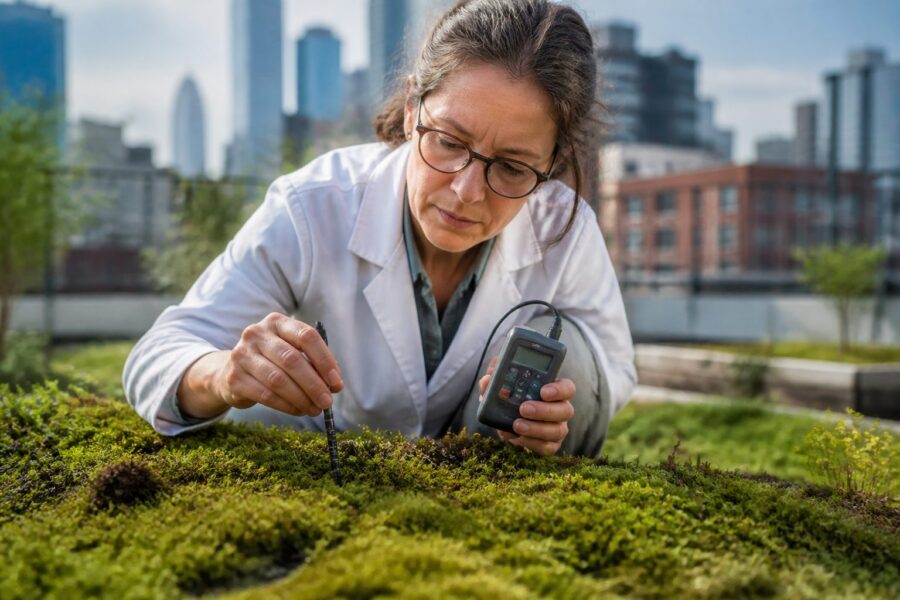
You can learn a lot with two cheap temperature sensors and a notebook, and you do not need a lab. The goal is to compare surface temperature swings on moss versus a nearby control surface that sees the same sun and wind.
Pick a spot like a balcony planter wall, a green roof test tray, or a shaded brick column near a window. Put one sensor at the moss surface, tucked into the canopy but not buried, and put the other on the bare substrate a few inches away.
If you can add a third sensor, place it in the air about 2 inches off the surface so you can separate air changes from surface response. That air sensor makes the idea of thermal lag obvious because the air will swing first and the surfaces will follow.
Run the test for at least three full days, because one cloudy day can lie to you. If you irrigate, do it at the same time each day so moisture is a controlled variable instead of a random event.
Track moss layer thickness in a few spots with a ruler, because mats are rarely uniform. If you want to test moss layer thickness as a variable, set up two trays with different depths and keep the substrate and exposure identical.
How to log data without overcomplicating it
The simplest logging plan is a reading at sunrise, mid afternoon, and late evening, because those points bracket the diurnal temperature range for most sites. If you can automate, a 5 minute interval is plenty, and anything faster usually adds noise instead of insight.
I like small Bluetooth loggers or a basic Arduino with a waterproof probe, but a kitchen thermometer can still teach you the pattern. The main mistake is moving the probe around, because you end up measuring your own curiosity instead of a consistent spot.
- Mark probe locations with tape or a paint pen
- Log sunrise, 3 pm, and 10 pm readings
- Note irrigation time and amount
- Record cloud cover in plain words
- Measure moss thickness at three points
- Snap one photo per day for shading changes
Interpreting results for comfort near windows and patios
Comfort near a window is often about radiant temperature, meaning what the surfaces around you radiate toward your skin. A mossy wall that stays a few degrees cooler at 4 pm can feel better than a bare wall, even if the air temperature is the same.
At night, you may want the opposite, because a surface that holds heat can keep a small patio usable longer. If your moss thermal lag is strong, the moss surface may cool slowly, but the substrate under it may also stay warmer and radiate later.
Look at the timing of the daily peak, not just the peak value, because lag is a time shift. If the bare surface peaks at 2 pm and the moss peaks at 4 pm, you have a clear delay that can line up with when you actually use the space.
Also watch the minimum temperatures before sunrise, because that is when condensation and frost risk show up. A moss mat that stays a little warmer than bare stone may reduce frost on a stair edge, but it can also keep a damp zone that grows algae on adjacent surfaces.
If you are comparing two moss areas, the one with a smaller surface diurnal temperature range is not always the winner. Sometimes the best outcome is a moderate swing with strong midday cooling, because that is when people complain about heat near glass doors.
Design choices that increase beneficial thermal lag
If you want more beneficial lag, start by keeping the moss reliably damp during the hottest part of the day. A simple drip line with a timer often beats hand misting, because it keeps the water input consistent.
Shade is the quiet hero here, because it reduces heat load and slows drying without any electronics. Even a slatted trellis or a balcony overhang can keep moss wet long enough to act like a real thermal mass layer.
Choose species and growth forms that make dense mats, because they hold moisture and reduce convective heat loss at the surface. In many cities, Bryum and Grimmia on masonry behave more predictably than wispy, open forms that dry the moment the wind picks up.
Increase moss layer thickness carefully, because the sweet spot is often around 10 to 20 millimeters for small built installations. Past that, you can end up with a dry crust on top and a damp base underneath, which makes temperature readings look good while the moss looks rough.
Use a substrate that can buffer water, like rough brick, porous stone, or a thin mineral felt designed for green roof tests. When the substrate holds a little water, the whole system keeps its lag longer into the afternoon.
Tradeoffs: cooling benefits vs. drying risk
The cooling you want often depends on evaporation, and evaporation depends on having water to spend. If a site is windy and sunny, the moss can burn through its water fast and lose the cooling effect right when you want it.
Thicker mats can reduce drying, but they can also trap heat at the surface when the top dries out. That is one reason two patches with the same moss layer thickness can show different diurnal temperature range behavior after a week of hot weather.
I have seen balcony moss look great in spring and then hit a midsummer wall where it turns crispy at the edges near reflective glass. The microclimate near windows can be harsher than the weather report, because the glass throws heat and light back onto the moss.
Overwatering creates its own problems, like fungus gnats in planters and mineral crusts on masonry that turn the surface alkaline. If your tap water is hard, you may need rainwater capture or occasional flushing, or your moss will lose traction and color.
There is also a safety tradeoff, because wet moss can be slippery on steps and pavers. Keep moss away from walking surfaces unless you are willing to manage it like you manage ice, with respect and a plan.
A practical checklist for tuning your moss layer
If you want to tune moss thermal lag, treat it like a small building assembly with a living top layer. That means you pick a target, like cooler afternoons by a patio door, and then you adjust moisture, thickness, and substrate to match.
Start with one test patch and keep it boring, because you need a baseline before you get creative. A single square foot on the same wall can teach you more than a whole weekend of scattered experiments.
Check moss layer thickness in several spots and write the numbers down, because your eyes will lie after a few weeks of growth. If the mat is uneven, level it gently with a light press and add small fragments to thin spots.
Control moisture with a schedule, not with mood, and adjust based on midday surface temperature readings. If the moss surface runs hotter than the bare control by mid afternoon, you probably need more shade or more reliable water.
Pick a substrate that matches your maintenance tolerance, because some surfaces demand constant attention. Rough brick and porous stone forgive missed watering better than sealed concrete or painted wood.
Recheck your data after weather shifts, because a cool week can make any setup look great. The real test is a hot, dry stretch where thermal mass and evaporation either show up or they do not.
Conclusion
Moss thermal lag comes from simple physics, water storage, insulation, and the way heat moves into whatever sits under the mat. When you manage moisture and moss layer thickness with intention, you can shrink surface diurnal temperature range swings in the places where people actually sit.
The best results usually come from a modest thickness on a water friendly substrate, plus shade that keeps the mat damp through the afternoon. If you measure instead of guessing, you can dial in thermal mass effects that feel real near windows and patios.