

Moss is one of the few plants that can look calm and lush in the middle of a city, even when you only have a narrow balcony to work with. If you get the moisture and light right, moss propagation on balconies is less fussy than people assume.
The trick is to treat your balcony like a tiny field site with its own weather, because it is. Your balcony microclimate decides whether moss stays springy or turns into crispy confetti.
I like balcony moss projects because the feedback is immediate, you see drying, greening, and growth week to week. This guide focuses on containers, shade mapping, and evaporation control so your patch survives real urban conditions.
Reading your balcony: sun hours, wind tunnels, and reflected heat
Start by tracking direct sun, not general brightness, because moss reacts to sun like a sponge reacts to a hair dryer. Spend two days watching where sun hits at 9 a.m., noon, and late afternoon, then mark those zones with tape on the floor.
Reflected heat is the sneaky problem on balconies with white walls, metal railings, or glass nearby. A spot that looks shaded can still cook at 3 p.m. because light bounces in and warms the surface under your moss.
Wind matters as much as sun because moving air strips moisture off moss fast. If your balcony forms a wind tunnel between buildings, you will need more evaporation control than someone with a sheltered courtyard.
Do a simple tissue test for airflow, hold a strip of tissue near the railing and near the door, then compare how hard it flutters. Put the moss where the tissue barely moves, then use tougher species for the breezier edges.
Also check what your balcony does after rain, because that tells you where humidity lingers. If one corner stays damp for hours while another dries in minutes, you already have a map for where to place moss in containers.
Choosing containers that keep moss evenly moist
The best container for balcony moss is the one that slows drying without turning into a swamp. Moss wants steady moisture at the surface, with air still reaching the stems and rhizoids.
Unglazed terracotta looks nice, but it wicks water out through the sides, which can be brutal in wind. Glazed ceramic, plastic nursery trays, and food safe storage boxes hold moisture longer and make moss propagation on balconies easier.
Wide and shallow beats tall and narrow because moss roots are shallow and you want surface humidity. A 2 to 4 inch deep tray gives you room for a thin substrate layer while keeping the moss close to the humid boundary layer.
Drainage holes are optional depending on your watering style and rainfall, but you must decide on purpose. If your balcony gets rain, add drainage and a saucer, because repeated soaking without airflow can sour the substrate.
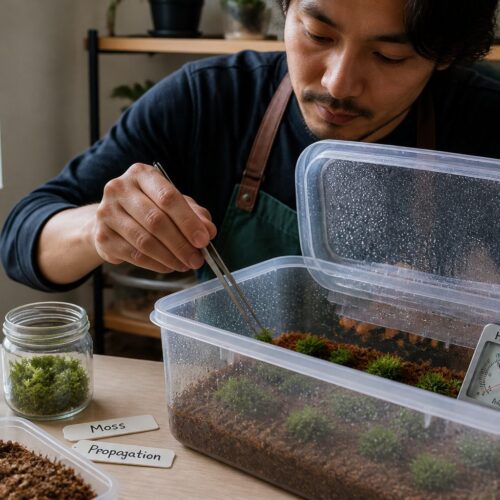
For evaporation control, I often use a clear lid propped open with a chopstick for the first two weeks after planting. That small gap keeps air exchange while holding humidity, and it prevents the classic balcony dry out cycle.
Picking surfaces: stones, tiles, wood pieces, and shallow trays
On a balcony, the surface under moss matters as much as the moss itself because it decides how water spreads and how fast it evaporates. Smooth glazed tile dries fast, while rough stone holds micro pockets of moisture that help moss attach.
If you want moss to stay put, pick a surface with texture and a little porosity, then keep it stable so it does not wobble in wind. I avoid fresh pressure treated wood for moss projects because it can leach chemicals and it often dries unevenly.
| Surface | What it does on a balcony | Best use case |
|---|---|---|
| Rough granite or lava rock | Holds moisture in pits, warms slowly | Outdoor trays with intermittent watering |
| Unglazed clay tile | Wicks water, cool surface, dries faster in wind | Sheltered corners with frequent misting |
| Concrete paver piece | Alkaline at first, then stabilizes, good grip | Hardy urban moss mixes after a rinse and weathering |
| Hardwood offcut (aged) | Uneven moisture, can grow algae if too wet | Small accent pads under shade cloth |
| Shallow plastic tray with thin substrate | Even moisture, easy to move for shade mapping | Starter flats for propagation and patch expansion |
Selecting moss for balcony life: resilience and growth habit
Choose moss like you choose shoes for a commute, pick what tolerates your conditions instead of what looks perfect in a forest photo. Balcony microclimate swings, so resilience beats rarity every time.
Acrocarpous mosses form tight cushions and often handle drying better, because their growth habit reduces exposed surface area. Cushion types can rebound after a dry spell if you rehydrate them slowly and keep sun off while they recover.
Pleurocarpous mosses spread like a mat and can fill trays quickly, which is great for coverage. They usually want steadier humidity, so they do best where your evaporation control is strong.
If you are sourcing locally, look for moss already growing on city stone, brick, or compacted soil, because it has proven it can handle dust and short droughts. Avoid stripping big sheets from one spot, and take tiny plugs from multiple patches instead.
Skip dyed craft moss and most preserved moss, because it is dead and it will teach you nothing about living care. Living moss should spring back when misted, and it should smell earthy, not like a floral aisle.
Propagation methods that fit small spaces
The cleanest method for moss propagation on balconies is plug planting, where you press pea sized clumps into a thin layer of damp substrate or onto a damp stone. It looks sparse at first, but it avoids the mess and odor that sometimes come with blended slurries.
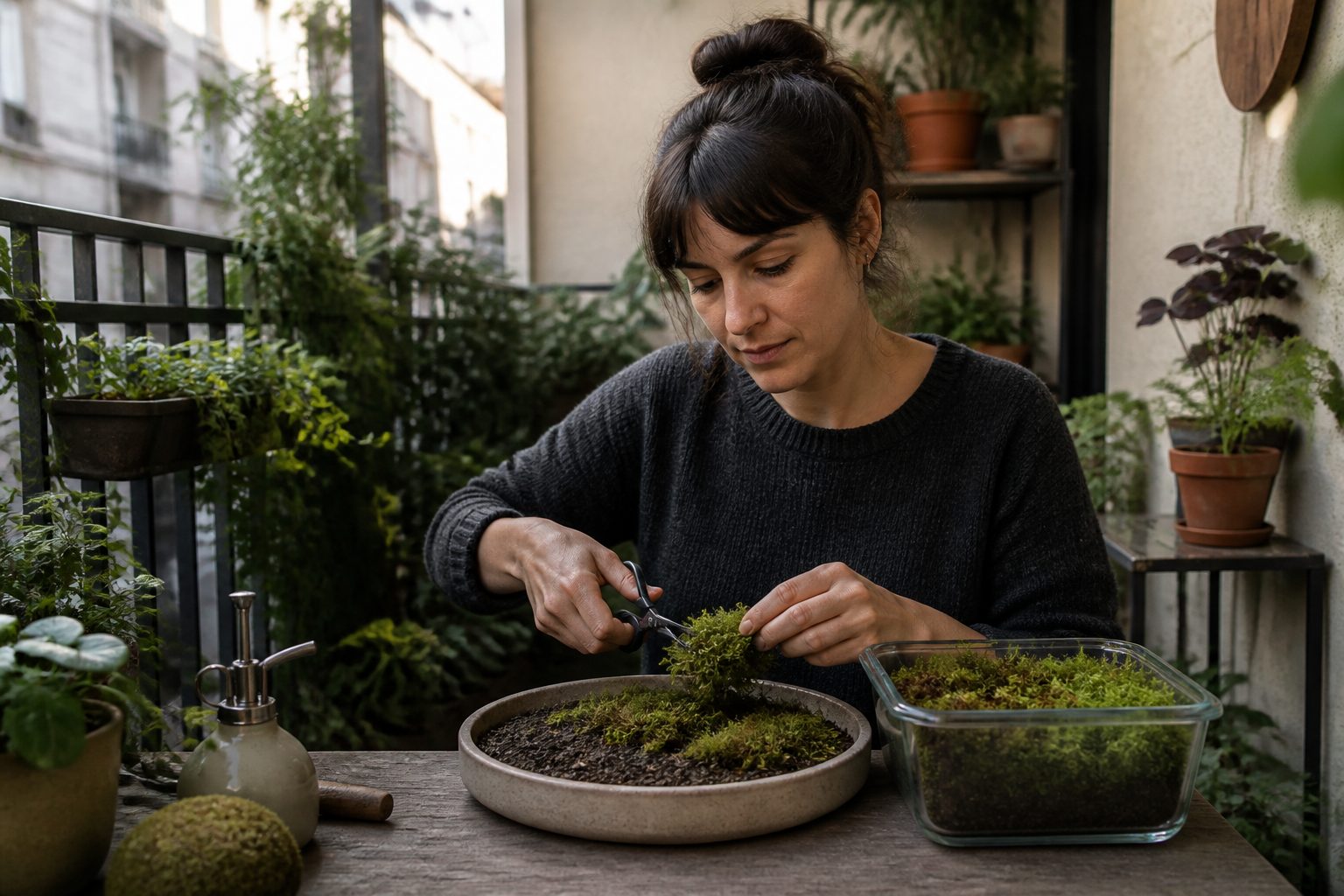
For fast coverage, you can do a chopped method, mince moss with scissors, then press the fragments into a rough surface like concrete or lava rock. Keep the fragments in close contact with the surface, because they dry out fast if they sit like loose confetti.
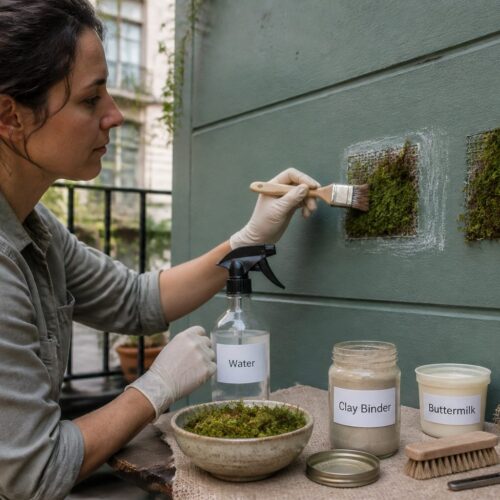
Slurry methods can work in small spaces, but I only recommend them if you can control smell and runoff. If you use a blender, use water or diluted buttermilk sparingly, then apply a thin film so it does not rot in the container.
Use a mister for placement, not a heavy pour, because a strong stream floats your fragments into a corner. A cheap kitchen spray bottle on a fine setting is enough for most balcony setups.
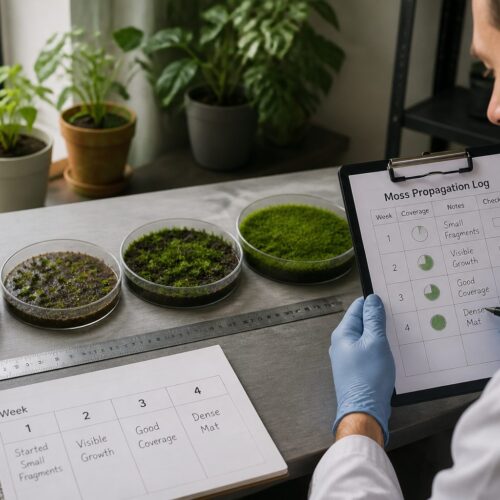
Whatever method you pick, label your trays with date and source, because you will forget which patch grew best in shade. That little note helps you repeat what worked and stop wasting time on weak performers.
Setting up shade: screens, cloth, and plant placement
Shade is your main tool for keeping moss hydrated, because you cannot out water full sun on a windy balcony. I set shade first, then adjust watering, because shade changes everything about evaporation control.
You do not need fancy gear, you need predictable light, so think in percentages and angles. A 30 to 50 percent shade cloth clipped to the railing often turns a failing tray into a stable one within days.
- 30 to 50 percent shade cloth clipped to railing
- Bamboo screen panel for reflected heat reduction
- Sheer curtain hung on a tension rod
- Tall herbs in pots to cast afternoon shade
- Moveable tray stand for seasonal sun shifts
- Cardboard test panels for one week shade mapping
Watering routine for balconies: preventing dry-outs
Balcony moss fails from drying, then being flooded, then drying again, and the cycle repeats until it gives up. A boring, consistent routine beats heroic weekend watering.
Mist in the morning when possible, because water has time to soak in before heat and wind peak. If you can only water at night, keep airflow in mind so the surface does not stay stagnant for twelve hours.
Use rainwater if you can collect it, or use tap water that has sat out overnight if your city has heavy chlorine. Hard water can leave mineral crust on stones and on moss tips, which looks like pale dust and slows growth.
I judge moisture by touch and color, not by schedule, because balcony microclimate changes with every weather front. Moss that is slightly glossy and cool to the touch is fine, while moss that looks gray and papery needs water now.
For evaporation control in heat waves, group trays close together and place a shallow pan of water nearby, not under the moss. That local humidity bump can buy you a day when the forecast turns harsh.
Managing runoff and keeping neighbors happy
Runoff is the fastest way to turn a peaceful moss hobby into a neighbor problem. If water drips onto a balcony below, you will end up watering less, and then your moss will suffer.
Put every container on a saucer or boot tray, even if it has drainage holes. Check after watering and dump excess within ten minutes, because standing water turns into mosquito habitat in warm months.
If you use a lid or humidity dome, open it enough that condensation does not rain down the sides and leak. A small wedge opening keeps the inside humid while preventing surprise drips over the edge.
Keep fertilizer out of the system, because moss does not need it and runoff with nutrients grows algae in every crack. If you want faster fill, focus on shade and moisture consistency instead of feeding.
When you rinse stones or clean trays, do it in a bucket and pour the water down your own drain, not off the balcony. That one habit keeps your project polite and keeps your building manager out of it.
Keeping moss clean: dust, soot, and leaf litter removal
Urban moss collects grime, and that layer blocks light and traps dry particles against delicate tips. If you ignore it, moss looks dull even when it is alive and hydrated.
Rinse gently with a fine mist once a week, then tilt the tray to let dirty water run into a catch saucer. This is simple evaporation control too, because clean moss rehydrates more evenly than dusty moss.
Pick out leaf bits and twigs by hand, because they rot and grow mold in humid trays. A pair of tweezers from a drugstore is perfect, and it keeps you from tearing up new growth.
If soot is heavy, use a soft paintbrush to loosen it, then mist to lift it away. Do not scrub like you are cleaning grout, because moss tears and it takes weeks to knit back together.
Watch for algae films, which look like slick green paint on the substrate or stone. Algae usually means too much standing water and too much light, so adjust shade and airflow before you start ripping things out.
Expanding your patch: harvesting and re-planting safely
Once a tray fills in, you can expand by harvesting small plugs and replanting them into new containers. This is the fun part of moss propagation on balconies, because you stop buying or collecting and start multiplying.
Harvest after a good soak, because hydrated moss separates cleanly and you break fewer stems. Use scissors to cut a plug like you are taking a turf sample, then press it into a prepared spot with firm contact.
Do not take more than a third of a tray at once, because the parent patch needs coverage to keep its own humidity stable. When you over harvest, the remaining moss edges dry and you lose more than you gained.
Quarantine new trays for a week if you can, because pests and mold spread fast in close quarters. A separate corner of the balcony with similar shade works, and it keeps one bad tray from contaminating the rest.
Keep notes on what expands well, because some moss spreads aggressively while other types sulk for months. If one species consistently outgrows the rest in your balcony microclimate, lean into it and build your design around that winner.
Conclusion
Balcony moss success comes down to reading your light, blocking harsh sun, and keeping moisture steady without creating stagnant puddles. When you treat evaporation control as the main job, everything else gets easier.
Start with one or two trays, learn your balcony microclimate, then scale up once you can keep moss in containers evenly moist for a full month. After that, moss propagation on balconies becomes a repeatable routine instead of a gamble.