

Moss propagation fails more often from watering mistakes than from bad moss, bad light, or bad luck. A realistic moss propagation watering schedule depends on how moss actually takes up water, and on how fast your setup dries between checks.
If you have ever treated moss like a houseplant, you probably watered the substrate and waited for roots to do the work. Moss has no roots, so your timing and your method matter more than the total amount of water you pour.
I like schedules that you can follow on a busy week, because propagation is won by consistency. This article gives indoor, outdoor, and container routines, plus fast ways to spot trouble like moss overwatering signs before a patch crashes.
How moss “drinks”: what’s different from watering typical plants
Moss does not pull water up through a vascular system the way most familiar plants do. It absorbs water across its surfaces, including leaves, stems, and the thin mat of older growth underneath.
That surface absorption is why misting can work at all, and why moss can rehydrate after looking crunchy. It is also why a patch can dry out in hours if moving air strips moisture off the top.
During propagation, you are trying to keep the moss tissue hydrated while it attaches to whatever you are growing it on. Attachment is mostly about steady contact and steady humidity, not deep soil moisture.
When people ask how often to mist moss, the honest answer is that it depends on evaporation, not on the calendar. A shelf in a heated apartment and a shaded brick wall outside behave like two different planets.
Moss also tolerates short dry spells better than stale, oxygen-poor conditions. If you keep it soaked with no airflow and no drying cycle at all, you invite algae, fungus gnats, and a slimy failure that looks green until it suddenly does not.

The three moisture zones you’re aiming for during propagation
I think about propagation moisture in three zones, because “moist” means different things to different people. Your goal is to move between zones on purpose, rather than drifting into swamp mode or desert mode.
Zone one is surface damp, where the moss tips look plump and slightly glossy but no water beads sit on them. This is the zone that supports attachment and steady growth without smothering the mat.
Zone two is wet but draining, where you have just drenched or dunked and water is actively moving away. This is useful for resets, for flushing salts, and for rehydrating after a windy day, but it should not last all day.
Zone three is drying, where the moss is still flexible but the surface is losing its shine. A short visit to this zone is healthy because it restores oxygen at the base and slows algae that love constant film water.
Most failed schedules camp in zone two nonstop, especially in closed containers. Most stalled schedules bounce between zone one and fully crispy, which forces the moss to keep recovering instead of attaching and spreading.
Misting, drenching, and dunking: choosing the right method for your setup
Use misting when the moss is already attached or when your substrate holds some moisture and you only need to keep the surface damp. Use drenching when you need to wet the whole mat and the top layer beneath it, especially on rough stone, wood, or compacted soil.
Dunking is my fix for uneven watering, because it soaks everything fast and then you control the drain time. It is also the easiest way to avoid blasting fragments off the surface with a spray bottle.
| Method | Best use case | What can go wrong |
|---|---|---|
| Mist | Maintaining zone one on attached mats, terrariums with airflow | Top stays wet while base dries, encourages algae if constant |
| Drench | New fragments on stone, bark, or soil that dries fast | Water pools, fragments float, anaerobic base if repeated daily |
| Dunk | Trays, shallow pans, container starts, salt flushes | Leaving it submerged too long, slow drain leads to rot |
| Targeted syringe or squeeze bottle | Edges and corners that dry first, seam lines on walls | Overfilling pockets, creating stagnant puddles |
Bottom watering and wicking: when it works and how to set it up
Bottom watering moss can work well in trays and shallow containers, because it keeps the base evenly hydrated without constantly wetting the tips. It is also a good option when you are tired of misting twice a day and still missing dry corners.
The trick is to wick moisture up slowly, not to turn the whole container into a pond. If water sits above the substrate line for hours, you will see moss overwatering signs even if the top looks fine.
For a simple wick setup, use a shallow tray under your propagation pan and add a strip of polyester felt or cotton rope that touches both the water and the substrate. Keep the water level low enough that the wick is damp but the substrate is not submerged.
If you use a capillary mat, cut it so it does not climb the sides and keep the rim soaked all day. A constantly wet rim grows algae fast, and algae creeps inward like a stain.
I still mist lightly when I bottom water, because the surface can dry while the base stays wet. That combination causes curling tips and slow attachment, so watch the surface and adjust instead of trusting the reservoir.
Water quality basics: tap water, filtered water, and what to avoid
Water quality shows up in moss faster than in many houseplants, because moss tissue is thin and exposed. Hard tap water can leave mineral crusts that block absorption and shift the surface pH over time.
If your tap water leaves white spots on a kettle or shower door, assume it will also leave deposits on moss. Filtered water, rainwater, or reverse osmosis water usually gives easier results and fewer mystery stalls.
Chlorine in city water is usually not the main problem, but chloramine can linger longer and irritate sensitive species. If you cannot filter, fill a bucket and let it sit with an airstone overnight, then use that for your next watering.
Avoid softened water from ion exchange systems, because it swaps calcium for sodium and sodium builds up fast. Avoid “plant tonic” additives, because moss does not need a fertilizer push during propagation and algae will happily take it.
If you see a slick green film forming on the substrate, suspect nutrient input or constant wetness before you blame the moss. A clean water source makes your moss propagation watering schedule easier to read, because you are not fighting chemistry at the same time.
Indoor schedules: stable routines for shelves, windows, and grow racks
Indoors, evaporation is usually steady, so you can build a routine and stick to it. That routine should still respond to heat vents, dehumidifiers, and the way sunlight hits a window for a few hours and bakes a tray.
For open trays on a shelf at 68 to 72 F, I start with a light mist every morning and a check at night. If the surface looks matte and the tips feel crisp, add a second mist, and if it still dries fast, switch to a gentle drench every third day.
For a bright windowsill, expect faster drying and more edge curl, especially in winter when indoor air is dry. In that spot, how often to mist moss is usually once in the morning and once mid afternoon, with a deeper soak twice a week to reset the whole mat.
Grow racks with LED lights dry moss more than people expect, because the air under lights warms and moves. If you run a small fan, you may need daily misting plus a dunk every five to seven days, which sounds like a lot until you see how quickly the surface loses moisture.
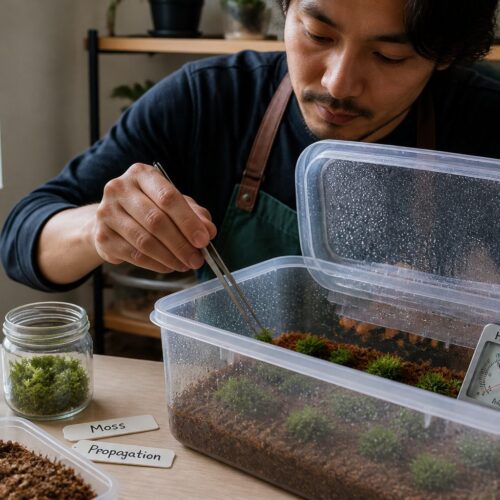
Closed bins and terrariums flip the problem, because they stay wet too easily. In those, mist lightly once, then wait until the lid has less condensation and the surface shifts from shiny to just damp before you mist again.
- Morning surface check, same time daily
- Mist until tips darken, stop before droplets pool
- Drench only when the base looks pale and dry
- Dunk weekly for trays that dry unevenly
- Vent closed containers for 10 to 20 minutes after watering
- Keep water off bare wood shelves, use a drip tray
Outdoor schedules: wind, heat, and rain adjustments for urban spaces
Outdoors, your schedule is really an adjustment plan, because wind and sun can double evaporation in a day. Urban sites add heat from brick, concrete, and metal railings that stay warm after sunset.
In mild weather with partial shade, newly placed moss usually does well with a morning mist and a deeper watering every two to three days. If the patch is on vertical stone, use a drench that runs across the surface rather than a quick spritz that evaporates in minutes.
Heat waves change everything, and I do not pretend they do not. When daytime highs push past 85 F with wind, plan on misting early morning and again in late afternoon, then add a short mid day mist if the patch is exposed.
Rain is helpful, but it can fool you into skipping checks while the edges still dry under an overhang. After a storm, press a fingertip into the mat near the attachment surface, because the top can look wet while the base is already drying.
If you grow moss on a balcony, wind tunnels around railings and corners are real. Shield the patch with a piece of shade cloth or a simple cardboard windbreak for the first two weeks, then taper watering as it attaches.
Container and shallow-pan schedules: keeping edges from drying first
Containers and shallow pans dry from the edges first, and that is where propagation often fails. The center stays damp, the rim goes crispy, and you end up with a donut of dead moss around a healthy middle.
Start by watering the edges on purpose, even if the center looks like it needs it more. A squeeze bottle or syringe makes this easy, and it keeps you from blasting fragments out of place.
For shallow pans indoors, I like a mist daily and a dunk every four to six days, with extra attention to corners. After dunking, let the pan drain at an angle for a few minutes so water does not sit under the mat.
If you use bottom watering moss in a container, watch for a wet center and dry rim, because wicking often favors the middle. Rotate the container 180 degrees every couple of days, because microclimates inside a room are real and they stack the odds against one side.
For outdoor containers, add mulch-like shade around the outside of the pan, such as a second tray or a wrap of burlap. That buffer cuts edge drying and makes your moss propagation watering schedule less frantic on hot afternoons.
How to tell if you’re overwatering (and how to fix it fast)
Moss overwatering signs look different than wilted houseplants, and they can trick you because the patch stays green at first. The big clue is texture, because healthy moss feels springy, while overwatered moss feels slick, heavy, and a little slimy.
If you see algae sheen, cloudy biofilm, or fungus gnats hovering over the tray, assume you have been keeping zone two for too long. Another clue is that the moss turns very dark and stays that way for days, even when the room air is dry.
Fix it fast by increasing air exchange before you change anything else. Crack the lid, move the tray to a spot with gentle airflow, and skip misting until the surface returns to zone one.
If the substrate is soggy, lift the moss mat carefully and blot the base with paper towels, then set it back down. This is one of the rare times I will disturb a new patch, because anaerobic conditions will kill it faster than careful handling will.
After you correct the moisture, cut back the method, not just the frequency, because a daily drench is hard to “schedule” into being safe. Switch to lighter misting, shorter dunks, or a lower reservoir level if you are bottom watering moss.
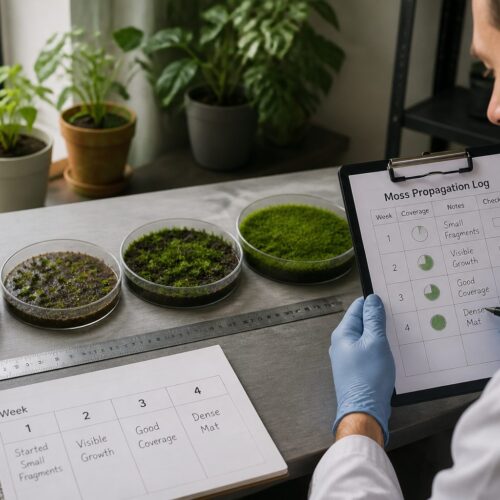
A 14-day watering plan for newly started moss patches
This plan assumes you start with clean moss fragments pressed onto a firm surface, like soil in a tray, a stone slab, or a shallow pan. It also assumes moderate light and temperatures around 65 to 75 F, because extremes need extra adjustments.
Days 1 to 3, keep the surface in zone one with two light mists per day, morning and evening. If you see pooling, stop and tilt the tray, because standing water at this stage breaks contact.
Days 4 to 6, drop to one mist per day if the surface stays damp for at least eight hours. If it dries faster, keep the second mist, but keep it light and even.
Day 7, do a deeper reset, either a gentle drench or a quick dunk and drain, then return to misting. This reset helps with even hydration, and it flushes dust and minerals that can build up from repeated sprays.
Days 8 to 10, start allowing a short drying window each day, where the surface goes matte for a few hours before the next mist. This is where attachment often improves, because the base gets oxygen and the mat firms up.
Days 11 to 14, shift toward your long term routine based on where the patch lives, indoors or outdoors. A good target is misting every one to two days with a deeper watering once a week, but you should still adjust based on how often to mist moss in your specific airflow.
If you are using bottom watering moss during this 14 day start, keep the reservoir shallow and let it run dry for half a day before refilling. That small dry interval prevents the base from staying waterlogged while the top keeps asking for mist.
Conclusion
A workable moss propagation watering schedule is less about strict dates and more about staying inside the right moisture zone for your setup. When you match method to conditions, misting and dunking become tools you choose, not habits you repeat.
Use bottom watering moss when you need even base moisture, but keep the reservoir low and watch for slick texture and algae. If you remember that moss drinks through its surfaces, you will spot problems early and adjust before moss overwatering signs turn into a full restart.