
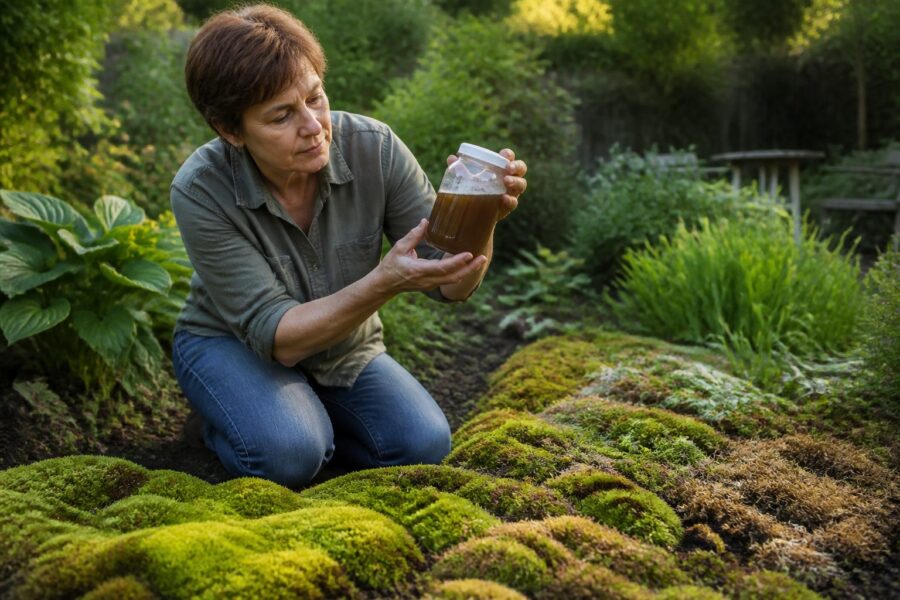
Compost tea sounds like a harmless upgrade for moss, because it is “natural” and smells like garden success. In practice, it is one of the fastest ways to trigger the moss compost tea risks people blame on “bad moss” when the real problem is too much food.
Mosses are not picky because they are fragile, they are picky because their whole body is a living surface that absorbs whatever lands on it. When you pour nutrient rich liquid over that surface, you change the chemistry, the microbes, and the competition in minutes.
I have watched a healthy patch go from crisp green to slick and brown after one enthusiastic feeding, especially in urban trays and rooftop setups. The fix is rarely more inputs, it is usually less nutrition and better control of water, light, and airflow.
Why moss doesn’t like rich feeding
Moss does not have roots that can filter and ration nutrients the way vascular plants do. It drinks through leaves and stems, so strong solutions hit every cell at once.
Many common urban mosses evolved on bark, stone, mortar, and sandy soil where nutrients arrive in tiny pulses. That history is why nutrient sensitivity is normal for moss, not a rare exception.
Compost tea is unpredictable, even when you brew it carefully, because the nutrient load depends on the compost, water, temperature, and brew time. Two batches made in the same bucket can behave like two different products.
When nitrogen and dissolved organics spike, moss often responds by growing softer and looser tissue that dries out faster later. People interpret that as “it grew, then it failed,” but it is a stress response followed by collapse.
A low nutrient substrate is not a handicap for moss, it is the condition that keeps competitors slow. If you want moss to win, you usually starve everything else, then tune moisture so moss stays active.
What compost tea changes on the moss surface
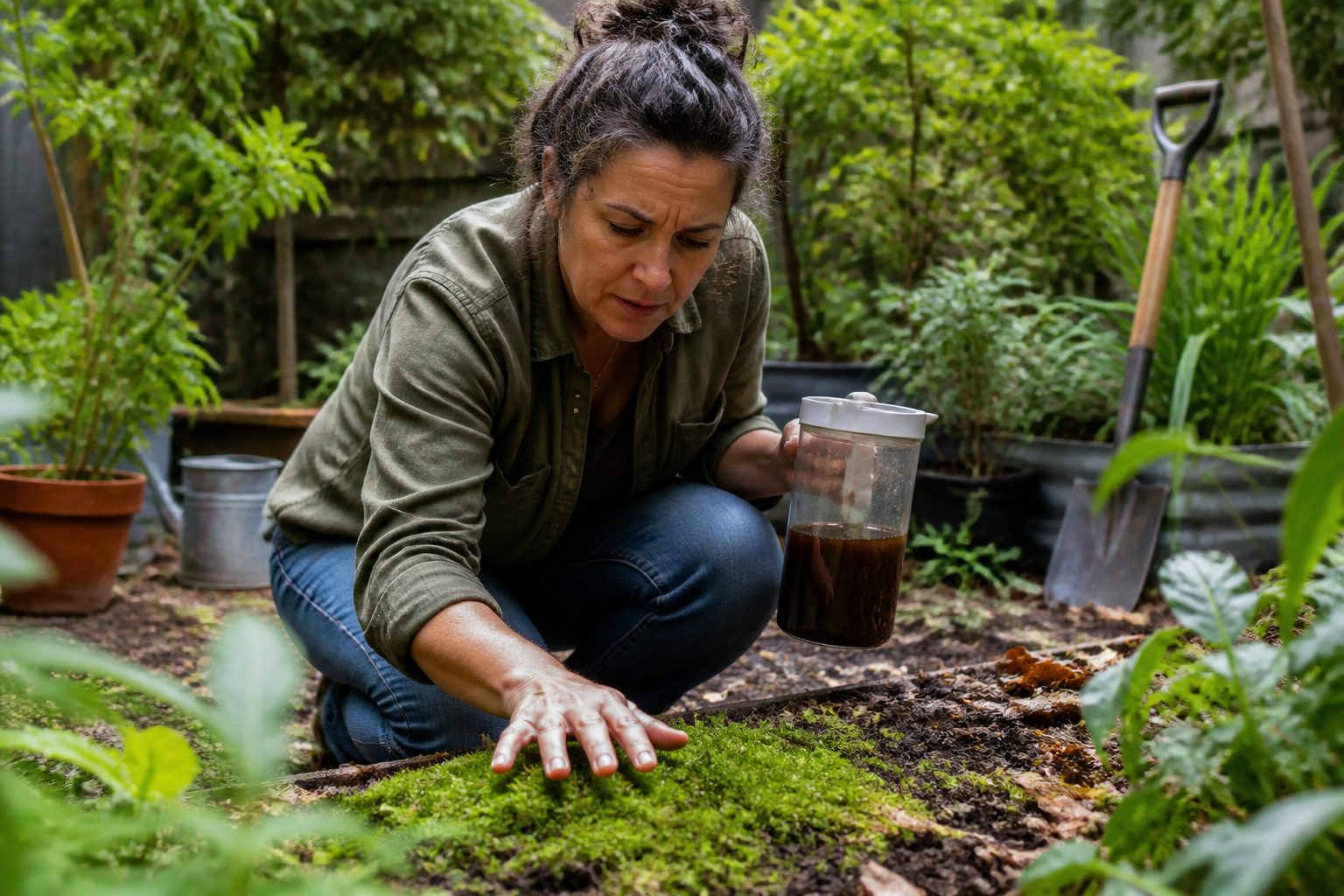
The moss surface is a thin boundary layer of water, acids, salts, and microbes that shifts with every misting. Compost tea dumps dissolved nutrients and microbial biomass into that layer and pushes it out of its normal range.
One immediate change is osmotic stress, where salts in the tea pull water out of moss cells instead of hydrating them. Even if the moss looks wet, the cells can act dehydrated and stop photosynthesizing well.
Another change is pH drift, because teas can swing acidic or alkaline depending on the inputs and aeration. Moss species that tolerate city rainwater may still react badly when their surface pH shifts quickly.
The sticky organic fraction in tea can glue dust and spores onto the moss canopy. That coating blocks light, slows gas exchange, and creates perfect real estate for algae growth.
Compost tea also feeds bacteria and fungi that were not dominant on the moss before, and some of them produce biofilms. Biofilms are the start of the slick, slimy look that makes people reach for even more “treatments.”
Common signs of overfeeding: slime, algae, and dieback
Overfed moss rarely fails quietly, it usually turns shiny, slippery, or patchy within a week or two. Those are classic moss compost tea risks, and they show up fastest in enclosed terrariums, shaded courtyards, and misted wall panels.
Algae is the big tell, because algae loves the same wet surfaces moss needs, but it responds faster to nutrients. If you see a green film that wipes off on your finger, you are watching the system tip away from moss.
| Symptom you see | What it usually means | What to do first |
|---|---|---|
| Slick clear slime on tips | Bacterial biofilm fueled by dissolved organics | Rinse with clean water and increase airflow |
| Green film that smears | Algae growth from excess nitrogen and light plus moisture | Reduce nutrients, shorten wet periods, add gentle shade |
| Blackened or brown centers | Smothering, low oxygen, or salt stress in the cushion | Flush thoroughly and thin the mat if it is packed |
| Fast growth then crispy collapse | Soft tissue from feeding followed by drying stress | Stop feeding and stabilize humidity and mist timing |
| White crust on surface | Mineral salts left behind after evaporation | Switch to low mineral water and rinse repeatedly |
If you already used it: immediate steps to reduce damage
Stop all feeding right away, even if the moss looks like it “needs a boost” after the first dose. Doubling down is how a minor algae issue turns into a full wipeout.
Flush the moss gently with clean water, ideally rainwater, distilled, or reverse osmosis, and let it drain. You want to dilute salts and dissolved organics without blasting the plants off the surface.
If the patch is on a tray or panel, tilt it so water runs across and off instead of pooling. Standing water keeps the nutrient soup in contact with the moss and keeps oxygen low.
Increase airflow, because most slime problems are worse when the surface stays wet all day. A small fan across a moss wall, set on low, often does more than any additive.
Cut back light intensity for a week if algae is already present, because algae can outcompete moss under strong light when nutrients are high. After the flush period, return to steady moderate light so moss can recover without another growth spike.
Better alternatives: water quality and microclimate tuning
If you want moss to spread, start with water, because water is the delivery system for every dissolved problem. Tap water with high hardness can leave a crust that mimics fertilizer burn even when you never feed.
Rainwater is great when you can collect it cleanly, but avoid roof runoff from old asphalt or metal flashing if it smells or stains. Distilled or reverse osmosis water is boring, and boring is exactly what moss likes.
Microclimate beats products, especially in urban settings where wind, heat, and reflective surfaces dry moss fast. A patch that dries in two hours will never look stable, no matter what you pour on it.
Aim for repeated short wettings that rehydrate the moss, followed by time to breathe. Constant wetness encourages algae growth, while constant dryness stalls moss metabolism.
When people ask me for a “moss fertilizer,” I usually tell them to buy a cheap hygrometer and watch the numbers for a week. Once you control humidity swings, most moss starts acting like it wants to live.
How to support growth with light and moisture, not fertilizer
Moss growth is mostly a math problem of hydration time plus usable light, not a nutrient problem. When moss stays hydrated long enough under decent light, it builds tissue from carbon dioxide and trace minerals already present.
Use bright shade or filtered sun outdoors, because harsh midday sun can cook a wet moss mat and bleach it. Indoors, a simple LED panel on a timer is easier to manage than a sunny window that swings hot and cold.
Moisture should come as mist or fine spray, not heavy watering that floods the cushion and traps silt. Flooding also washes spores and algae cells into the mat where they settle and multiply.
Watch how the moss dries, because a slow dry with airflow often beats a fast dry in still air. If the surface stays wet but smells sour, you have too little oxygen, not too little fertilizer.
Once you tune light and moisture, your system naturally stays closer to a low nutrient substrate condition. That low nutrient baseline is what keeps moss ahead of algae and weedy seedlings.
Safe spot-testing before you treat a whole area
If you insist on trying any additive, treat it like paint testing, not like feeding a garden bed. Pick a small corner that matches the main patch and mark it with a stone or a bit of tape nearby.
Use a weak dilution and apply once, then wait at least ten days, because moss reacts slowly and algae reacts fast. If you cannot wait, you are not testing, you are gambling.
Take phone photos in the same light each day, because your eyes adjust and you will miss early shine or film. Look for tip burn, color shift to yellow, or that slick look that signals biofilm.
Keep everything else identical during the test, including mist schedule and light exposure. If you change three things at once, you will not know what caused the result.
If the test area does worse or grows algae, treat that as your answer and stop. Moss does not reward stubbornness, and nutrient sensitivity is a hard limit for many species.
- Test area no larger than a postcard
- Single application, then wait 10 to 14 days
- Dilution at least 1:20 for any tea-like liquid
- Daily photo from the same angle
- Stop at first sign of slickness or green film
- Flush with clean water if tips yellow
Substrate refresh methods that don’t spike nutrients
When moss stalls, the problem is often compaction, dust loading, or mineral crust, not starvation. Refreshing the surface without feeding is the clean way to reset conditions.
For tray culture, lift the moss gently and rinse the underside to remove trapped fines, then lay it back on a clean base. This sounds fussy, but it is less risky than pouring nutrients into a clogged mat.
On soil based patches, top dress with washed sand or crushed granite fines, because those materials keep a low nutrient substrate and improve drainage. Avoid compost, worm castings, and potting mixes, because they keep releasing nutrients for months.
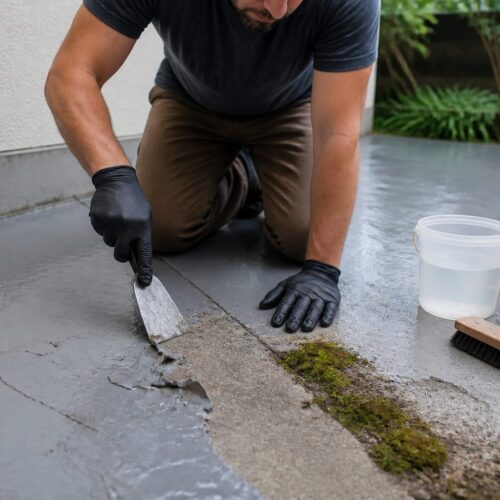
On concrete and mortar, scrub off algae and dust with a soft brush and clean water, then let the surface dry slightly before rehydrating. A clean mineral surface gives moss a fair shot without feeding its competitors.
If you need a binder for fragments, use plain water and patience rather than sugary mixes or dairy hacks that rot. Those folk recipes often create the same biofilm problems as compost tea, just with a worse smell.
Long-term care plan for stable, low-nutrient conditions
A good moss plan looks boring on paper, because it is mostly consistency. You keep minerals low, keep moisture predictable, and keep the surface clean enough for light and gas exchange.
Start by choosing water that leaves little residue, then commit to it for months. Switching between hard tap water and rainwater can create alternating crust and flush cycles that stress the mat.
Set a mist schedule based on drying time, not on the clock, and adjust with seasons. In a hot week, moss may need two short sprays, while in a cool shaded week it may need only one.
Do routine cleaning before problems explode, like gently removing leaf litter, soot, and bird droppings that add nutrients in ugly bursts. Urban moss fails all the time because of unnoticed nitrogen inputs, not because it lacked compost tea.
Track algae as a warning light, because algae growth almost always means the system got richer or stayed wet too long. When algae shows up, respond by flushing and drying slightly faster, not by reaching for more products.
When to start over vs. rehabilitate
Rehab works when the moss still has green tips and the structure is intact, even if the base looks rough. If the mat is mostly brown but springs back green after a soak, it still has a chance.
Start over when the patch is dominated by slime, smells sour, or peels off in sheets with black mush underneath. At that point you are managing a microbial mat more than a moss colony.
If you see thick algae that returns within days after rinsing, assume the surface stays too nutrient rich for moss to compete. Remove the top layer, clean the substrate, and rebuild with a low nutrient substrate approach.
Also start over if the underlying surface is wrong, like potting soil that keeps growing weeds and fungi. Moss can tolerate a lot, but it cannot outlast a substrate that leaks nitrogen every time it gets wet.
When you restart, reuse any healthy fragments you can, but rinse them well and quarantine them on clean sand first. That step prevents you from carrying the same nutrient and algae problem into the new setup.
Conclusion
Compost tea often backfires on moss because moss absorbs what you apply and because its competitors respond faster to rich inputs. The moss compost tea risks are real, and they show up as slime, algae growth, mineral crust, and steady dieback.
If you want moss to spread, build a stable microclimate with clean water, steady light, and a low nutrient substrate that stays breathable. When you treat moss like a surface ecosystem instead of a hungry plant, it usually rewards you with slow, durable coverage.