

Moss is tough outdoors, but propagation in a tray or closed box can fail fast when humidity swings. The whole game is keeping new growth damp enough to root, while staying dry enough to avoid fuzz and slime.
Most beginners lose moss to one of two problems, crispy dry out or a moldy, stagnant container. Moss propagation humidity control is the middle path, and it is easier when you watch a few simple signals instead of chasing perfect numbers.
I like setups that can survive a missed day, because real life happens and moss does not care about your calendar. If your system needs constant babysitting, it will eventually fail, even if your technique is solid.
This guide sticks to home and balcony conditions, using lids, bags, and cheap meters rather than lab gear. You will also get a practical moss misting schedule, basic ventilation for moss, and low drama ways of preventing mold in moss.
What humidity does for moss while it’s establishing
Moss has no true roots, so fresh fragments rely on surface contact and constant moisture to attach. High humidity keeps the tiny leaf tips hydrated long enough for rhizoids to grab the substrate.
When humidity drops, moss dries from the edges first, and those edges are where new growth often starts. Repeated dry cycles slow attachment and can leave you with a green center and dead brown margins.
Humidity also changes how quickly your substrate loses water, especially shallow trays and thin pads. A covered container turns evaporation into a loop, and that loop is what makes propagation forgiving.
The downside is that stagnant humidity traps spores, bacteria, and algae in the same cozy space as your moss. If you push humidity without airflow, you are basically inviting a biology experiment to move in.
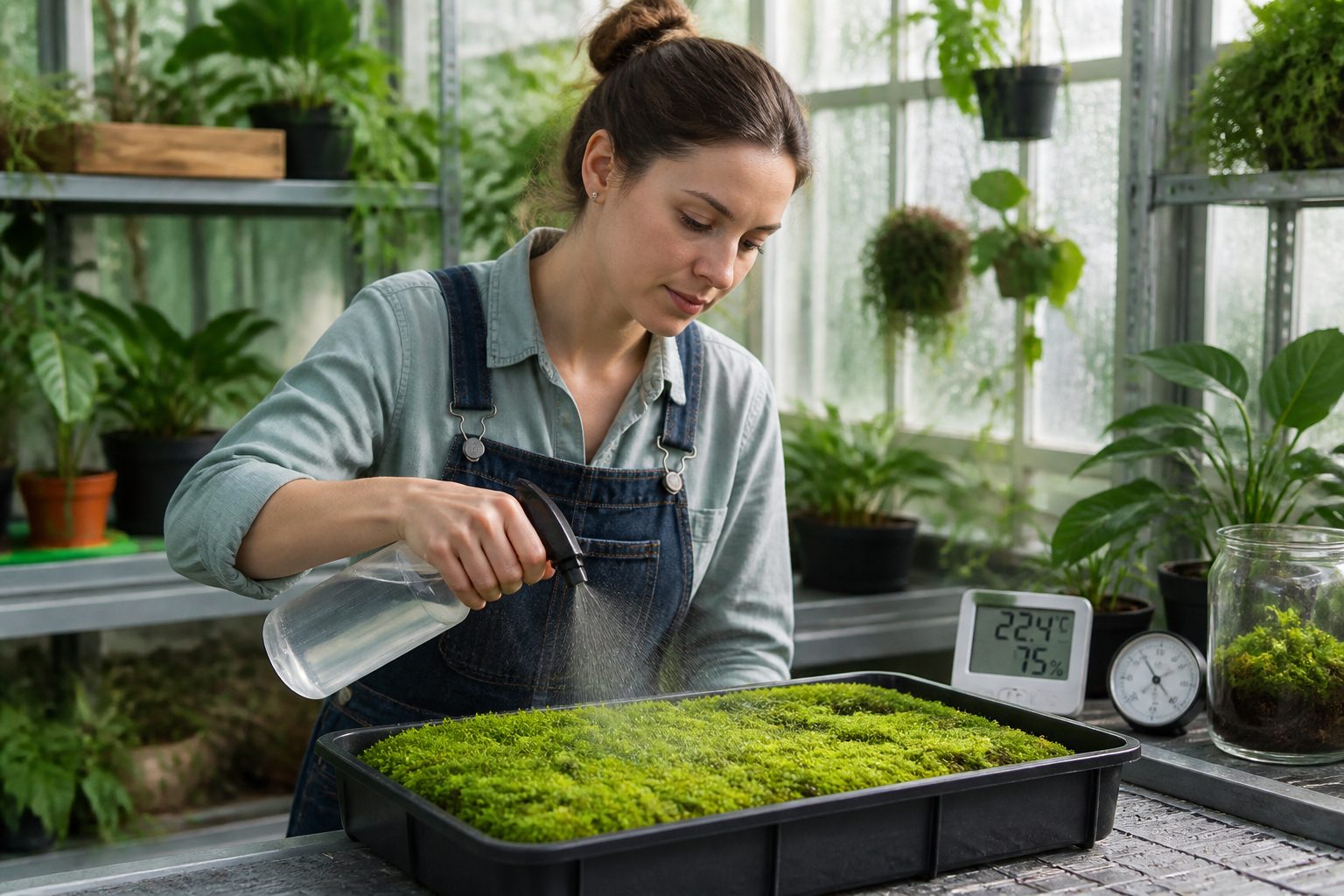
Good moss propagation humidity control is less about maximum moisture and more about stable moisture. Stable means the surface stays damp, but it does not stay glossy wet for days at a time.
The humidity range that works in most home and balcony setups
For most indoor bins and balcony mini greenhouses, 80 to 95 percent relative humidity works during the first couple weeks. That range keeps fragments from crisping while still allowing you to vent briefly each day.
If you can only measure one thing, measure how fast the surface dries after misting, not the air number. A cheap digital hygrometer helps, but the moss will tell you the truth sooner than the screen will.
In a sealed clear tub, humidity often sits near 95 percent and that can be fine if you manage condensation and airflow. In a mesh shelf greenhouse on a balcony, you might hover closer to 70 percent, so you compensate with more frequent light misting.
Temperature changes the whole situation because warm air holds more water, and containers fog up differently. If your bin sits in sun for an hour, humidity spikes and then crashes when the lid cools, and moss hates that swing.
A practical target is damp moss with a lid that shows light, scattered condensation in the morning and clears a bit by afternoon. If the walls are raining all day, you are too wet, and if they look bone dry all day, you are too dry.
Misting vs. soaking: when each method helps (and when it backfires)
Misting raises humidity fast and rehydrates the top millimeter of moss, which is where new green tips show up. Soaking recharges the whole substrate, which matters when your base dries out faster than you notice.
The backfire is predictable, misting too often keeps the surface glossy and encourages algae, while soaking too often leaves the moss sitting in water and turns it mushy. A good moss misting schedule uses misting for maintenance and soaking as a reset after a dry spell.
| Method | Best use during propagation | Common failure mode |
|---|---|---|
| Light misting | Daily humidity boost in covered tubs or balcony domes | Constant wet sheen, algae film, fuzzy mold |
| Bottom watering | Keeping substrate evenly damp without wetting moss tips | Soggy base, stagnant smell, slow attachment |
| Full soak and drain | Rehydrating after crispy edges or a hot dry day | Waterlogged pads, slime patches, gnats |
| Targeted syringe or pipette | Spot fixing dry corners and raised ridges | Overcorrecting one spot, puddles under moss |
Building a low-cost humidity system with common household items
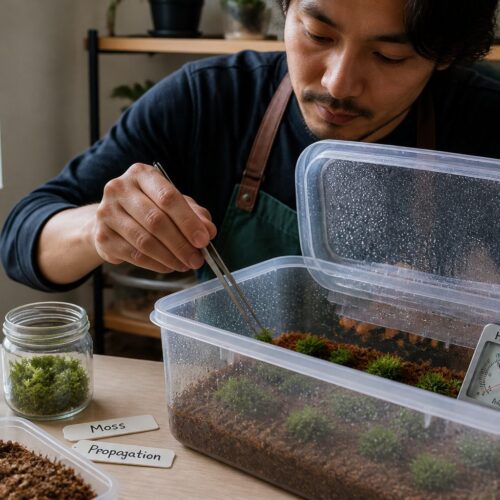
The cheapest reliable setup is a clear plastic shoebox with a lid, plus a shallow drainage layer and a removable tray. You can use a takeout container as the tray so you can lift the moss out to inspect it without tearing it up.
For the drainage layer, I like aquarium gravel or chunky perlite, then a piece of plastic mesh or an old window screen to keep the substrate from mixing in. That gap holds extra water and buffers humidity without keeping the moss pad submerged.
A zip top bag works for tiny samples, but it overheats easily on a balcony and it goes anaerobic fast. If you use bags, keep them shaded and open them daily, because ventilation for moss matters more in a bag than in a tub.
On a balcony, a clear storage bin under a table is better than a mini greenhouse in full sun. Sunlight through plastic can cook your moss in minutes, even when humidity looks perfect on paper.
Add a small hygrometer inside the container, but do not chase the number every hour. Use it to learn your baseline, then make small changes, like propping the lid 2 millimeters or misting one extra time.
Ventilation basics: how to add airflow without drying everything out
Ventilation for moss is about short exchanges of air, not a constant breeze. You want to dump stale air and excess spores, then return to a stable humid pocket.
If your container is sealed, crack the lid for five to ten minutes once or twice a day, and longer if you see heavy condensation. If your container is already leaky, focus on keeping the substrate evenly damp and stop over-misting the surface.
- Crack the lid 5 to 10 minutes each morning
- Wipe pooled condensation off the lid edge
- Prop one corner with a chopstick for a small vent gap
- Keep containers out of direct sun and heater drafts
- Use a tiny USB fan outside the tub, not blowing into it
- Rotate the tub weekly so one side does not stay wetter
Condensation clues: reading the lid, walls, and surface moisture
Condensation is your free humidity gauge, and it is more useful than a single RH reading. The pattern on the lid tells you whether the system is balanced or stuck in a swamp.
Tiny beads on the walls that come and go during the day usually mean your moss is in a safe zone. Thick fog that never clears means the air is saturated and you probably need more vent time.
If you see big droplets raining onto the moss, you can get localized rot spots where drops keep landing. Tilt the lid slightly or wipe it, because preventing mold in moss often starts with stopping drip points.
Check the moss surface itself, and aim for damp and matte rather than shiny. A shiny surface after hours usually means you are over-misting or the substrate is too wet under the pad.
Dry corners are common because airflow sneaks in at lid seams, especially on cheap bins. Fix corners with a pipette and then adjust the lid fit, because corner crisping is a sign your humidity control is uneven.
Preventing mold and algae during propagation (without harsh products)
Mold usually shows up when you combine constant surface wetness with zero airflow, plus a bit of organic debris. Algae shows up when light is strong and the surface stays glossy wet, especially on nutrient rich mixes.
The first move is always mechanical, vent longer, wipe condensation, and stop misting for a day while keeping the base damp. Most minor outbreaks fade when the container stops acting like a sealed terrarium.
Remove dead leaves, twigs, and old potting soil bits before you start, because they feed the problem. If you collected moss from pavement cracks, rinse grit off gently, because street dust can carry a lot of spores.
Use clean water, and if your tap water smells like chlorine, let it sit overnight or use filtered water. I avoid strong disinfectants because they can burn tips and set growth back, and you will not notice until a week later.
If you need a mild intervention, increase ventilation for moss and reduce light intensity before you reach for any spray. A simple change like moving the tub back from a bright window often cuts algae more than any treatment does.
Humidity troubleshooting: crispy tips, slimy patches, and stalled growth
Crispy tips mean the surface is drying faster than the moss can recover, even if the substrate below is wet. That often happens when the lid leaks on one side or when a fan or heater dries the air around the container.
Fix crisping by rehydrating once with a soak and drain, then switch to lighter misting and better lid sealing. If you keep blasting the surface with heavy mist, you will trade crisping for algae.
Slimy patches usually mean water is pooling under the moss, so the pad stays oxygen starved. Lift the moss, blot the base with paper towel, and rebuild with a drainage layer so humidity stays high without standing water.
Stalled growth often comes from low light or from a container that stays too wet to breathe. Moss can stay green and do basically nothing for weeks if it never gets a brief dry down and fresh air.
If you see white fuzz on the substrate but the moss looks fine, treat it as an airflow issue first. Extend your daily vent time and cut your moss misting schedule in half for a few days, then reassess.
Humidity changes by substrate type (rock, bark, fabric, and mixes)
Rock holds almost no water, so humidity has to do most of the work during establishment. On stone, you want higher ambient humidity and more frequent light misting until rhizoids grip.
Bark is tricky because it can stay dry on the surface while holding moisture inside, and that mismatch confuses your routine. Pre soak bark, then let it drain well, because a wet core with a dry face can lead to crispy edges.
Fabric and felt backings wick water evenly, which makes humidity control easier but raises mold risk if airflow is weak. Use thinner layers and vent daily, because thick wet fabric can sour fast.
Soil based mixes hold water longer, and they are the easiest place to grow algae. If you use any potting mix, keep it lean, avoid fertilizer, and rely on ventilation for moss to keep the surface from staying glossy.
My favorite propagation base is a thin layer of sphagnum or coco coir over drainage, topped with a flat mesh so the moss stays in contact without sinking. That setup gives stable humidity without turning the bottom into a swamp.
A weekly humidity routine you can actually stick to
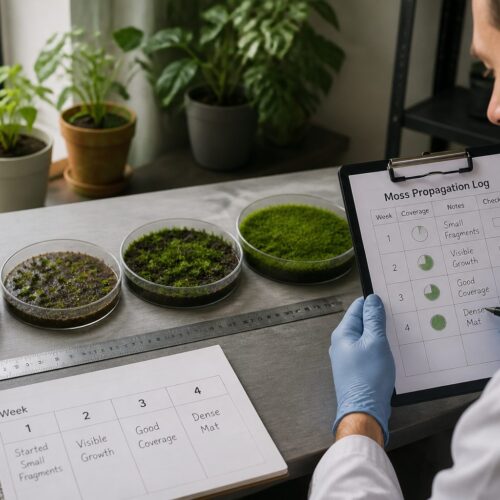
Pick a routine that matches your container style, because a sealed tub and an open balcony tray need different habits. I plan for one daily check that takes under a minute, plus one deeper check on the weekend.
On weekdays, vent the container briefly, scan for shiny wet areas, and mist only if the surface looks matte dry. If you keep a consistent moss misting schedule, you will start to recognize what normal looks like in your setup.
Midweek, lift one corner of the moss gently and check the substrate, because surface appearance can lie. If the base is wet enough to squish, skip misting and increase ventilation for moss that day.
Once a week, wipe the inside walls and lid if you see heavy condensation or drip lines. This one habit does a lot for preventing mold in moss, because it removes spores and stops water from raining onto the same spot.
Also once a week, rotate the container or shift it a few feet, since light and drafts are rarely even. Small moves prevent one side from staying too dry, which is a common hidden failure in moss propagation humidity control.
Conclusion
Humidity control is the difference between moss that attaches and moss that slowly falls apart at the edges. Aim for stable dampness, brief daily air exchange, and a surface that dries slightly between wettings.
When problems show up, adjust your environment before you blame the moss, because most issues are about stagnant air or constant wet sheen. If you treat moss propagation humidity control as a simple routine instead of a perfect number, your success rate jumps fast.