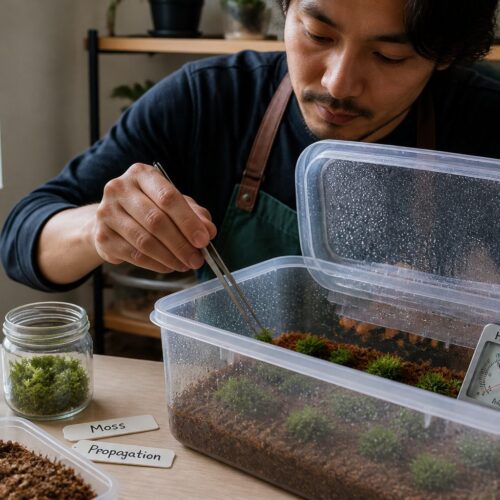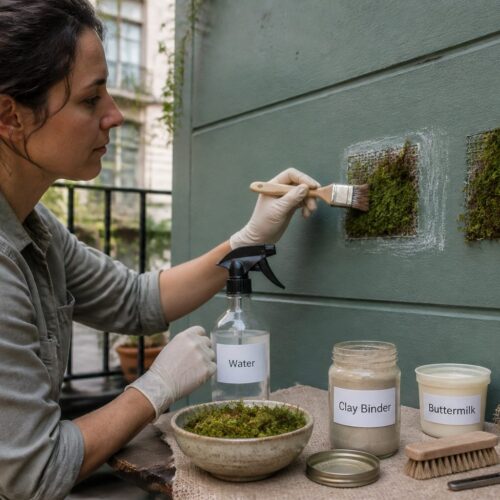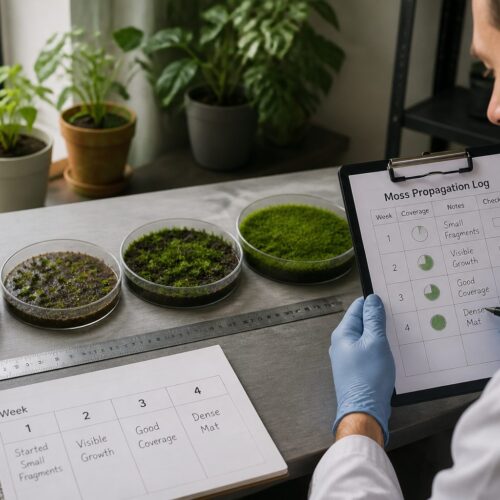

Moss is picky about light, but it is not picky in the way most houseplants are. If you get the brightness roughly right, moss will usually handle the rest as long as it stays evenly moist.
The problem is that “shade” and “sun” mean different things in a city courtyard, on a balcony, or behind a window. This guide focuses on moss propagation light requirements you can actually measure with quick observations and a couple simple tools.
I have seen people fail with fancy misting systems and succeed with a takeout container on a north window. Light is often the difference, especially in the first two weeks when moss is trying to attach and restart growth.
You do not need a lab meter to make good decisions, but you do need a plan. Once you know what “bright shade” looks like in your own space, low light moss growth becomes predictable instead of random.
Why light matters for moss propagation (without overcomplicating it)
Moss has no roots, so it cannot chase water and nutrients the way vascular plants do. Light is what powers the slow rebuild after you move or blend moss, and low light can stall that restart.
During propagation, moss needs enough brightness to photosynthesize, but not so much that it dries between mistings. That balance is the core of moss propagation light requirements in real homes and real outdoor corners.
Think of moss as a thin solar panel sitting on a wet sponge. If the panel sits in harsh sun, the sponge dries and the panel overheats, and if it sits in deep shade, the panel barely charges.
Most urban moss failures blamed on “bad spores” are really a light and moisture mismatch. People keep the moss wet, but the light is so low that it stays dull and never thickens.
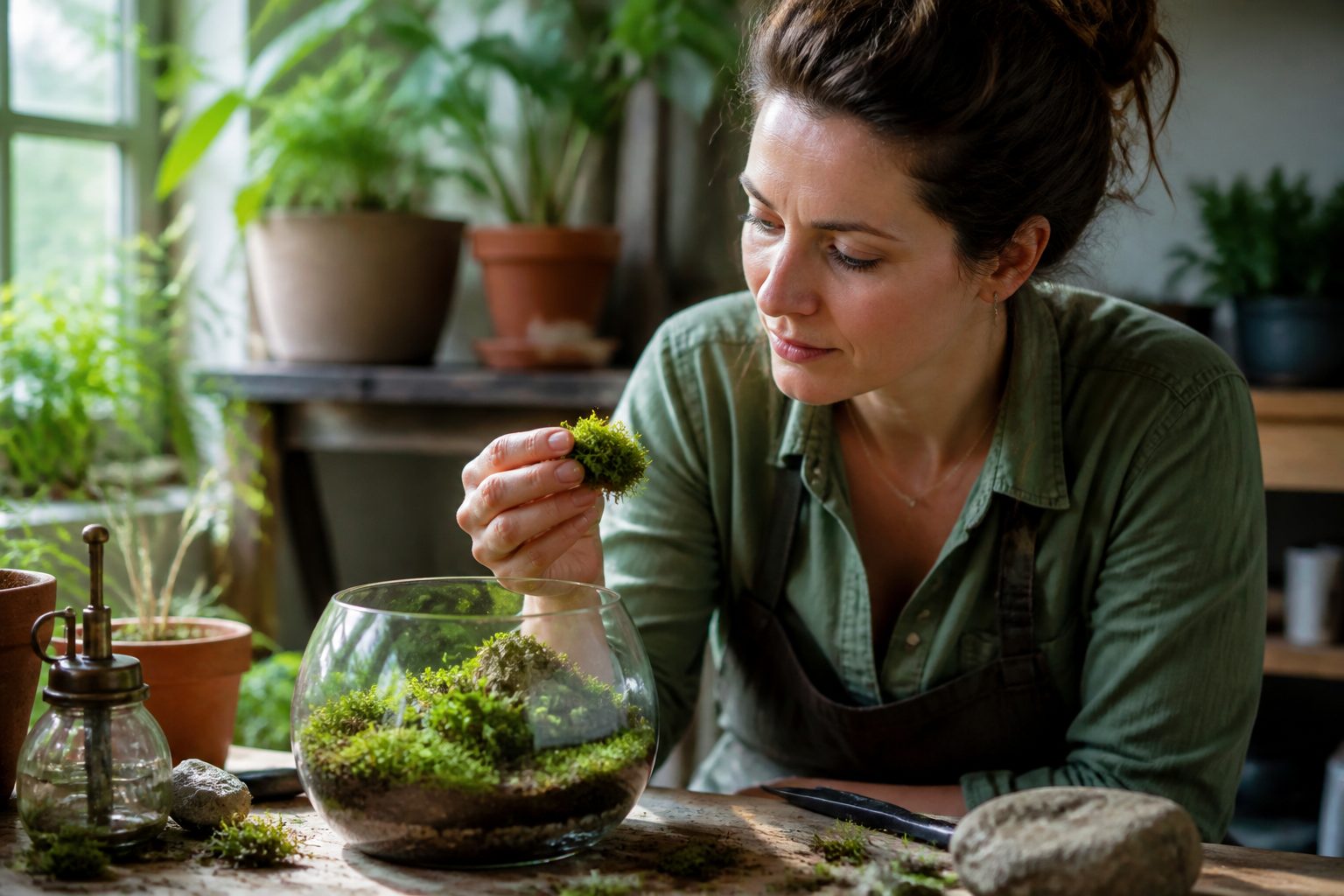
On the other side, people put moss where succulents would thrive, then wonder why it turns pale and crispy at the edges. Moss can handle a lot once established, but propagation is the fragile stage.
The good news is that moss gives fast feedback if you watch it closely for a week. You will see color shifts, surface texture changes, and new tips that tell you whether to move it closer to light or back it off.
How to read your space: quick shade mapping you can do in 10 minutes
Shade mapping for moss is just a quick way to label the bright and dim zones you already have. You can do it with your eyes, your phone camera, and a sticky note, and it takes less time than mixing a slurry.
Pick three times that match your schedule, morning, mid afternoon, and evening. Stand where you want the moss and look for moving sun patches, reflected glare from walls, and any spot that stays evenly lit.
Use your phone camera in manual exposure if you can, and lock exposure on the moss spot. Walk two steps left and right, and you will see the exposure swing, which is a quick proxy for brightness differences.
Mark the spot with a note that says “A” for always shaded, “B” for bright shade, “C” for sun hits, and “D” for full sun. The labels matter because moss propagation light requirements change a lot between B and C.
Reflections are the sneaky part in cities, especially near light colored stucco, metal railings, and glass. A spot can look shaded but still run hot and bright because it receives bounced light for hours.
If you have a cheap lux meter, use it, but do not obsess over perfect numbers. Your map is what you will use later when you need to move trays, rotate a moss wall, or decide whether to add grow lights for moss.
The best light range for most urban moss setups
Most urban growers do best with bright shade, meaning strong ambient light without direct sun on the moss. That is the sweet spot where low light moss growth still has enough energy to thicken, but evaporation stays manageable.
If you like numbers, aim for a moderate lux range and treat it as a starting point, not a law. Different species, surfaces, and humidity levels shift the target, so use the table to pick a safe first placement.
| Setup | Practical brightness target | What it usually looks like |
|---|---|---|
| Outdoor shaded wall or courtyard | 3,000 to 10,000 lux | Open shade, sky visible, no sun patches on moss |
| Balcony bright shade under an overhang | 5,000 to 15,000 lux | Bright ambient light, reflections possible, moss stays cool |
| Indoor window, north or shaded east | 1,000 to 5,000 lux | Readable light all day, no sharp sunbeam on the tray |
| Beginner LED grow light at close distance | 2,000 to 8,000 lux | Even light circle, moss stays damp between mistings |
| Direct sun during establishment | Above 20,000 lux | Hard shadows, fast drying, bleaching risk |
Direct sun vs. bright shade: what moss can handle during establishment
During establishment, direct sun is the fastest way to turn a promising patch into a crunchy green stain. Even “morning sun only” can be too much if the surface is thin, dark, or mounted on heat holding stone.
Bright shade is different because the light is high but the surface temperature stays lower. That temperature difference matters because moss dries from heat and airflow as much as from brightness.
If you insist on some sun, give moss filtered sun through a lattice, sheer curtain, or leafy shrub. Dappled sun can work, but it is less forgiving than people expect, especially with fresh slurry.
Hardscape makes sun harsher in cities, because brick, concrete, and metal reradiate heat after the sun moves. A patch that looks fine at noon can dry out at 4 pm from stored heat, even in shade.
Wind is the other half of the direct sun problem on balconies and rooftops. Strong light plus steady breeze can outpace your misting, and moss does not get a second chance if the growing tips desiccate.
If you want a simple rule, establish in bright shade first, then test sun after you see new growth. Once it knits to the surface and thickens, you can push light a bit higher and watch for bleaching.
Indoor windows: choosing the right orientation and distance from glass
Indoors, the window is your sun, and orientation decides everything. North windows usually give the steadiest conditions for moss propagation light requirements, while south windows can roast a tray in an hour.
East windows are friendly if you control the first two hours of sun with a sheer curtain or by placing the tray off to the side. West windows are harder because late day sun is hotter, and apartments often trap heat then.
Distance from glass matters more than most people think because brightness drops fast as you move back. A tray that struggles at three feet can wake up at one foot, even though the room looks “bright” to you.
Glass also creates a microclimate, and the air right against it can swing from cold to hot. If you see condensation on the glass in winter, keep moss slightly back so it does not sit in a cold draft zone all night.
Window screens, tinted glass, and insect mesh reduce light enough to matter for low light moss growth. If your moss looks stuck indoors, try removing one layer between it and the sky, or move it closer before you buy lights.
For small containers, I like a bright window with the tray rotated every couple of days. Rotation prevents one side from stretching and keeps growth even, especially when the light comes from a single direction.
Using grow lights: simple settings that work for beginners
Grow lights for moss are useful when your windows are dim, blocked by buildings, or inconsistent. They also make propagation repeatable, which is nice if you are building multiple trays or a moss graffiti panel.
You do not need purple blurple lights, and you do not need high wattage fixtures meant for tomatoes. A basic white LED bar or panel works, as long as you can set distance and a steady timer.
- Use a 5000K to 6500K white LED for easy color checking
- Start with a 10 to 12 hour daily timer
- Place the light 8 to 16 inches above the moss surface
- Aim for even coverage, avoid a tight hot spot
- Raise the light first if tips pale, lower it first if growth stalls
- Keep airflow gentle, avoid a fan pointed at the tray
Signs your moss is getting too much light (and what to change first)
The most common high light sign is bleaching, where green turns yellow green, then straw colored. People often misread this as “dryness,” but it can happen even when the surface stays wet.
Crispy edges and a rough, shrunken texture also point to excess brightness or heat. If the moss looks like it is tightening into itself by midday, the light load is too high for your humidity.
Another clue is algae taking over the wet surface while the moss stalls. Strong light plus constant wetness can favor algae films, and they can smother young moss fragments before they attach.
Change one thing first, reduce peak light before you change watering. Move the tray back from the window, add a sheer curtain, or shift outdoors from sun hit to true bright shade.
If you use grow lights for moss, raise the fixture or cut the timer by two hours. Do not jump from 12 hours to 6 hours in one day, because moss can also stall if you suddenly starve it.
After you reduce light, watch for green returning at the tips within a week. If color improves but growth still looks slow, you can fine tune moisture and airflow next, but fix brightness first.
Signs your moss is not getting enough light (and how to boost it safely)
Low light moss growth can look deceptively healthy because it stays green and soft. The giveaway is that it does not thicken, and new tips look long, thin, or slightly glossy instead of dense.
Another sign is a constant “wet towel” look with no texture, even after weeks. Moss in very low light often stays alive but never knits to the surface, which makes it easy to peel or wash off.
Boost light in small steps, because a big jump can scorch a shade adapted patch. Move the container closer to the window by six inches, or shift from deep shade to bright shade using your shade mapping for moss notes.
If you use LEDs, lower the light a few inches or extend the timer by one hour. Keep misting steady while you adjust, so you can tell whether the change helped instead of mixing variables.
Pay attention to color and posture over three to five days, not just one afternoon. When light is right, the moss looks more upright and textured, and you start seeing tiny fresh points that look brighter green.
If nothing changes after a week, the issue may be surface chemistry or drying cycles, not just brightness. Still, it is smarter to confirm moss propagation light requirements first because it is the easiest lever to pull.
Light changes by season: adjusting your setup through the year
Seasonal shifts matter more in cities because buildings create sharp sun corridors. A spot that is safe in June can get blasted in October when the sun angle drops and sneaks under an overhang.
Indoors, winter light is weaker, but heaters drop humidity and speed drying. That combo can fool you, because you see less sun yet the moss dries faster, especially near radiators and forced air vents.
In spring, trees leaf out and turn a bright spot into deep shade in a week. If your moss slows down suddenly in May, check whether the canopy changed the light more than you changed your care.
Summer brings long days and higher UV, and windows can magnify heat on a sill. If you propagate indoors in summer, I prefer moving the tray a bit back and using a small reflective white board to soften light.
Fall is a great time for outdoor establishment because sun is gentler and nights are cooler. If you can keep surfaces damp, moss often attaches faster outside in fall than it does under indoor lights.
Make seasonal adjustments like you adjust clothing, small and based on conditions. A five minute recheck of shade mapping for moss each season keeps you from chasing problems that are really just sun angle changes.
A practical 7-day light tuning plan for newly placed moss
Day 1 is placement day, and I start conservative with bright shade or a gentle indoor window. The goal is steady moisture and no bleaching while the fragments settle and start to grip.
Day 2 is observation day, and you should look at the moss at the same time morning and evening. If it dries bone dry between checks, lower light or increase humidity, because establishment needs consistency.
Day 3 is your first micro adjustment, only one step. Move the tray a little closer to the window or lower the LED slightly if growth seems stalled, or back off if the surface looks hot and tight.
Day 4 is a texture check, and you are looking for plumpness and a slightly more upright look. If the moss stays flat and slick, it probably needs more brightness than it is getting.
Day 5 is a stability check, and you should lightly mist and see whether pieces stay put. If fragments float or slide, you may be overwatering, but it can also mean the light is too low to drive attachment.
Day 6 is a peak light test, where you watch the brightest part of the day for stress signs. If you see paling at the tips or rapid shrinking, reduce peak exposure even if the rest of the day looks fine.
Day 7 is your decision day, and you lock in the spot for the next two weeks. Write down what worked, because moss propagation light requirements are easier the second time when you have notes from your own space.
Conclusion
Good moss propagation is mostly about choosing a brightness level that supports photosynthesis without forcing constant rescue misting. Bright shade, careful window placement, or simple grow lights for moss cover most urban situations.
Do a quick shade mapping for moss once, then use it whenever you start a new tray or patch. When you treat light as something you can adjust in small steps, low light moss growth becomes a manageable problem instead of a mystery.
If you remember one thing, protect fresh moss from peak sun until it thickens and grips the surface. After that, you can experiment, but start with stable moss propagation light requirements and let the plant tell you the rest.