
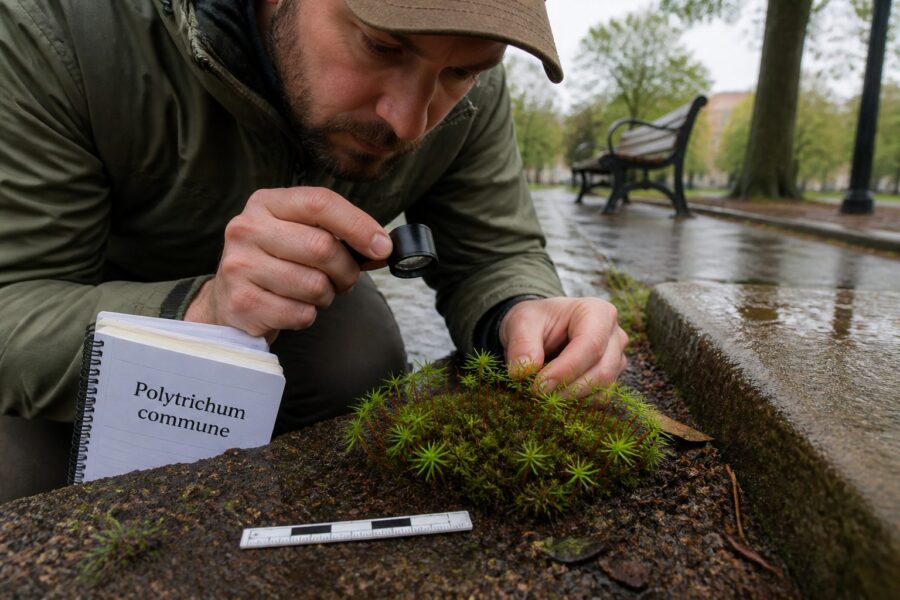
Walking through a city park, you might often overlook the small, green wonders thriving beneath your feet. Among these, a particular moss stands tall and distinctive, making its presence known even in bustling urban environments. This is Polytrichum commune, often called common haircap moss or Polytrichum star moss, a fascinating bryophyte that catches the eye with its upright growth.
Identifying this large urban moss can be a rewarding experience for any nature enthusiast or aspiring urban moss cultivator. Its unique features set it apart from other ground covers, offering clear clues for Polytrichum commune identification in city parks. We’ll explore what makes this moss so recognizable and how you can spot it on your next stroll.
Understanding Polytrichum commune identification city parks involves looking closely at its structure, habitat, and reproductive parts. By the end of this article, you will feel confident distinguishing this remarkable species from its less prominent relatives. Get ready to discover the secrets of this resilient and beautiful star moss.
Size and Upright Growth: Why Polytrichum Stands Out
Polytrichum commune is not your average low-lying moss; it really reaches for the sky in the bryophyte world. This large urban moss often forms dense, extensive mats that can feel surprisingly springy underfoot. You will notice its individual stems can grow several inches tall, sometimes even up to a foot in ideal conditions.
This impressive height is a key characteristic for Polytrichum commune identification city parks. Most other mosses you find in urban areas stay much closer to the ground, creating a flatter, more carpet-like appearance. The upright growth of Polytrichum commune gives it a distinct texture and visual presence.
The stems themselves are unbranched or sparingly branched, creating a compact, almost bristly look. These stems are tough and wiry, providing the structural support needed for their vertical ambition. This robust architecture helps the moss compete effectively in various environments, including those found in city parks.
When you observe a patch of Polytrichum star moss, it often looks like a miniature forest, with numerous individual plants standing shoulder to shoulder. This collective upright growth creates a visually striking effect, especially when wet and glistening. It’s hard to miss once you know what to look for.
The sheer size and vertical orientation make it a standout species for common haircap moss identification. Its ability to grow so tall helps it capture more sunlight in shaded areas, giving it an advantage over shorter mosses. This characteristic also contributes to its common name, as its dense growth can resemble a thick head of hair.
Leaf Structure: The Lamellae You Can See With a Lens
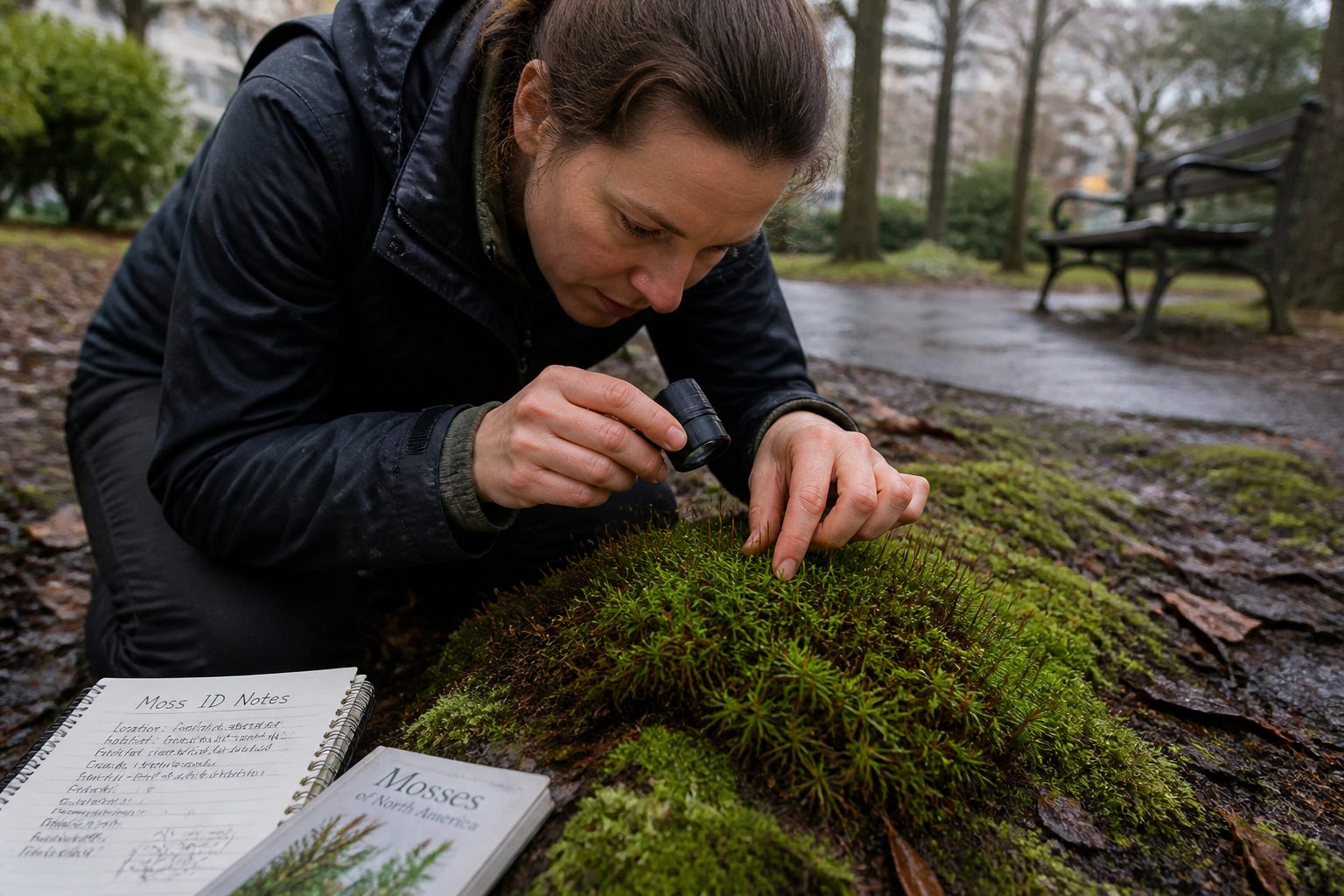
When you get up close to Polytrichum commune, its leaves reveal some truly remarkable features, especially if you have a hand lens. The leaves are stiff, linear, and typically dark green, often appearing somewhat rigid. They are arranged spirally around the stem, giving the plant a star-like appearance from above when dry.
The most distinctive characteristic for Polytrichum commune identification city parks lies on the upper surface of these leaves. Here, you will find microscopic, parallel plates of cells called lamellae. These lamellae run longitudinally along the leaf, creating a textured surface that looks almost ribbed.
These lamellae are essentially tiny, vertical fins that increase the surface area of the leaf for photosynthesis. They also play a crucial role in water retention, trapping moisture and protecting the photosynthetic cells from desiccation. This adaptation allows the Polytrichum star moss to thrive in drier periods, even in exposed urban settings.
To observe the lamellae, gently peel off a single leaf and examine its upper surface with a magnifying glass or a low-power microscope. You will see the distinct lines running down the leaf, which are unmistakable once you know what they are. This feature is a definitive marker for common haircap moss identification.
The presence of these lamellae is a key differentiator from many other mosses, which typically have smooth leaf surfaces. This specialized structure gives Polytrichum commune a slightly duller, almost velvet-like sheen when dry, compared to the glossy appearance of some other mosses. It’s a fascinating adaptation for survival in diverse conditions.
Sporophyte and Cap Features for Confident Identification
The reproductive structures, or sporophytes, of Polytrichum commune offer some of the most striking and reliable features for identification. These structures emerge from the top of the female plants, standing tall above the leafy gametophyte. They are quite distinctive and easy to spot when present.
A mature sporophyte consists of a long, reddish-brown stalk called a seta, topped with a capsule (sporangium) where spores develop. The capsule itself is box-like and angular, typically four-sided, which is a unique trait among many mosses. This angular shape helps distinguish it immediately.
| Feature | Description for Polytrichum commune | Typical Alternative in Other Mosses |
|---|---|---|
| Seta (Stalk) | Long, stiff, reddish-brown | Shorter, thinner, various colors |
| Capsule Shape | Angular, typically 4-sided | Round, oval, or cylindrical |
| Calyptra (Cap) | Hairy, golden-brown, covers entire capsule | Smooth, hood-like, often falls off early |
| Peristome Teeth | Short, blunt, 64 in number | Longer, pointed, often 16 or 32 |
Where It Grows in Urban Parks: Soil, Woodland Edges, and Path Margins
You might be surprised by the versatility of Polytrichum commune in urban environments. This robust large urban moss isn’t picky about pristine wilderness; it thrives in a variety of disturbed and semi-natural habitats found within city parks. Knowing its preferred growing spots significantly aids Polytrichum commune identification city parks.
One of the most common places to find Polytrichum star moss is on open, acidic soils, particularly those that stay consistently damp. Think about the edges of woodland patches within a park, where trees provide some shade but sunlight still filters through. These areas often have the right balance of moisture and light.
You will also frequently spot it along the margins of paths and trails, especially where foot traffic has compacted the soil slightly. This moss seems to tolerate moderate disturbance quite well, often colonizing bare ground where other plants struggle. Its dense growth can even help stabilize soil and prevent erosion.
Look for it in areas where drainage is good but moisture is retained, such as slight depressions or gentle slopes. It prefers full sun to partial shade, adapting its growth form slightly depending on light intensity. This adaptability makes common haircap moss identification relatively easy in diverse park settings.
I often see it flourishing near old stone walls or under the drip lines of large trees, where consistent moisture is available. These microclimates within parks create ideal conditions for its establishment and spread. Its widespread presence means you do not need to venture far to find it.
Common Confusion Species Within the Polytrichum Genus
While Polytrichum commune has many distinctive features, identifying it can still be tricky because several other species within the Polytrichum genus look quite similar. These close relatives often share the upright growth habit and the general appearance of Polytrichum star moss. Careful observation is key to accurate common haircap moss identification.
One common confusion species is Polytrichum juniperinum, also known as juniper haircap moss. This species typically has leaves that are sharply pointed and often reddish or brownish at the tips, especially when dry. Its leaves are also more strongly recurved or curved backward compared to the straighter leaves of Polytrichum commune.
Another look-alike is Polytrichum strictum, which often grows in Sphagnum bogs and peatlands, though you might encounter it in very damp park areas. Its leaves are usually narrower and more appressed (pressed against the stem) when dry, giving the plant a more slender appearance. The overall texture can also feel softer.
Polytrichum formosum, or the handsome haircap moss, is another species that can cause confusion. It shares the tall, erect stems and lamellate leaves of Polytrichum commune. However, its leaves tend to be wider and more abruptly pointed at the tip, and the capsule is typically less sharply angled than that of Polytrichum commune.
Distinguishing these species often requires examining the leaf margins, the presence or absence of a border of differential cells, and the specific shape of the capsule. Even experienced bryologists sometimes need a microscope to confirm the exact species. For Polytrichum commune identification city parks, focusing on the combination of strong upright growth, visible lamellae, and the four-sided capsule is your best bet.
How to Tell It Apart From Atrichum and Other Tall Acrocarps
Beyond its own genus, Polytrichum commune can be mistaken for other tall, upright mosses, particularly those in the genus Atrichum. Both are acrocarps, meaning their sporophytes develop at the tips of their main stems, and both can form extensive patches. However, some clear differences help with Polytrichum commune identification city parks.
The most reliable distinction lies in the leaf structure, specifically the presence of lamellae on Polytrichum leaves. Atrichum species, like Atrichum undulatum (common smoothcap moss), have distinctively wavy or undulate leaves that lack these lamellae. Their leaves also tend to be broader and more translucent.
- Check for lamellae on leaf surface
- Examine leaf undulations (wavy vs. straight)
- Observe capsule shape (angular vs. cylindrical)
- Note the calyptra (hairy vs. smooth)
- Compare stem rigidity and branching patterns
Growing Polytrichum: Substrate and Moisture Requirements
Cultivating Polytrichum commune, this impressive large urban moss, can be a rewarding endeavor for urban gardeners and bryophyte enthusiasts. Understanding its specific needs for substrate and moisture is essential for successful growth. It is not as simple as just grabbing a clump and hoping for the best.
Polytrichum star moss prefers acidic soil conditions, typically with a pH range between 4.5 and 6.0. You can replicate this by using a substrate composed of peat moss, pine bark fines, or a mix specifically formulated for acid-loving plants. Avoid alkaline soils at all costs, as the moss will not thrive there.
The substrate needs to be well-draining yet capable of retaining consistent moisture. A sandy loam or a mix with a good proportion of coarse sand and organic matter works well. This balance prevents waterlogging while ensuring the moss does not dry out too quickly, especially in warmer climates.
Maintaining consistent moisture is perhaps the most critical factor for common haircap moss identification. Polytrichum commune loves humidity and damp conditions, but it also dislikes standing water that can lead to rot. Regular misting or a location with naturally high humidity, like a shaded area in a terrarium or a damp corner of a garden, is ideal.
When you are attempting Polytrichum commune identification city parks, you will notice it often grows in spots with reliable moisture, like near leaky faucets or under dense tree canopies. Mimicking these conditions in your cultivation setup will greatly increase your chances of success. Good air circulation is also beneficial to prevent fungal issues.
I find that replicating its natural habitat, which often includes partial shade to full sun, is also important. While it can tolerate some direct sun, prolonged exposure without adequate moisture can stress the plant. Aim for a spot that gets morning sun and afternoon shade, or dappled light throughout the day, for optimal growth.
Consider adding a layer of small pebbles or gravel at the bottom of your container to improve drainage, especially if you are using pots. This prevents the substrate from becoming waterlogged and provides a stable base for the moss to establish its rhizoids. These tiny root-like structures anchor the moss but do not absorb nutrients like true roots.
You can propagate Polytrichum commune by carefully transplanting small clumps from an existing patch, ensuring you take some of the underlying soil. Gently press the transplanted moss onto your prepared substrate and keep it consistently moist for the first few weeks. It usually takes some time for the moss to fully establish itself in a new location.
Remember that mosses grow relatively slowly, so patience is a virtue when cultivating Polytrichum star moss. Avoid using fertilizers, as mosses are sensitive to high nutrient levels and can be harmed by them. Their nutritional needs are met through rainwater and airborne particles.
Finally, protect your cultivated patches from heavy foot traffic or excessive disturbance, especially during their establishment phase. While Polytrichum commune can tolerate some impact in its natural habitat, a newly planted patch needs time to settle in. Enjoy watching your large urban moss thrive and spread.
Conclusion
Polytrichum commune, the common haircap moss or Polytrichum star moss, is truly a standout species in the world of urban bryophytes. Its distinctive upright growth, unique lamellate leaves, and recognizable sporophytes make Polytrichum commune identification city parks a straightforward task once you know what to look for. This large urban moss offers a fascinating glimpse into the resilience of nature in human-dominated landscapes.
From its preference for acidic, damp soils in park woodlands and path margins to its unique adaptations for moisture retention, Polytrichum commune is a master of survival. Learning to distinguish it from similar species within its own genus and other tall acrocarps enhances your appreciation for bryophyte diversity. It is a rewarding skill to develop.
Whether you are a casual observer on a park walk or an aspiring urban moss cultivator, the journey of understanding Polytrichum commune adds depth to your connection with the natural world. So next time you are out, take a closer look at the green carpets underfoot. You might just find yourself admiring a miniature forest of common haircap moss.
Its presence is a testament to the fact that even in our busiest cities, pockets of wild beauty persist and thrive, waiting to be discovered. This resilient star moss invites us to slow down and appreciate the intricate details of life on a smaller scale. Keep an eye out for this remarkable plant on your next urban adventure.