
Moss will grow on wood without any fancy tricks, but getting it to stay put is the hard part. If you have ever watched a nice patch slide off a log after the first dry week, you already know the problem.
Reliable moss propagation on wood comes down to contact, steady moisture, and picking wood that does not fight you. I like methods that look simple because they usually hold up better outdoors.
Wood is not a neutral surface, it swells, dries, sheds tannins, and slowly changes as fungi move in. When you plan for those changes, moss attachment on fences, planters, and logs becomes repeatable instead of random.
How moss interacts with wood: moisture, texture, and decay
Moss does not have true roots, so it cannot grab wood the way ivy does. It anchors with rhizoids and by growing into tiny surface pockets where water lingers.
That means the first job is not feeding moss, it is giving it a stable, damp landing zone. If the underside dries out even once at the wrong time, the rhizoids stop committing to the surface.
Wood that cycles between soaking wet and bone dry tends to pop moss loose. The fibers expand after rain, then shrink in sun, and that movement breaks early attachment.
Even small movement can be enough, especially on thin boards that heat up fast. A log in deep shade can feel steady, while a fence board in afternoon sun can act like it is breathing.
Texture matters more than people think, because a slick board gives moss nothing to bite into. Rough grain, checks, and weathered ridges hold fragments in place long enough for new growth to knit together.

If you run your fingers over the wood and it feels like a countertop, expect a longer timeline. If it feels like a dry sponge or old rope, moss usually finds a way to hook in.
Decay is a double edged tool for moss growers. Slightly softened wood can hold moisture and offer better grip, but active rot can undercut the whole pad and make it peel away.
I treat “softened” as a surface effect, not a structural one, because you still want the wood to stay intact for years. If you can push a fingernail deep into it, you are past the sweet spot.
Tannins and resins can slow establishment, especially on fresh cut cedar, redwood, or pine. I have seen moss stay green for weeks on resinous wood and then crisp at the edges because the surface kept shedding water.
Some of that is chemistry, and some of it is just water behavior on oily grain. If water beads up, moss will struggle because it needs a thin film of moisture, not droplets that roll away.
Wood also hosts other organisms, and moss is competing from day one. Algae, molds, and lichens can claim the same damp texture and change how the surface holds water.
That competition is not always bad, but it changes the pace. If you see a slick green film forming under your moss, it usually means the surface is staying wet without enough airflow.
Moss prefers consistent humidity more than constant wetness, which is easy to mix up. A damp surface that dries slowly is better than a soaked surface that dries in an hour.
When you understand that rhythm, you stop chasing moss with heavy watering and start managing the microclimate. That is when wood stops being a gamble and starts acting like a predictable substrate.
Choosing the right wood: untreated, aged, and naturally rough options
The best wood type for moss is usually untreated and already weathered. Old fence rails, fallen hardwood branches, and rough bark slabs are easier than new lumber.
Weathered wood has already done its dramatic shrinking and swelling, so the surface is calmer. It also tends to have tiny cracks that hold fragments like little shelves.
Avoid pressure treated boards and anything with stain or water repellent, because moss hates those residues. If you must use a planter box, pick plain cedar or fir and accept that it may take longer.
Even “safe” finishes can be a problem if they are designed to repel water, because moss is basically a water management project. If the wood is meant to shed rain, it will also shed your moss.
Hardwoods like oak and maple often work well once they age a bit, since the surface checks and holds water. Fresh oak can leach tannins, so I prefer pieces that have already sat outside for a season.
If you only have fresh hardwood, you can still use it, but you should expect a slower first month. I like to let rain rinse it naturally, because that is what the moss will experience later anyway.
Softwoods vary a lot, and this is where people get frustrated. Cedar and redwood resist decay, which is great for structures, but their oils can make early moss attachment slower.
That does not mean you cannot grow moss on them, it just means you need more patience and better surface prep. If you can find cedar that has already grayed outdoors, it behaves much more like a cooperative surface.
Bark can be excellent if it is stable and not flaking off in sheets. If the bark is loose, the moss will attach to the bark and then drop when the bark falls away.
I test bark by tapping and tugging at the edge, because loose bark is obvious once you look for it. If you hear hollow spots or feel it shift, treat it as temporary and do not build your main patch there.
For decorative logs, I like pieces that have natural grooves and shallow pits. Those shapes protect edges from wind and create damp pockets that stay active between waterings.
For fences and vertical boards, I prefer wood with visible grain and small cracks rather than perfectly milled faces. A rough sawn board almost always outperforms a smooth planed board for moss attachment.
If you are scavenging wood, avoid anything that smells strongly of chemicals or has a waxy feel. Moss is sensitive, and you do not want to spend weeks watering a surface that is quietly repelling it.
Also think about how long you want the project to last, because moss will outlive flimsy wood. A stable piece that stays in place and does not flex in the wind gives moss a much better chance to knit in.
Preparing wood surfaces: cleaning, pre-soaking, and conditioning
Preparation is where most reliable moss propagation on wood starts, because you are controlling the first week of contact. I clean off loose dirt and algae, then I rough up glossy spots with a stiff brush or coarse sandpaper.
I keep the cleaning simple because soap residue can be just as annoying as dirt. Plain water and elbow grease usually beat chemical cleaners for moss work.
If the wood has flaky old paint or stain, I remove it completely in the area where moss will go. Moss does not like unstable layers, and it will detach the moment that coating starts to peel.
Pre-soaking wood is worth the time, especially for new planters and dry logs that drink water fast. I soak or hose the surface until it stops repelling water, then I let it drain so the moss does not sit in a puddle.
On very dry wood, you can watch the water disappear as if it was poured onto a towel. That first soak is not really for the moss, it is for the wood so it stops stealing moisture from the moss pad.
If I am working with boards, I like to soak them flat and then stand them up to drain. That helps me avoid the “wet on top, dry underneath” problem that happens when water only hits one face.
Conditioning is basically giving the wood a few days to settle into a damp routine before you ask moss to commit. A shaded corner with occasional misting is enough to make the surface more welcoming.
I also look for sharp ridges and splinters that will lift an edge like a tiny lever. If a ridge is high enough to create an air gap, it is high enough to start peel-off later.
| Prep step | How to do it | What it fixes |
|---|---|---|
| Scrub and rinse | Stiff brush plus plain water, no soap | Removes grit that blocks contact |
| Light roughing | Coarse sandpaper or wire brush on slick grain | Adds texture for rhizoids and fragments |
| Pre-soaking wood | Soak 30 to 120 minutes, then drain | Reduces rapid drying in the first week |
| Conditioning period | Keep wood shaded and damp for 2 to 5 days | Stabilizes moisture before placement |
| Spot leveling | Shave high ridges that lift moss edges | Prevents air gaps under patches |
If the wood is very dirty or has embedded grit, I do a second rinse after it dries once. Drying reveals what is still stuck, and it is easier to brush off when you can see it clearly.
For logs with loose fibers, I brush in the direction of the grain so I do not tear out big chunks. The goal is texture, not damage, because moss wants stability more than softness.
When I rough up a surface, I focus on the spots where moss edges will land. A strong edge bond is more valuable than a perfectly prepared center.
If you are attaching moss to a planter, think about splash and soil creep during prep. A quick wipe of the planter rim after watering can keep mud from building a slippery layer under the moss.
One small trick is to mist the wood right before placement so it is evenly damp, not just wet in streaks. Moss responds well to that uniform film of moisture, and it helps you press the pad flat without dry pockets.
Best moss species traits for wood-based projects
For wood projects, I pick mosses that tolerate drying and recover fast after a soak. Species that grow as tight mats usually attach better than tall, loose tufts.
Tight mats behave like living felt, and they can handle a little movement in the wood without tearing. Tufted moss can look great, but it catches wind and dries unevenly, which makes it lift sooner.
Sheet forming mosses are easier to press flat onto curved bark or a rounded log. When a moss naturally creeps, it will bridge small gaps and knit over thread marks.
Creeping growth is especially helpful on fences because boards shift over time. A moss that slowly crawls can re-connect small separations that would otherwise become permanent bare lines.
Urban growers often succeed with common sidewalk and tree base mosses because they already handle heat and irregular watering. If you can lift a patch from a shady brick edge and it stays together, it often does well on wood too.
I also pay attention to where the moss was living, because that tells you what it can tolerate. Moss from a damp creek rock may sulk on a fence, while moss from a dry retaining wall often adapts quickly.
Look for clean, pest free material with minimal soil stuck to the underside. Soil trapped under a pad can turn into a slimy layer that lifts the moss off the wood.
If you do have soil stuck in the underside, you can gently crumble it away while the moss is damp. I avoid rinsing aggressively because it can tear the rhizoid layer that helps the moss reattach.
I avoid very thick, spongy moss clumps for fences because they dry from the outside in and curl. Thin mats start slower but they do not peel as easily when wind hits them.
Thicker clumps can still work on horizontal logs where you can keep them evenly moist. On vertical wood, thickness becomes a sail, and the center often stays damp while the rim turns crispy.
Color is not the best indicator of health, because many mosses look brown when dry and green when wet. What I care about is whether the patch rebounds quickly after misting and stays cohesive when lifted.
If you are collecting moss, take small amounts from multiple spots rather than stripping one area. That gives you a mix of micro-variants and usually improves your odds on a new surface.
For decorative projects, I like to mix a couple of textures so the wood does not look like a flat carpet. Just keep the mix realistic, because mosses that want different moisture levels will separate over time.
Propagation options: fragments, sheets, and pressed patches
Fragments are the most forgiving method when the wood surface is irregular. You press chopped bits into damp grain and let them spread, which looks messy at first but fills in over time.
I like fragments for old bark, knotty wood, and anything with deep cracks. Those surfaces naturally trap pieces, so you get lots of starting points without fighting a big sheet.
Fragments also let you work around problem spots like sap pockets or slick streaks. If a small area fails, you can reapply without disturbing the whole project.
Sheets give instant coverage, but they demand better contact and steadier moisture. If the sheet bridges a hollow, that hollow becomes a dry pocket and the sheet shrinks away from it.
When sheets fail, they usually fail cleanly, which feels dramatic because you lose a big piece at once. That is why I only use sheets when I can control shade and watering for at least a few weeks.
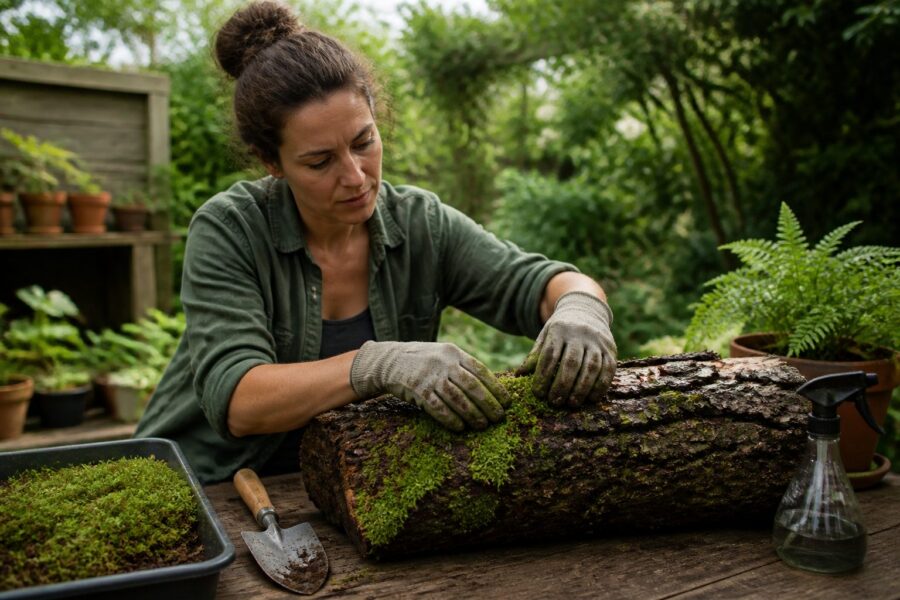
Pressed patches are my favorite compromise for moss propagation on wood because you can build a mosaic that conforms to the surface. I cut pads into palm sized pieces and press the edges tight so the seams do not lift.
The mosaic approach also lets you rotate pieces to match the grain and contour. If one patch is thicker, I place it where the wood dips so the surface ends up more even.
Skip the blender slurry approach on vertical wood unless you can keep humidity high for weeks. Slurry dries into a crust on boards and the new growth often stays thin and patchy.
Slurry can work in a sheltered terrarium-like setup, but outdoors it is usually a disappointment. The first sunny day turns it into a brittle layer that flakes off before it can establish.
When I use fragments, I keep them slightly larger than confetti, more like small flakes. Dust sized pieces wash away, while larger flakes can lodge in texture and start new tips.
I also avoid packing fragments too thick, because they can smother each other and trap slime. A thin scatter pressed into texture tends to outperform a thick pile sitting on top of the wood.
With pressed patches, I try to keep the underside in full contact, even if the top looks uneven. Moss can tolerate a bumpy surface, but it cannot tolerate air gaps underneath.
If you are working on a log, placing patches along the natural grain lines makes the seams less obvious later. Moss growth will blur the edges, but starting with a natural layout speeds up that blend.
Whatever method you choose, plan for a slow start and then a sudden improvement. Moss often looks unchanged for weeks, and then it starts to knit and hold as if it decided overnight.
Tie-down and contact methods: thread, mesh, and gentle pressure
Moss tie-down methods matter because moss needs contact more than it needs fertilizer. If wind can get under an edge, it will, and the pad will dry and curl like a potato chip.
Contact also matters because moss does not like to “reach” for the surface, it likes to grow along it. When the pad is pressed flat, new growth naturally spreads into the wood texture instead of hovering above it.
I prefer simple pressure methods that you can remove later without ripping the moss. The goal is steady contact for two to six weeks, then you can back off.
If you leave ties on too long, they can cut grooves or create permanent lines where moss cannot expand. I check tie-downs regularly and loosen them as soon as the patch feels anchored.
- Cotton thread wraps around logs
- Jute twine for rough bark grip
- Plastic mesh pinned at corners
- Stapled burlap strips on fences
- Flat stones or tiles as gentle weights
- Wooden slats screwed as press bars
Cotton thread is nice because it eventually breaks down, but it can also loosen too fast in heavy rain. If you use cotton, wrap more often than you think you need, because slack is the enemy.
Jute twine grips well on bark, but it can shrink and tighten as it wets and dries. I avoid tying it like a tourniquet, because you want pressure, not strangulation.
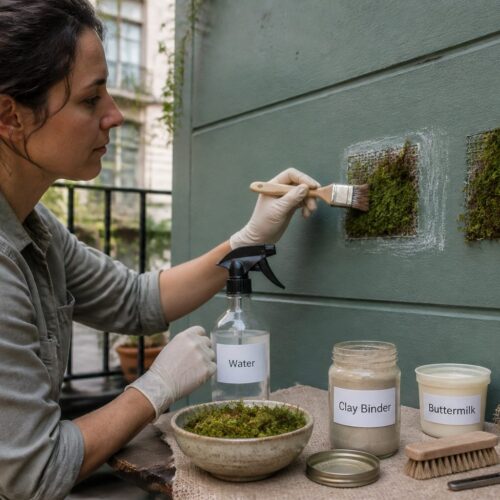
Plastic mesh works well when you need even pressure across a broad area. I like mesh for fences because it holds edges down without needing a hundred individual wraps.
If you pin mesh, pin it to the wood, not through the moss, because punctures can create weak spots. The mesh should hover just enough to press, not scrape.
Burlap strips are great for rough surfaces and they hold moisture, but they can also grow mold if airflow is poor. I use burlap as a temporary bandage and remove it once the moss grips.
Weights like stones are underrated on horizontal wood because they are gentle and easy to adjust. I place them on the edges rather than the center so the rim does not curl up first.
Press bars work well on flat surfaces like planter sides, especially if you want a clean, controlled look. A thin slat spreads pressure evenly and prevents the tie-down from cutting into the moss.
No matter what you use, check after the first windy day and the first hot day. Those are the two moments when weak contact shows itself quickly.
Keeping wood evenly moist without waterlogging
Even moisture is the make or break factor during establishment. If you water hard once a week, the wood swells and dries, and the moss loses contact.
I think of moisture like background noise rather than an event. A little bit often keeps the moss calm, while big swings keep it stressed and brittle.
I mist or sprinkle lightly and often, aiming for damp wood rather than dripping moss. On hot days, two short waterings beat one long soak.
Morning watering is usually safer than evening watering if your area is prone to mold. If nights are cool and still, wet moss can stay wet too long and invite algae films.
Waterlogging is a real problem on planters and flat topped logs where water pools. Standing water turns the underside of the moss sour and encourages algae that forms a slick layer.
If you see a patch looking dark, slick, and slimy instead of velvety, reduce the soaking and improve drainage. Moss can handle being damp, but it cannot handle being submerged in stale water.
If you are working on a vertical fence, take advantage of gravity and water from above. A slow drip line or a hose set to a gentle trickle for ten minutes can keep things damp without blasting fragments away.
I like to aim water above the moss so it runs down like rain, because direct spray can lift edges. The goal is to wet the wood and let the moss drink from contact, not to pressure wash the surface.
In containers, I like to keep the moss zone separate from the soil zone so splash does not bury it. A strip of wood or a raised rim helps keep potting mix from creeping under the moss edge.
Splash is sneaky because it happens slowly, one watering at a time. A little soil under the moss becomes a slippery layer, and then the whole patch starts to skate.
If your climate is dry, a temporary shade cloth can reduce watering needs more than any spray bottle routine. Cutting wind and sun exposure is often more effective than trying to out-water the weather.
If your climate is humid, focus on airflow and avoid keeping moss constantly wet. In humid air, moss can stay hydrated with less watering, and too much water can push algae growth faster than moss growth.
Rain is helpful, but it can also be violent on new fragments. After a heavy storm, I check for washed-out spots and press any loosened pieces back into place while everything is still damp.
As a general rule, if the wood looks damp but not shiny, you are close to the right level. If it looks glossy and dripping, you are probably feeding algae more than moss.
Placement: shade, drip lines, and airflow around structures
Placement decides how hard you will have to work later, so I pick the shadiest, most protected spot that still gets rain. North and east exposures usually behave better than south facing boards.
Shade is not just about light, it is about temperature stability. A shaded board stays cooler and holds moisture longer, which reduces the swell-and-shrink cycle that breaks attachment.
Drip lines can help or hurt, depending on how they hit the wood. A steady roof drip can keep moss alive, but a heavy splash zone can erode fragments and carve channels.
If you have a harsh drip, you can redirect it with a small chain, a splash block, or a different placement. Moss likes gentle, frequent wetting, not a daily hammering in the same spot.
Airflow matters because stagnant humidity can push algae and mold onto the wood. I like gentle air movement, like the edge of a porch, rather than a sealed courtyard corner.
Too much wind is also a problem, because it dries edges and works under tie-downs. If a spot feels like a wind tunnel, expect to do more re-pressing and more frequent misting.
Heat radiating off masonry can dry wood fast, even in shade. If your log sits against a brick wall, leave a small gap so the back side can cool and dry evenly.
Masonry also changes moisture patterns, because it can absorb water and then release it as heat later. That delayed heat can dry your moss at the exact time you think it should be safe.
On fences, I avoid the lowest foot near soil because mud splash coats the moss. If you want moss near the ground, add a small gravel strip to cut down on dirt spray.
Ground-level areas also get more foot traffic and accidental bumps, which is enough to break early attachment. A patch higher up is easier to protect while it is still knitting in.
Think about sprinklers and hose patterns too, because they can either help you or sabotage you. A sprinkler that hits the moss for thirty seconds and then bakes it in sun is not the same as a gentle mist in shade.
If you are placing moss on a decorative log, orient the best patches toward the direction you usually view it from. Moss will grow where conditions are right, but you can still design the first impression.
Also consider how often you can realistically water, because convenience matters. A perfect shady spot that you never visit will fail faster than a decent spot you can maintain consistently.
Once you find a placement that works, replicate it, because moss success is surprisingly repeatable when the microclimate matches. I treat each successful location like a template for the next project.
Preventing peel-off and drying edges during establishment
Peel off starts at the edge, almost every time. Once the rim dries and curls, the center follows, even if you keep watering.
Edges are exposed to wind and sun from multiple angles, so they lose moisture first. If you can keep edges flat and damp, most of the battle is already won.
I overlap pieces like shingles so water runs over seams instead of into them. When I cannot overlap, I press seams tight and tie across the seam instead of around the whole log.
Seams are basically edge zones, so treat them with the same respect as the outer rim. A seam that lifts becomes a crack that dries out the neighboring patches too.
Use smaller patches on curved wood because large sheets bridge and lift. A patch the size of your hand can conform to a log, while a dinner plate sized sheet will fight you.
Curves also mean uneven pressure, which is why tie-downs need to be adjusted as the moss settles. If one side is tight and the other is loose, the loose side will curl first.
If edges keep drying, I add a temporary humidity shield for a week or two. A strip of shade cloth or a loose plastic tent held off the moss can cut wind without trapping puddles.
The key is “held off,” because plastic touching moss can trap water and create slime. I use little sticks or spacers so the cover acts like a roof, not a wet blanket.
Watch for ants and pill bugs moving under edges, because they can wedge pads loose. If I see activity, I lift the corner, rinse, press it back, and tighten the tie down before the gap grows.
Slugs can also scrape tender new growth, especially in very damp setups. If you see shiny trails and ragged edges, reduce hiding spots and avoid leaving wet burlap on too long.
Another common cause of edge failure is uneven watering, where the center gets wet but the rim stays dry. I aim the mist at the perimeter first and let overspray take care of the middle.
If a patch starts to curl, do not wait for it to fix itself. Wet it thoroughly, press it flat, and secure it again, because curled moss rarely reattaches on its own.
Sometimes peel-off is a sign the wood is too smooth in that exact spot. In that case, I lift the patch, rough the wood lightly, re-wet, and press it back before the moss dries out.
Early on, I treat the project like it is fragile, because it is. After a few weeks of stable contact, moss becomes surprisingly tough and stops acting like it wants to slide away.
Long-term upkeep: trimming, re-pressing, and seasonal adjustments
Once the moss grabs, maintenance is mostly about keeping the wood from swinging between extremes. Summer heat and winter wind do more damage than gentle rain ever will.
Long-term success is also about accepting that moss is slow and wood is always changing. If you plan for small repairs, you will not be surprised when a corner needs attention.
I trim encroaching grasses and seedlings because they shade unevenly and lift moss as roots thicken. A simple hand pull after rain is easier than letting weeds turn into a mat breaker.
Seedlings love the same damp pockets moss loves, so they show up right where you do not want them. If you remove them early, you avoid disturbing the moss later with bigger roots.
Re-pressing is normal, especially on fences where boards warp. If a corner lifts, I wet it, press it flat, and tie it down again for another couple of weeks.
I keep a small roll of thread or twine nearby so I can fix lift immediately. Waiting until the next weekend often means the lifted edge dries hard and becomes difficult to flatten.
Wood slowly changes, and that can be good if you stay ahead of it. When a log starts to soften, I move moss to a fresher piece and keep the old log as a nursery surface.
This is especially useful if you are building a mossy look across multiple items, because you can “copy” your best patches. A healthy log becomes a donor source for future touch-ups.
Seasonal watering needs change a lot in cities because wind tunnels and reflected heat are real. In spring and fall, I often stop supplemental watering and let natural rain set the pace.
In summer, I focus on preventing crisp edges, even if the moss goes a little dormant. Moss can handle dormancy, but repeated edge curl and peel-off can permanently thin the patch.
In winter, I avoid soaking moss right before a hard freeze, because ice can lift edges as it forms. If freezing is common, I water earlier in the day so the surface can drain and stabilize.
If algae starts to take over, I reduce watering frequency and increase airflow rather than scrubbing the moss. Scrubbing usually damages the moss more than it fixes the algae problem.
Sometimes moss gets too thick in one area and starts to mound, which can trap debris and create rot pockets. A gentle thinning with your fingers can keep the surface flat and healthy.
If you are growing moss on a structure you care about, inspect the wood itself once or twice a year. Moss does not automatically cause rot, but trapped debris and constant pooling water can shorten wood life.
Over time, you will notice that the best patches are the ones you barely touch. Consistent conditions beat constant tinkering, and moss rewards patience more than intervention.
Conclusion
Reliable moss propagation on wood is mostly about choosing cooperative wood, keeping steady contact, and managing moisture like a habit. When those basics are right, the moss does the slow work of knitting itself to the grain.
Pick an untreated, rough surface, commit to pre-soaking wood, and use moss tie-down methods that stop edge lift without crushing the plant. After a month or two of steady care, you can ease off and let weather take over.
If you want one takeaway, it is that moss is not difficult, it is picky about the first few weeks. Once it settles in, it becomes one of the most low-drama, durable green covers you can put on wood.