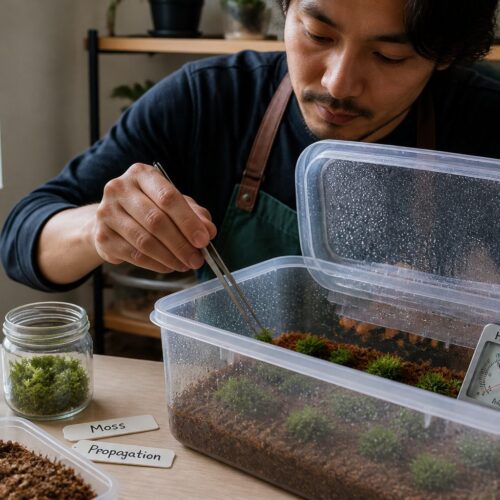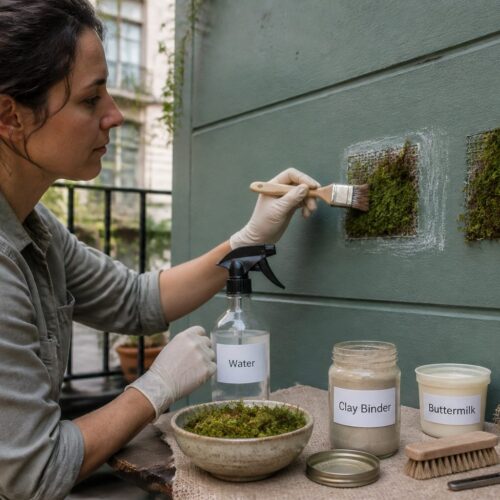


Moss is stubborn in the city because the air swings between too dry and too hot in a single afternoon. A cloche fixes that by trapping humidity right where the moss needs it.
I use cloches whenever I want faster, cleaner establishment on stone, concrete, compacted soil, or a shallow tray. Moss propagation under cloches is simple enough for a windowsill, but it scales to rooftops and courtyards.
The trick is respecting what moss likes, steady moisture on the surface, gentle light, and fresh air often enough to keep funk from building up. If you treat a cloche like a sealed terrarium forever, you will learn about preventing moss rot the hard way.
What a cloche does for moss and why it speeds establishment
A cloche holds a pocket of humid air over the moss, so the plant does not dry out between mistings. That alone can cut establishment time because moss resumes photosynthesis faster when the leaf surfaces stay hydrated.
Under cover, your substrate dries from the top down much more slowly, which matters because moss has no roots to chase deeper water. When the surface stays evenly damp, the rhizoids can grab and the fragments stop skittering around.
A cloche also reduces wind, and wind is a quiet moss killer on balconies and street level planters. Even a light breeze can strip moisture off a thin moss layer in minutes.
You also get a buffer against short heat spikes, especially on sun warmed masonry. The air under the dome can still overheat, but it changes more slowly than the open air.
For moss propagation under cloches, I like the way the cover forces me to water with intention instead of blasting everything with a hose. That slower pace reduces washout, keeps silt from burying tips, and makes the whole setup easier to read.

Choosing a cloche: DIY jars, plastic domes, and mini-greenhouses
A cloche can be a mason jar, a clear salad container, a bakery dome, or a purpose built mini greenhouse. What matters is clear walls, enough headspace that condensation does not drip constantly onto the moss, and a way to vent.
Glass jars are heavy, stable in wind, and easy to clean with hot water, which is a real advantage if you fight algae or fungus. The downside is heat, because glass in direct sun can turn your humidity dome for moss into a tiny oven.
Clear plastic domes are light and cheap, and you can poke vent holes with a hot nail or a drill bit. They scratch over time, and scratches hold grime that blocks light, so I replace them when they get cloudy.
For larger projects, a storage tote flipped upside down works better than most people expect. I cut a few vent ports near the top and tape insect screen over them so gnats do not move in.
Mini greenhouses with zipper covers are great for trays and flats, but they can stay too wet if you never open them. If you buy one, pick a model with roof vents so venting a cloche does not mean unzipping the whole front every time.
Prepping the site: moisture priming and surface texture
Before you place any moss, get the surface wet and keep it wet for a full day if you can. Dry concrete and terracotta drink water fast, and moss fragments fail when the first wetting disappears in ten minutes.
Texture matters more than fertilizer, and I will take rough stone over rich soil every time. If the surface is slick, scuff it lightly with a wire brush, a piece of sandstone, or even the edge of a brick.
| Surface type | Prep step | What you are aiming for |
|---|---|---|
| Concrete paver | Soak, then scrub with stiff brush | Rough micro grooves that hold water |
| Glazed ceramic pot | Sand a small patch or use unglazed saucer | Matte area where rhizoids can grip |
| Compacted soil | Firm, then rake shallow scratches | Stable crust with shallow texture |
| Brick wall (shaded) | Rinse salts, then mist twice daily for 48 hours | Even dampness without white crust |
| Wood (untreated) | Pre soak and roughen with coarse sandpaper | Moist, fibrous surface that stays cool |
Planting moss under a cloche: fragments vs patches
You can plant moss as intact patches or as small fragments pressed into the surface. Patches look better on day one, but fragments often establish faster because more edges touch the substrate.
If you harvest ethically from your own property, lift thin sheets with a putty knife and keep the underside intact. I avoid thick chunks of soil because they stay soggy under cover and invite rot.
For fragments, tear the moss by hand into pieces about the size of a fingernail and spread them like confetti. Press them down with a damp gloved hand or a piece of mesh so the tips contact the surface.
Skip the blender method unless you have a specific reason, because it can turn into a slime layer that never knits. When people complain that moss propagation under cloches failed, the cause is often pulverized tissue sitting in stagnant humidity.
After planting, mist until everything darkens evenly, then set the cloche down gently so you do not blow fragments out of place. If your dome has a rim, seat it into the soil or around the tray edge to reduce air leaks.
Venting strategy: how to balance humidity with fresh air
The best cloche is one you can vent without thinking about it, because daily fresh air prevents most problems. Venting a cloche is not optional, since moss likes humidity but hates stagnant, sour air.
I start with high humidity for the first week, then I increase airflow in small steps as the moss grips. If you see heavy condensation that never clears, your dome is too sealed for the temperature you are running.
On jars, I crack the lid a quarter turn or prop one side with a toothpick. On plastic domes, I like two small holes near the top rather than one big hole at the base.
Morning venting works better than evening venting because it lets the moss dry slightly before the coolest part of the night. That small dry down helps with preventing moss rot without forcing the moss to fully desiccate.
If you smell anything earthy in a bad way, like old compost, open the cloche wide and let it air out for an hour. A healthy setup smells like nothing, or at most like clean rain on stone.
Watering under cover: misting, fogging, and avoiding puddles
Watering under a cloche is different because the goal is a damp surface, not a soaked substrate. If water pools, the moss stays pressed into an oxygen poor layer and the base turns brown.
I prefer a fine mist sprayer that produces a soft cloud rather than a jet, and I keep the nozzle at least a foot away. For larger domes, a handheld pump sprayer set to the finest pattern works well.
- Mist until the moss turns uniformly darker
- Wipe standing droplets off the inside roof if they drip
- Tip the tray to drain after heavy watering
- Water the substrate edges, not the moss center, when it is saturated
- Use room temperature water to avoid temperature shock
- Switch to lighter misting once new green tips appear
Light management: preventing overheating and bleaching
Light under a dome is sneaky because the moss can look bright and fine while it slowly bleaches. A humidity dome for moss belongs in bright shade, not on a south facing ledge in July.
If you grow indoors, aim for gentle LED light and keep the dome out of direct sunbeams. I have cooked moss in winter by putting a jar too close to a sunny window and a radiator.
Outdoors, morning sun can work if the site cools quickly, but midday sun is risky on stone and metal. If you must use a sunny spot, add shade cloth or move the cloche so it only gets dappled light.
Watch the color, because pale yellow green usually means too much light or heat, not lack of water. Deep green with a slight sheen is a better sign than a washed out matte look.
Condensation can act like a lens and create hot spots, especially on curved glass. If you see a sharp sun patch under the dome, rotate it or diffuse the light with a thin paper screen.
Monitoring progress: what to look for through the cover
The nice part of moss propagation under cloches is that you can watch it without touching it. If you keep lifting the cover to check, you lose the stable humidity you are trying to build.
In the first week, look for the moss to stay dark and plump for most of the day, with only slight paling right before you mist. If it goes crispy between waterings, your dome leaks too much or your room is too warm.
By week two to four, you want to see tips that look fresher than the older tissue, often a brighter green at the growing points. On sheet moss, the edges start to grip first, and you can sometimes see a subtle tightening as it adheres.
Pay attention to where condensation forms, because it maps airflow and temperature. If one corner always drips, that is where puddles and rot start, so adjust the dome or level the base.
Take a photo from the same angle once a week, because slow moss growth tricks your brain. When you compare images, you can spot fill in, color change, and bare patches that need re seeding.
Hardening off: removing the cloche without shocking the moss
When the moss stays attached during gentle misting and shows new growth, it is time to reduce reliance on the cover. Hardening off is where many setups fail, because the moss goes from constant humidity to real air too quickly.
Start by increasing vent time, then increase vent size, then finally remove the dome for part of the day. I like a schedule of one extra hour of open air every two or three days, adjusted for heat and wind.
During hardening, switch from frequent light misting to fewer, deeper mistings that wet the surface texture. The goal is teaching the moss to handle normal drying cycles without peeling up.
If you are working outdoors, harden off during a mild weather week rather than during a heat wave. A breezy 90 degree day can undo a month of progress in one afternoon.
Once the cloche is off, keep an eye on the edges, because edges lift first when humidity drops. If you see curl, mist and temporarily replace the dome at night for a few days.
Troubleshooting: fungus, slime, and stalled growth
If you see white fuzz, gray film, or a slick sheen, assume your setup is too wet and too still. The fix is usually more air, less water, and a quick cleanup, not some fancy additive.
For fungus, I remove the cloche for a few hours, wipe the inside with diluted hydrogen peroxide, and let it dry before replacing it. I avoid spraying chemicals directly on the moss because tender tips burn easily.
Green slime often comes from pulverized fragments, nutrient rich runoff, or a substrate that stays waterlogged. Scrape the slime gently, rinse the surface, and restart with a thinner layer and better venting a cloche each morning.
Stalled growth usually means the moss is alive but stuck, and the cause is often light that is too low or a surface that is too smooth. Move the dome to brighter shade, roughen a small test area, and re press a few fragments to see if they take.
If the base turns brown while the tips stay green, you are on the edge of preventing moss rot but not quite there. Reduce pooling, vent more, and stop misting on a schedule, mist only when the moss starts to lose its dark tone.
Conclusion
A cloche works because it makes the microclimate boring, and boring is what moss wants. When humidity stays steady, moss propagation under cloches becomes predictable instead of luck based.
Pick a clear cover you can vent easily, prep a textured surface, and plant thin so air can move. Treat the dome like a tool you adjust daily, and you will spend more time watching new green tips and less time preventing moss rot.
Once the moss grips, remove the cover slowly and let it learn your real conditions, whether that is a shaded stoop or an indoor tray. After that, your job is simple, keep the surface damp during dry spells and resist the urge to fuss.