
Dried moss looks dead, but a lot of it is only paused, especially the tougher urban species that spend half their lives drying out on sidewalks and tree bark. Moss propagation from dried moss can work, but it is not magic, and the details decide whether you get green fuzz or a tray of brown crumbs.
If you have ever bought “dried moss” for crafts and wondered if you could turn it into a living patch, you are asking the right question. The honest answer is that some dried material can rehydrate and regrow, and some has been killed by heat, dye, preservatives, or long storage.
I like dried-moss revival because it forces you to slow down and watch what moss does when it wakes up. The method below focuses on rehydrating moss, running a simple moss viability test, and then committing to a surface only after you see real recovery.
When dried moss can regrow (and when it usually can’t)
Many mosses tolerate desiccation, meaning they dry down and later restart metabolism when water returns. That is why moss on a roof can look gray for weeks and then turn green within minutes of rain.
What matters is how the moss was dried and what happened afterward. Air dried moss collected gently and stored cool often revives, while kiln dried or “preserved” craft moss is usually done for.
Species also matters, and urban growers see this fast. Tough genera like Bryum and Ceratodon often bounce back, while delicate sheet mosses from constantly damp forests tend to fail after harsh drying.
Time in storage is a factor, but it is not the only one. I have revived old fragments that were kept dry and dark, and I have watched “fresh” dried moss fail because it was cooked in a hot car.
Assume you will lose some material, and plan your moss propagation from dried moss like a series of small experiments. If you treat it like a guaranteed shortcut, you will skip the testing steps that save you weeks.
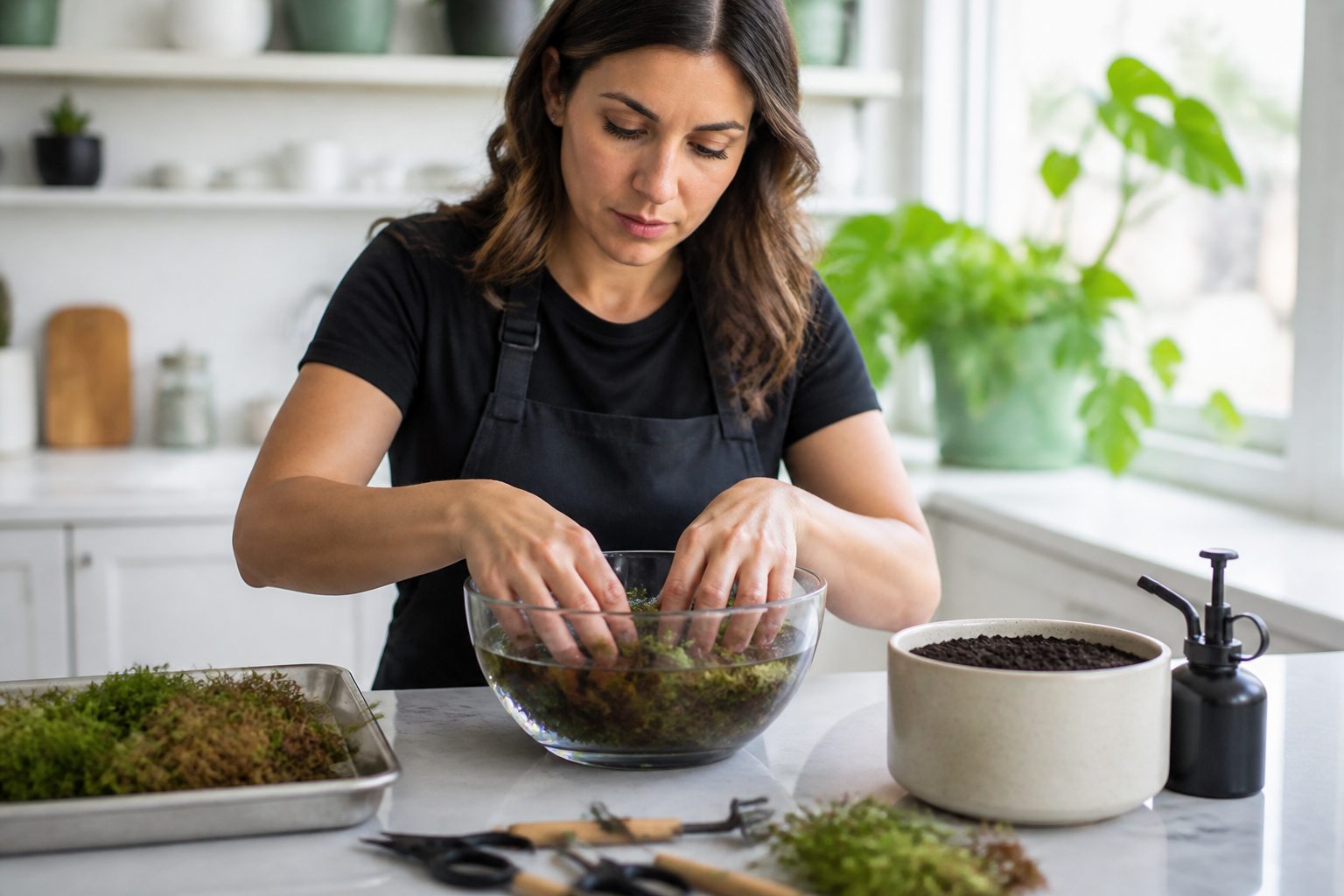
Choosing dried material: what “good” dried moss looks like
Start with dried moss that still has recognizable stems and leaves, not powder. If it crumbles into dust when you pinch it, the growing tips are probably destroyed.
Color can mislead you, because many mosses dry to tan or gray and still live. What you want to avoid is material that looks uniformly black, greasy, or smells like chemicals.
Check for signs of craft treatment, because preserved moss is often dyed or glycerin treated. If the moss feels rubbery, overly soft, or stains your fingers, it is a bad candidate for reviving moss fragments.
Look for intact shoot tips, because regrowth usually starts from those points. Even when a whole clump does not revive, a few surviving apical tips can restart and spread over time.
When possible, choose moss that was collected from conditions similar to your grow setup. Sidewalk moss tends to accept brighter light and drying cycles, while creek bank moss often sulks indoors unless humidity stays high.
Rehydration steps: soaking, rinsing, and gentle cleaning
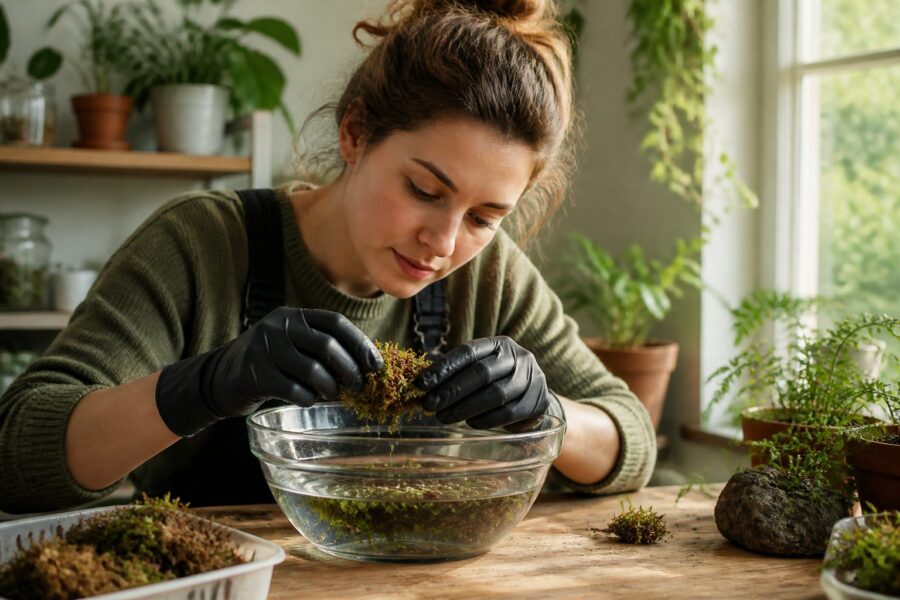
Rehydrating moss is mostly about removing dust and salts while letting tissues drink slowly. If you rush with hot water or aggressive scrubbing, you can shred the very tips you need for regrowth.
I use cool or room temperature water, and I treat the first soak as a dirty pre rinse. You can change the water once or twice until it stops turning tea colored from debris.
| Step | What to do | Why it helps |
|---|---|---|
| Pre soak | Soak 10 to 20 minutes in cool water | Rehydrates slowly and loosens dust |
| Rinse | Swirl gently, pour off, refill 1 to 3 times | Removes grit and surface salts |
| Pick debris | Use tweezers to remove bark chips, seeds, dead leaves | Reduces mold and competition |
| Optional brief dip | 10 to 30 seconds in 1% hydrogen peroxide, then rinse | Knocks back algae and spores without long exposure |
| Drain | Press lightly in a sieve or on paper towel | Prevents anoxic waterlogging in test trays |
Setting up a viability test tray before you commit
A moss viability test tray is a cheap way to avoid wasting your best stone or a big terrarium on dead material. Think of it like germination testing, except you are watching for green tips and new shoots instead of sprouts.
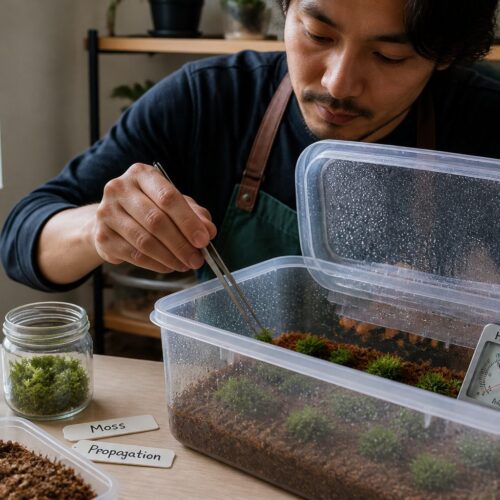
Use a shallow plastic tray with a clear lid, and keep it dedicated to testing so you do not mix unknown moss with established cultures. I like deli containers or seed starting flats with humidity domes because they vent easily.
Line the tray with something inert, like nylon mesh, fiberglass window screen, or a thin layer of rinsed pumice. Avoid potting soil in the test phase, because it grows algae fast and hides what the moss is doing.
Spread rehydrated moss in small labeled patches, and keep each patch thin enough that you can see individual shoots. If you pile it thick, the bottom stays waterlogged and you will confuse rot with dormancy.
Set the tray in bright shade and mist lightly, then wait. Most viable fragments show some greening within a week, but real new growth can take three to six weeks depending on species and how hard it was dried.
Best surfaces for revival attempts: trays, mesh, and stone
After you see signs of life, choose a surface that matches the moss you have and the way you plan to water. Moss propagation from dried moss works best when the surface holds a thin film of water but still gets oxygen.
Plastic nursery trays and food containers are good for early expansion because they are easy to clean and easy to cover. They also let you control humidity while you figure out how fast your moss dries between misting sessions.
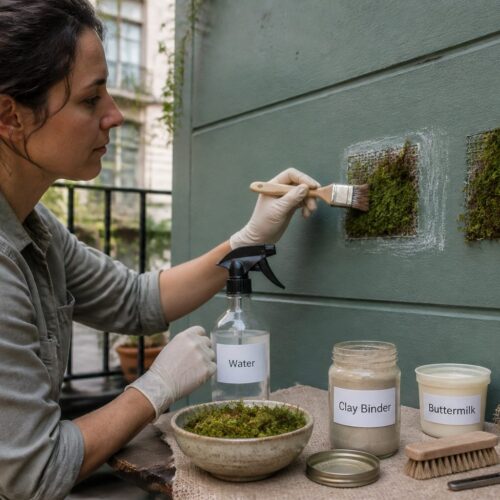
Nylon mesh is underrated, especially for reviving moss fragments that are tiny or mixed with grit. The mesh keeps pieces from floating away, and you can lift the whole sheet to rinse algae off without disturbing the shoots.
Stone is my favorite finish surface, but it is a hard place to learn. If you jump straight to stone, pick something porous like lava rock, sandstone, or unsealed concrete, because polished river rock dries too fast and sheds fragments.
Wood can work, but it is unpredictable because it molds and changes pH as it ages. If you use wood, choose weathered hardwood, rinse it well, and expect to redo the project if fungus wins early.
Planting rehydrated pieces: pressing and stabilizing
Planting moss is less like planting a seedling and more like setting a bandage, because contact matters. You want the rehydrated pieces pressed into the surface so capillary water reaches the stems and rhizoids can grab.
Break the moss into small pieces, but do not puree it unless you are ready for a messy algae fight. I prefer fragments the size of a fingernail, because they stay put and still have intact growing tips.
- Press fragments flat with clean fingertips
- Use nylon mesh or a light rock to pin pieces down
- Keep patches thin, one layer deep
- Trim away obviously dead black bases
- Label species or source location on the tray
- Leave small gaps for air flow between patches
Moisture and humidity: keeping conditions steady
Most failures happen because growers swing between swampy and crispy conditions. During recovery, keep moisture steady enough that tissues stay hydrated, but give the moss fresh air so it does not rot.
I mist with a fine sprayer and aim for “damp surface, no standing water.” If water beads up and pools, tip the tray to drain and increase ventilation for a day.
Humidity domes help, but they can trap stale air, so crack the lid daily. If you see condensation dripping constantly, you are running too wet and algae will show up soon.
Water quality matters more than people think, especially for small trays. If your tap water is hard, use rainwater, distilled water, or reverse osmosis water to avoid mineral crust that blocks rehydrating moss tissues.
Do not fertilize during the first month, even if you are tempted to “feed” it back to life. Fertilizer feeds algae faster than moss, and algae smothers weak shoots before they can anchor.
Light levels during recovery: avoiding stress while it wakes up
Light is fuel, but too much light is stress when moss is recovering from drying. Give bright shade or gentle artificial light, and save direct sun for later when you know the species can handle it.
A sunny windowsill often looks perfect, but glass magnifies heat and dries trays fast. I would rather use a north facing window or a shelf light set 12 to 18 inches above the tray.
Photoperiod matters less than intensity, but consistency helps. I run 10 to 12 hours of light for indoor recovery because it keeps growth steady without pushing heat buildup.
Watch for bleaching, which looks like pale straw tips that never green up after misting. Bleaching usually means the moss is getting too much light, too little water, or both at the same time.
If you see good green color but no spread, increase light slightly before you change anything else. Many trays stall because they sit in deep shade where moss survives but does not build new tissue.
Tracking progress: what counts as new growth
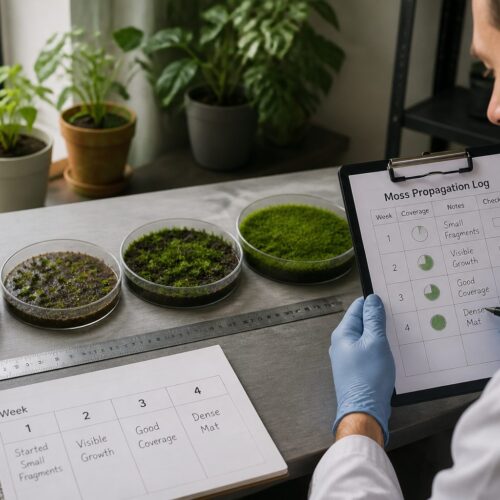
Greening is a good sign, but it is not the finish line. A true moss viability test looks for new structures, like fresh tips, branching, or a fuzzy edge creeping onto bare surface.
Take weekly photos from the same angle, because your eyes lie after you stare at a tray every day. A phone photo with a coin for scale makes it obvious when a patch has expanded by a few millimeters.
New growth often appears as brighter green at the shoot tips, while older tissue stays dull. In some species, you will see tiny side branches forming like little bottlebrushes along the stem.
If you are reviving moss fragments, pay attention to which fragment sizes succeed. I often see medium fragments take off, while dust sized bits either disappear or turn into algae mats.
Look for anchoring, which is when the patch resists a gentle nudge with tweezers. Once it grips the surface, you can reduce humidity slowly and start training it for the conditions it will live in long term.
If it fails: how to adjust your method for the next attempt
If nothing greens up after six weeks, assume the material was dead or your conditions were hostile. That is frustrating, but you can learn a lot by diagnosing the failure instead of repeating the same setup.
If the moss turned slimy and smelled sour, you kept it too wet with too little air. Use thinner patches, add mesh, crack the lid wider, and drain more aggressively after misting.
If it dried crispy between misting, you went too dry or too hot. Move the tray away from sun, add a humidity dome, and mist earlier in the day so water stays available during the warmest hours.
If algae took over, reduce light a notch, stop any fertilizer, and rinse the surface gently with clean water. A brief peroxide dip can help on the next run, but do not soak living moss in peroxide and expect it to like you.
If you suspect the dried moss was craft preserved, do not waste more time trying to force it. Buy live moss from a reputable grower, or collect a small legal sample locally and build your culture from material you trust.
Conclusion
Yes, moss propagation from dried moss can work, but only when the moss was dried in a way that leaves living tissue behind. Your best tools are patience, clean water, and a simple moss viability test tray that shows you the truth early.
Rehydrating moss is easy, but reviving moss fragments takes stable moisture, gentle light, and good surface contact. If you treat each attempt like a small experiment, you will get better fast and waste less material.
Once you see new green tips and the patch starts to anchor, you can move it onto stone, mesh panels, or a permanent display. At that point the “dried moss” story is over, and you are just growing moss like any other culture.