
If you want fast acrocarp vs pleurocarp moss identification, you need a couple of visual habits, not a microscope and a Latin dictionary. Most mistakes happen because people stare at leaf shape first, when growth form and sporophytes give better clues.
Acrocarps and pleurocarps are not perfect taxonomic boxes, but they are practical field categories that speed up sorting in mixed urban patches. Once you can see the split, you stop treating every green fuzz on a wall like it is the same thing.
I use this split constantly when I am checking moss trays, scouting a new wall for colonization, or mapping what survives summer heat near pavement. It also keeps your notes cleaner because you can describe a patch accurately even when you cannot name the species.
Why this split matters for species identification
The acrocarp versus pleurocarp split narrows your options fast, because many genera cluster strongly on one side. When you get the growth form right early, later steps like leaf costa, capsule shape, and cell pattern become less overwhelming.
Urban moss surveys often fail at the first hurdle, because grime and drought shrink plants and erase fine detail. Moss growth form comparison holds up better under stress, since clumping versus creeping stays visible even when leaves curl.
This split also guides how you handle a sample, because acrocarps often come up as tight tufts with rhizoids anchored in one spot. Pleurocarps tend to lift as mats that peel from bark or mortar in sheets, which changes how you bag and label them.
For cultivation, the distinction predicts how a moss will fill space in a tray or on a vertical panel. Acrocarps usually build height and make little cushions, while pleurocarps spread sideways and knit a carpet if moisture stays steady.
When you are doing acrocarp vs pleurocarp moss identification for a class or a community science project, this split lets you report something useful without overclaiming a species name. A careful “pleurocarpous mat with lateral sporophytes” is better than a confident wrong ID.
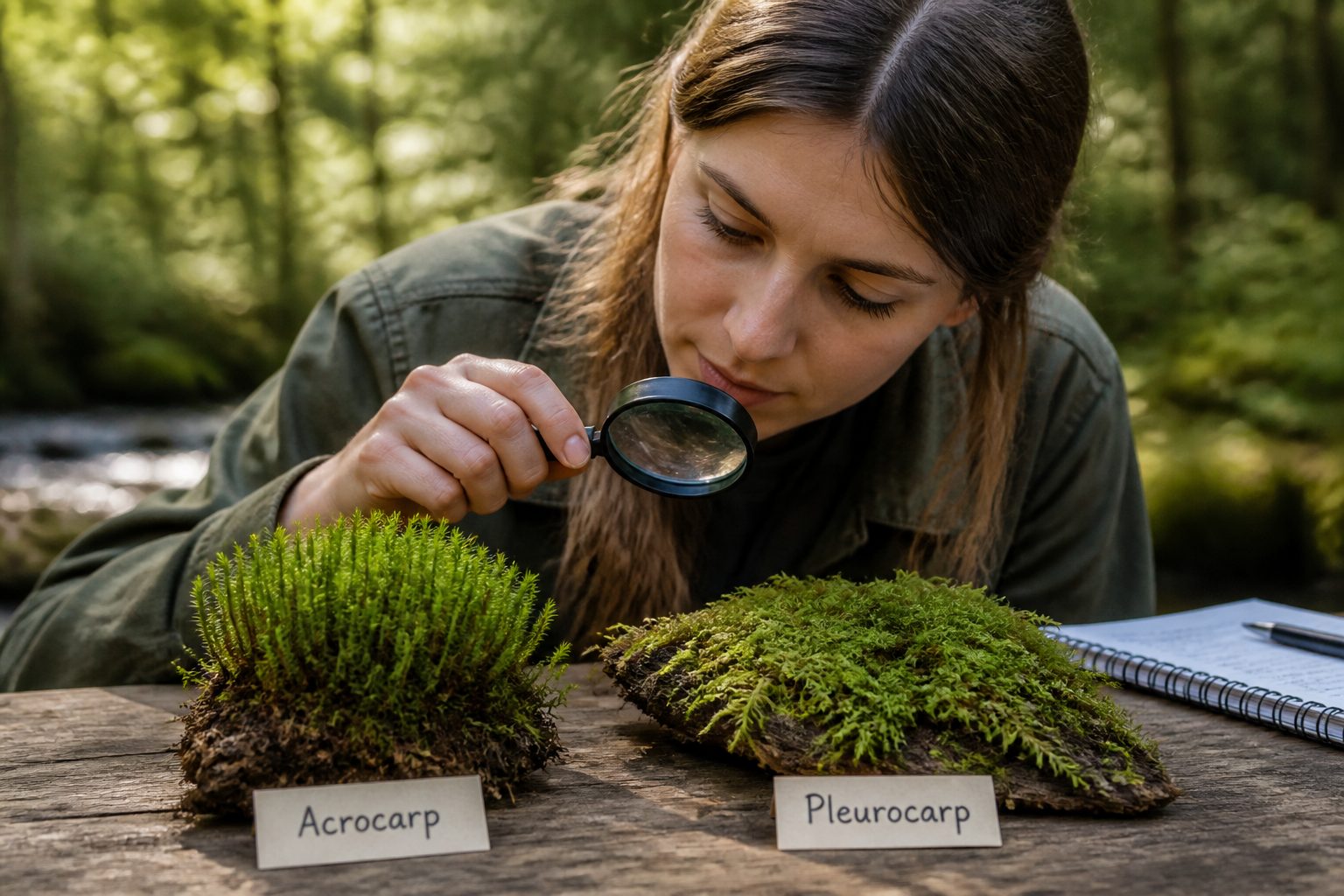
The quick visual test: upright clumps vs. creeping carpets
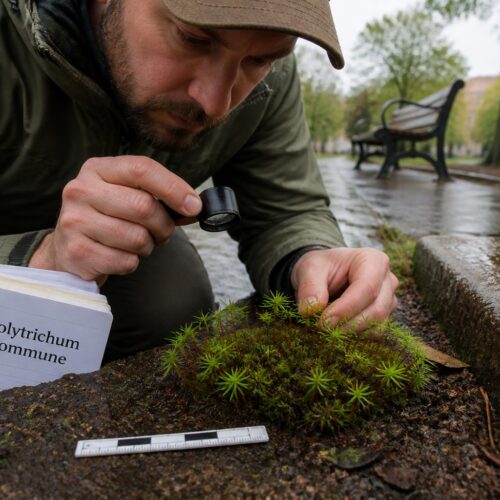
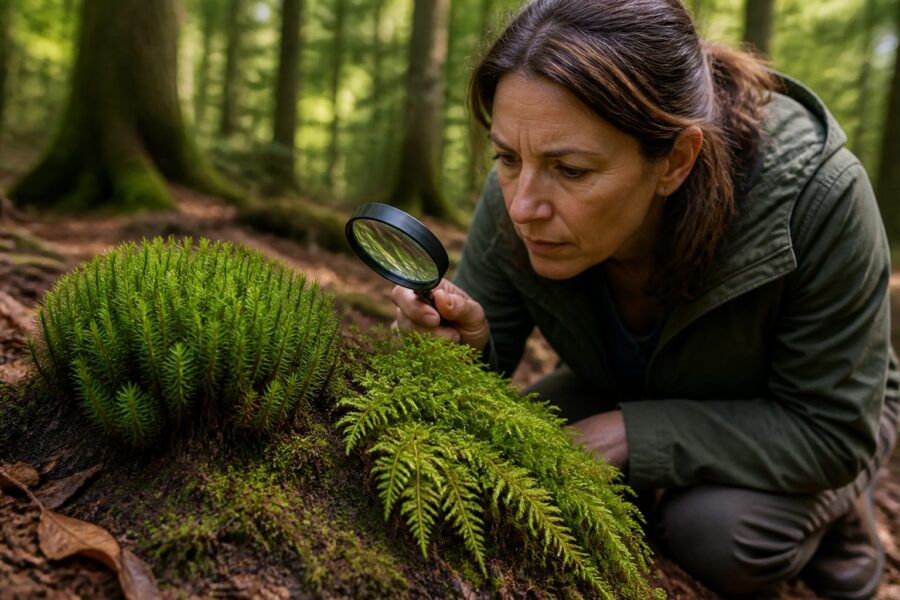
Start with posture, because posture is hard for moss to fake. Acrocarps usually look like upright clumps, little pins in a cushion, while pleurocarps usually look like creeping carpets that flow over the surface.
If you see lots of tiny stems standing mostly vertical and packed close, you are probably in acrocarp territory. If you see stems running sideways with many short branches making a net, you are probably looking at a pleurocarp.
In dry weather, acrocarps often tighten into firm tufts that look almost bristly, especially on soil banks and sidewalk cracks. Pleurocarps often flatten and look like a thin green felt, sometimes with glossy highlights when wet.
Use your fingertip lightly, because texture tells you a lot. A cushion that springs back and holds a dome shape leans acrocarp, while a mat that drags and smears as a sheet leans pleurocarp.
Do not panic when a patch has both forms, because mixed colonies are normal in cities. Your job is to separate what is truly one moss from what is a layered community, which is why moss growth form comparison is step one.
Where sporophytes appear and what that tells you
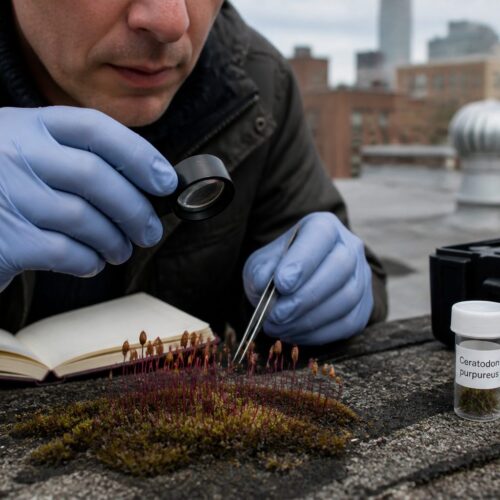
Sporophytes are the closest thing mosses have to a neon sign, and the moss sporophyte position is one of the fastest tells in the field. If you have capsules, use them, because they often cut through confusing leaf shapes.
In general, acrocarps produce sporophytes at the tips of the main stems, so the setae rise up from the top of a tuft. Pleurocarps tend to produce sporophytes on short side branches, so capsules can pop up along the mat instead of only at the highest points.
| Clue you see | More typical of acrocarps | More typical of pleurocarps |
|---|---|---|
| Capsules appear | Mostly at stem tips | Often on side branches |
| Setae density | Many stalks rising from one tuft | Stalks scattered across a mat |
| Height of sporophytes | Often taller than the cushion | Often shorter relative to the mat |
| Where you notice them first | On the highest domes | Along edges and runs |
Stem and branching: simple patterns you can learn
Moss branching patterns are easier than they sound, because you are mostly judging whether the plant builds upward or outward. Acrocarps typically have a main stem that stays obvious, with limited branching or branches that do not make a wide net.
Pleurocarps often show lots of branching off a creeping stem, and the whole thing looks feathered or fernlike when you tease it apart. When you pull a small piece with tweezers, pleurocarps often reveal a running stem that keeps going past your sample.
Watch for a clear “leader” stem, because that leader is common in acrocarps that form tufts. In many pleurocarps, the leader is horizontal and the eye reads the branches as the main structure.
Do not overinterpret one broken fragment, since city moss gets shredded by shoes, dogs, and maintenance crews. Take two or three pieces from nearby spots and compare, because intact architecture matters for moss branching patterns.
If you want a quick habit, roll a wet fragment between your fingers and then lay it flat on your palm. Acrocarp fragments often look like little bottle brushes, while pleurocarp fragments often look like tiny sprigs that want to sprawl.
Leaf arrangement differences you can spot with a hand lens
Leaf arrangement is where many beginners finally trust a hand lens, because you can see order in the chaos. Acrocarps often have leaves crowded around an upright stem, and the leaves can look more radial when the plant is moist.
Pleurocarps often show leaves that look flattened into two ranks on side branches, especially in feather moss types. That “combed” look is not universal, but it shows up enough that it is worth training your eye.
Look for how leaves change along the plant, because pleurocarps often have different leaves on the main creeping stem versus the smaller branches. Acrocarps more often keep a consistent leaf style along the short stem, aside from the tight bud at the tip.
Do not let leaf curl trick you, since drought can make any moss look spiky. Wet a tiny piece with a drop of water and wait a minute, because leaf posture relaxes and the arrangement becomes readable.
For acrocarp vs pleurocarp moss identification, I treat leaf arrangement as a confirmation step, not the first step. If growth form and moss sporophyte position point one way, leaf arrangement usually agrees unless you are in a messy edge case.
Habitat tendencies in urban areas (walls, soil, tree bases)
City habitat does not determine the type, but it nudges your expectations in a useful way. Many acrocarps do well on exposed soil, compacted ground, and thin substrates where water comes in pulses and then disappears.
Pleurocarps often show up where moisture stays a bit steadier, like shaded tree bases, the north side of stone, or mortar that wicks water after rain. They also like surfaces where they can creep without getting buried by silt.
On walls, I see acrocarps more often in small pockets and cracks that collect dust and grit, because those spots act like tiny planters. Pleurocarps more often take over broader runs of rough brick or stone, especially where runoff keeps the surface damp.
On soil, acrocarps can dominate disturbed patches, like the edge of a garden bed or a construction scar that keeps getting scuffed. Pleurocarps can still occur on soil, but they usually need a stable surface layer that does not get churned up weekly.
Tree bases can host both, and the deciding factor is often bark texture and how water drains down the trunk. A smooth-barked street tree that dries fast can favor small acrocarp tufts, while rough bark with constant shade can support pleurocarp mats.
Common urban examples (without overpromising exact ID)
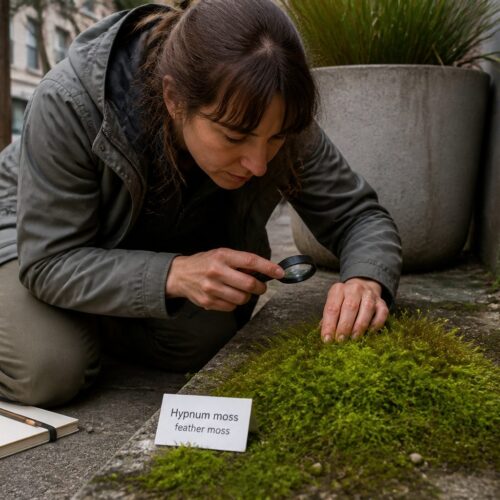
You can practice the split using common city moss types, even if you never pin down the species. I prefer to say “something in the Bryum type” or “a Hypnum-like pleurocarp” rather than pretend a photo proves it.
On sidewalk cracks and compacted soil, you often meet small acrocarp cushions that resemble Bryum, Tortula, or Syntrichia depending on leaf twist and dryness response. On roofs and gritty mortar, Grimmia-like or Orthotrichum-like tufts also show the upright clump habit.
- Sidewalk crack tufts, likely acrocarp
- Mortar pocket cushions on brick, likely acrocarp
- Shaded tree-base mats, often pleurocarp
- Rough stone runs in splash zones, often pleurocarp
- Mulch and garden bed edges with tight domes, often acrocarp
- Fence-post or log carpets with creeping stems, often pleurocarp
Look-alikes and edge cases that trip you up
Some acrocarps sprawl when they are shaded and well watered, which can make them look pleurocarpous at first glance. Some pleurocarps, especially when drought-stressed, shrink into tight patches that mimic cushions.
Fragmented mats are a common trap on sidewalks, because foot traffic breaks pleurocarps into little islands. Those islands can look like clumps until you find a piece that still has a running stem connecting the patch.
Another trap is mixing liverworts or algae into the same patch, because the texture shifts and your brain tries to average it into one organism. When you do moss growth form comparison, separate the colony by color and sheen first, then test each part.
Sporophytes can mislead you if you only see one, since a single capsule might belong to a minority species in the patch. Check whether many stems share the same moss sporophyte position, because that repetition is the real clue.
Finally, some mosses sit in the gray zone where the acrocarp and pleurocarp habit is not obvious to beginners. When that happens, write down moss branching patterns and move on, because forcing a binary call can wreck your notes.
How to record the right clues in your notes
Good notes beat a shaky ID, especially when you come back later with a key or better photos. I aim to record what I saw, not what I want it to be, and that mindset improves acrocarp vs pleurocarp moss identification fast.
Start with growth form in plain language, like “tight dome cushions” or “thin creeping mat with feathered sprigs.” Then add a sentence about the substrate and exposure, like “north-facing brick, splash zone, stays damp after rain.”
If you see capsules, write where they attach, because moss sporophyte position is diagnostic and seasonal. Note whether the setae rise from the highest tips or pop up along the sides of the mat.
Include a quick branching sketch, even a bad one, because sketches capture moss branching patterns better than words. A phone photo of a teased-apart sprig on your fingertip also works, as long as you keep scale consistent.
Record moisture state at the time, because many mosses change posture dramatically between dry and wet. If you rewetted a fragment, write that down too, since it explains why your leaf arrangement photos look different from the field patch.
A step-by-step sorting routine for mixed patches
When a wall or tree base has a mixed patch, treat it like sorting laundry, not like solving a single puzzle. You are separating growth forms into piles, then checking each pile for confirmation clues.
Step one is to pick three tiny samples from different microspots, like a crack, an edge, and the center. If all three look the same when you tease them apart, you probably have one dominant moss and your moss growth form comparison is reliable.
Step two is the posture call, cushion versus carpet, using the quick visual test and a light touch. Step three is branching, because moss branching patterns show up even in small fragments if you keep them intact.
Step four is sporophytes, if present, because moss sporophyte position can confirm or contradict your first call. If sporophytes are absent, do not invent them, and instead lean harder on architecture and habitat.
Step five is the hand lens check for leaf arrangement, mainly to catch the times you misread a stressed mat as a tuft. If you still cannot decide, label it “uncertain, acrocarp-like” or “uncertain, pleurocarp-like” and keep the evidence in your notes.
Conclusion
Fast acrocarp vs pleurocarp moss identification comes from trusting big structure first, then using small details as backup. Upright clumps, creeping carpets, moss sporophyte position, and moss branching patterns do most of the work.
If you practice on common urban patches, you will get quick at making a clean moss growth form comparison even when the plants are dirty or drought-curled. Your notes will improve too, and that is the difference between guessing today and identifying later with confidence.