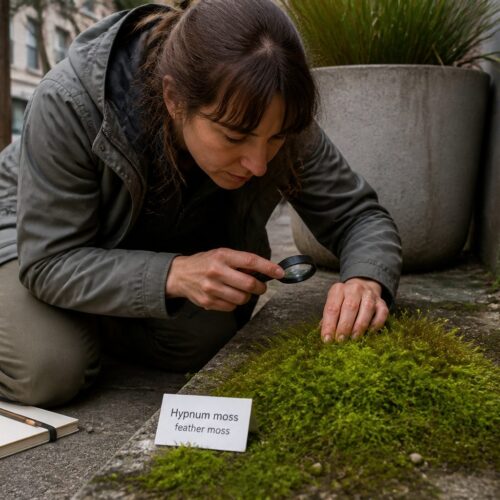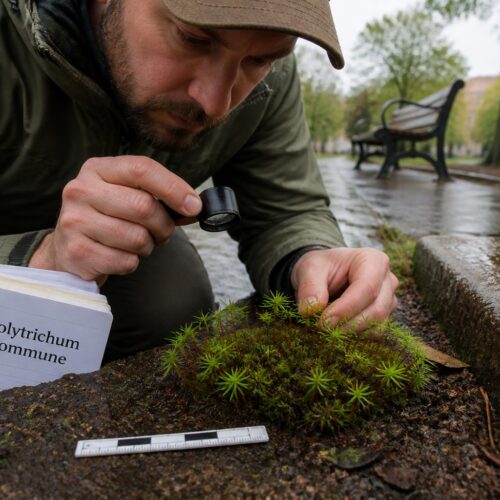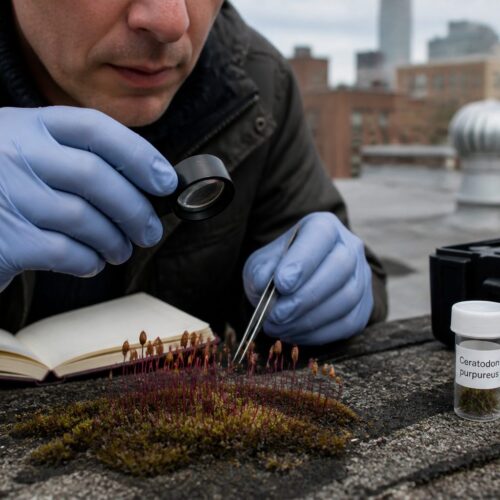


Brick walls grow moss in a way that surprises people, because the surface looks dry and hostile until you get close. Once you start doing moss identification on brick walls, you see that mortar seams, chips, and shaded faces act like tiny planters.
I like wall mosses because they force you to pay attention to microclimate instead of broad habitat labels. A single wall can hold several wall moss species, and each patch tells you something about water, salt, and sun.
This guide focuses on what you can observe with your eyes and a phone camera, even if you do not have a microscope handy. The goal is to make your notes good enough that you can narrow down mortar moss and vertical surface moss later with keys or local checklists.
Why brick and mortar create unique moss microhabitats
Brick is full of pores, and those pores soak up rain and then release it slowly. Mortar is even more important, because it holds water longer and often has a higher pH than the brick face.
That pH difference matters for moss identification on brick walls, since many species tolerate alkaline mortar better than acidic stone. If you see a patch that stays greener on mortar joints than on brick faces, you are already learning the chemistry story.
Walls also have sharp temperature swings, especially where sun hits in the afternoon and the wall radiates heat at night. Mosses that survive there tend to handle rapid drying, and they often show tight cushions or flattened mats that cling hard.
Urban dust changes the substrate fast, and it can turn a clean wall into a nutrient source. That is why you will sometimes find lush vertical surface moss under traffic grime, even when nearby clean brick looks bare.
Salt is the wildcard, because deicing salts and efflorescence can burn some mosses and favor others. If you see white crusts on brick, expect the wall moss species list to shift toward tougher, stress tolerant plants.
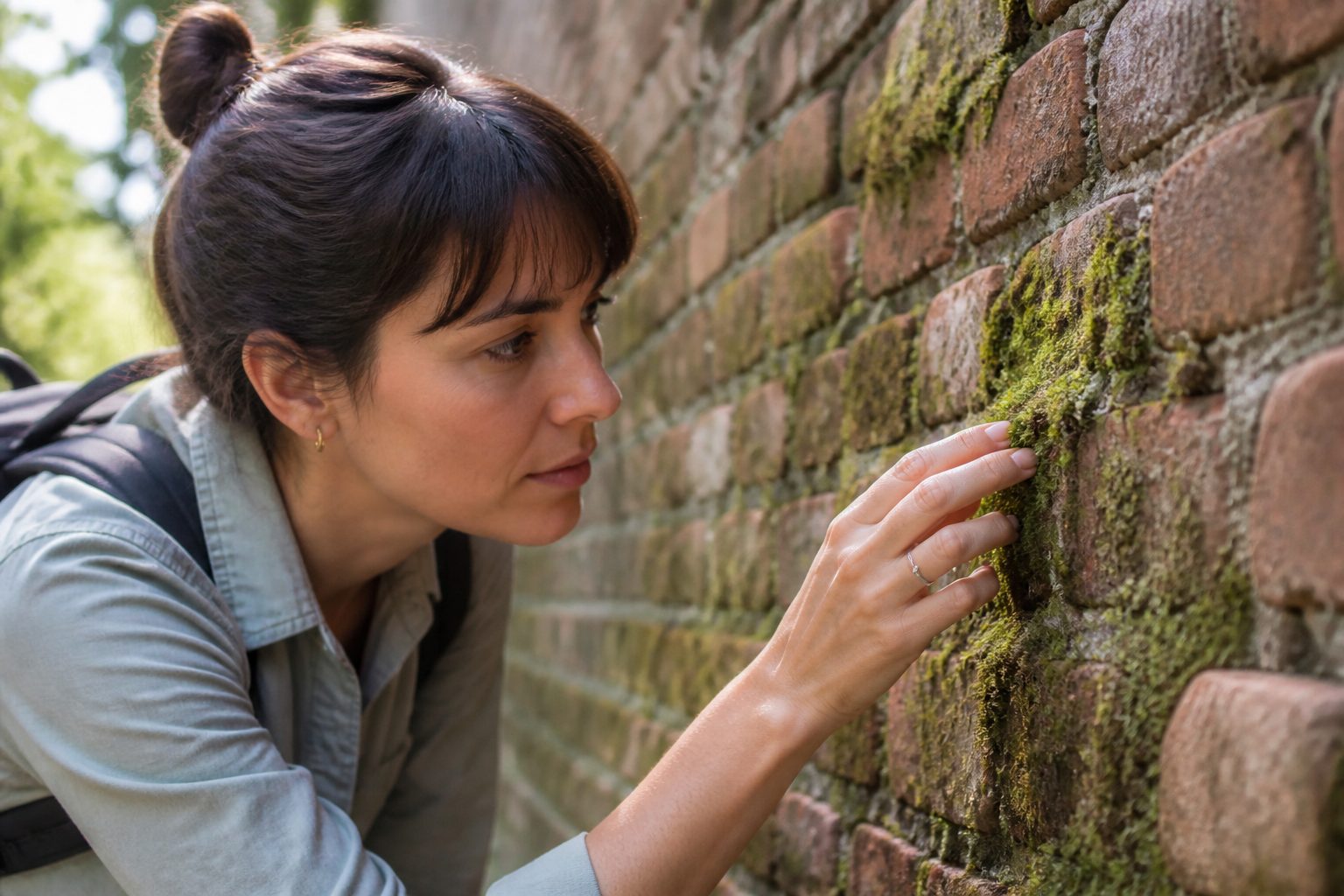
Where to look: weep lines, ledges, caps, and north faces
If you scan a wall at eye level, you miss the best spots, because moss follows water and shade. Start at the top, since coping stones, caps, and flashing edges drip and keep the first few courses damp.
Weep holes and weep lines are reliable, because they leak slowly after storms and after irrigation cycles. A thin green stripe below a weep point often contains multiple wall moss species layered together.
Ledges and projecting bricks create tiny shelves that trap grit and leaf fragments. That trapped debris acts like potting mix, and it can support thicker mats than the vertical face right below it.
North facing brick is the classic place to start, because it stays cooler and avoids harsh afternoon sun. Even in winter, a north face can keep enough moisture for mortar moss to stay attached and slowly spread.
Do not ignore the east face, since morning dew plus brief sun can favor species that hate long baking heat. When you practice moss identification on brick walls, comparing aspects on the same building is one of the fastest ways to learn.
Moisture clues: runoff paths and splash zones
Runoff marks are the best map you will ever get, because they show where water actually travels instead of where you assume it goes. Dark streaks, clean washed channels, and algae stains often line up with the wettest moss patches.
Splash zones near the ground behave differently, because they get repeated wetting plus grit from soil and pavement. A low band of vertical surface moss can look messy, but it usually reflects a stable moisture rhythm.
| Wall moisture clue | What it usually means | Likely moss response |
|---|---|---|
| Vertical dark runoff streak | Frequent sheet flow after rain | Thin mats, flattened shoots, fewer cushions |
| Green line below a weep hole | Slow seepage from behind the wall | Persistent mortar moss, often brighter green |
| Lower wall splash band | Rewetting from puddles and sprinklers | Mixed patches, grit tolerant wall moss species |
| White efflorescence crust | Salt movement through masonry | Patchy growth, stress tolerant vertical surface moss |
Growth forms common on vertical surfaces
On walls, growth form is often more useful than color, because color changes with moisture and season. For moss identification on brick walls, start by deciding whether you are looking at a cushion, a mat, or a tuft.
Cushion mosses form tight domes that shed water and resist wind, and they often sit on mortar knobs or chipped brick edges. When dry, they can look gray or brown, then turn green within minutes of mist.
Mat forming mosses spread like felt across the brick face, and they usually track runoff paths. These mats can hide multiple species, so you may need to look for different leaf sizes or branching patterns inside one patch.
Tufted mosses stand up more, and they show individual stems even without magnification. On a wall, tufts often indicate a pocket that holds more water, like a recessed joint or a crack that catches silt.
Watch for creeping shoots that run along mortar seams, because they can act like highways for colonization. When you see a seam lined with tiny stems, you are likely looking at a mortar moss that prefers the joint over the brick face.
Leaf traits that hold up on walls (even when dry)
Wall moss leaves get beat up by sun and wind, so the traits that matter are the ones you can still read when the plant is dry. I pay attention to whether leaves twist, curl, or press flat against the stem.
Many common wall moss species show crisped leaves when dry, and that crisping can be a clue instead of a nuisance. If a patch looks like tiny hooks or tight spirals along a mortar seam, photograph it dry and again after wetting.
Leaf tip shape is another wall friendly trait, because it stays visible even on stressed plants. Look for blunt tips, sharp points, or hairlike awns that catch light along the brick face.
The midrib, called the costa, often shows as a pale line down the leaf, especially in side lighting. On vertical surface moss, a strong costa can help leaves hold their shape when the wall dries fast.
Texture clues matter too, because some leaves look glossy while others look dusty or frosted. That surface look can come from papillae, tiny bumps that you cannot see clearly without magnification, but you can still notice the overall sheen.
Sporophytes on walls: when capsules are more common than you think
People assume wall moss never fruits, but I see capsules on brick more often than in lawns. Walls dry and rewet in pulses, and those pulses seem to line up well with sporophyte production for several urban species.
For moss identification on brick walls, sporophytes can do more work than leaves, because capsule shape is easier to compare in photos. Pay attention to whether the capsule sits upright, nods, or hangs on a curved seta.
Capsules often cluster at the edge of a patch where growth is active and light is decent. If you only photograph the greenest center, you might miss the fruiting stems that are sticking out along the drier margin.
Timing is local, but many wall moss species show capsules in late winter through spring when moisture is steady and competition is low. After a few weeks of heat, the same patch can look dead even though the capsules are still standing.
Do not pull capsules to inspect them, because the wall substrate can crumble and you lose context. A close phone photo with side light usually captures enough detail, especially if you include a scale like a coin held near the patch.
Differentiating moss from lichens on brick
Brick walls host lichens that mimic moss at a distance, especially crusts that form greenish films. The first check is structure, because moss has stems and leaves, while lichens form a thallus without true leaves.
If you can see tiny leaflets overlapping like shingles, you are likely in moss territory. If the patch looks like paint, a crust, or a cracked flat plate glued to the brick, it is probably lichen.
Moisture response is a quick field test, because many mosses green up fast when misted. Many lichens change less dramatically, and some stay dull even when wet, though a few do brighten.
Reproductive structures also differ, since lichens often show disk like apothecia that look like tiny buttons. Moss sporophytes look like stalks with capsules, and once you learn that silhouette you stop confusing the two.
Mixed patches are common on older masonry, so do not force one label on everything green. For accurate moss identification on brick walls, separate the patch into parts and photograph each texture as its own subject.
How mortar age and texture influence which mosses appear
Fresh mortar can be harsh, because it is alkaline and often sheds fine dust that smothers tiny shoots. I rarely see stable vertical surface moss on brand new joints unless the wall stays shaded and damp for long stretches.
As mortar ages, it roughens, cracks, and collects grit, and that roughness gives spores a place to stick. This is why old tuckpointing lines can look like green stitching across a wall.
Texture matters as much as chemistry, because smooth mortar leaves nothing to grip. A sandy, open mortar mix holds water and gives rhizoids something to bite into, so it often hosts thicker mortar moss patches.
Brick faces vary too, since hard fired brick stays relatively smooth while softer brick spalls and creates pits. Those pits hold moisture and dust, and they can support wall moss species even when the surrounding face stays bare.
If you are comparing sites, note whether the wall has been sealed or painted, because coatings change moisture movement. Sealed brick can push water to joints and cracks, which shifts where moss identification on brick walls becomes easiest.
Taking wall-safe photos and notes for later ID
Good photos beat memory, especially when you are trying to separate similar wall moss species later. I take three shots every time, a habitat shot, a close patch shot, and a tight shot of leaves or capsules.
Side lighting is your friend, because it reveals leaf curl, costa lines, and capsule angles. If the wall is in shade, use your body to block glare and then tap to focus on the moss, not the brick.
Write down the wall orientation, because north, south, and sheltered courtyards produce different results. A note like “north face under gutter drip” helps more than a vague address when you review photos later.
Include a scale without touching the patch, like holding a ruler or coin a half inch away from the surface. Touching is where people damage crumbly mortar, and it is also where you lose the clean edge that helps identification.
If you can, record recent weather and irrigation, because moisture history changes appearance fast. For moss identification on brick walls, a patch photographed after rain can look like a different plant than the same patch after three dry days.
Practical troubleshooting: mixed patches and crumbly substrates
Mixed patches are the rule on walls, not the exception, and that can frustrate beginners. When two or three species share a seam, treat it like a mini community and focus on the dominant growth form first.
Crumbly mortar is a real constraint, because you can destroy the habitat by poking at it. If the joint turns to sand when you brush it, stick to photos and do not try to peel samples for a desk ID.
- Photograph patch edges where species boundaries show
- Look for capsules rising above mixed mats
- Check whether moss prefers mortar seams or brick faces
- Note white salt crusts and powdery efflorescence
- Compare dry and rewetted leaf posture
- Record height above ground and splash exposure
Conclusion
Moss identification on brick walls gets easier when you stop staring at the green and start reading the wall for water, shade, and texture. Weep lines, caps, and runoff streaks are the real field marks, and the moss follows them faithfully.
Wall moss species reward careful photos, because leaf curl, costa strength, and capsule posture often survive even when the plant looks baked. If you build a habit of noting mortar age, efflorescence, and orientation, you will sort mortar moss from other vertical surface moss with far less second guessing.