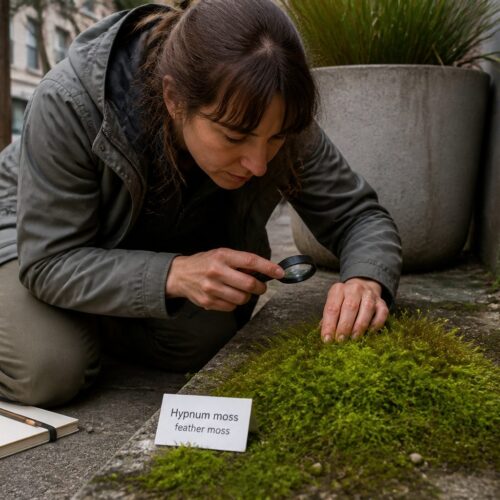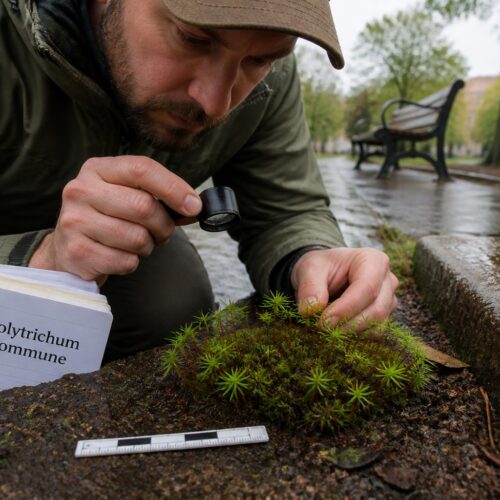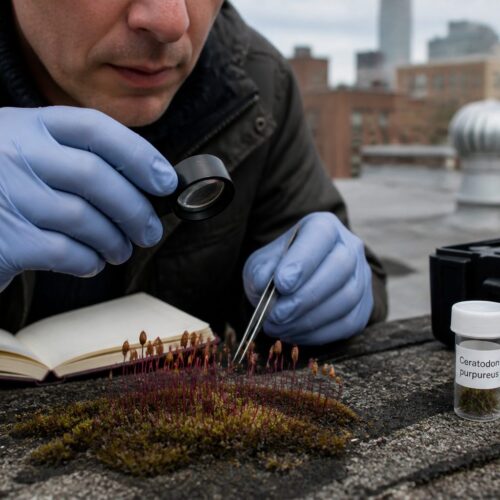


Urban mosses give away their identity by where they choose to live, long before you get your hand lens out. When I do moss identification by habitat urban, I start with the surface, the water pattern, and the amount of sun, then I worry about leaf shape.
City microclimates are harsh, with salty splash in winter, hot reflected light in summer, and constant abrasion from grit. Those pressures sort species into predictable moss microhabitats, which makes habitat a practical filter for beginners and a time saver for experts.
This approach does not replace morphology, it keeps you from chasing the wrong genus on the wrong wall. Once you get comfortable with substrate-based moss ID, you will notice that many “mystery mosses” stop being mysterious.
Why habitat-based ID works so well for mosses
Mosses are small, but they are picky about water and chemistry in a way that is easy to see in cities. A sidewalk seam that stays damp for two extra hours can grow a different patch than the slab ten inches away.
Most urban bryophytes live close to their tolerance limits for drying, heat, and alkalinity. That makes urban ecology moss patterns feel almost rule based once you pay attention.
Habitat-based ID works because the “habitat” for a moss is usually a microhabitat, not the whole park or neighborhood. Moss microhabitats include drip lines under railings, splash zones at curb edges, and the shaded north face of a brick planter.
Substrate-based moss ID is especially useful because urban substrates are standardized and repeated across a city. Concrete, mortar, brick, compacted soil, and mulch show up block after block, so you get lots of practice fast.
I also like habitat first because it keeps my expectations honest about what I might find. If you are on a sun baked parapet, you should expect desiccation tolerant species, not the same mosses you see along a creek.
Concrete and mortar: high pH, fast drying, and tough species
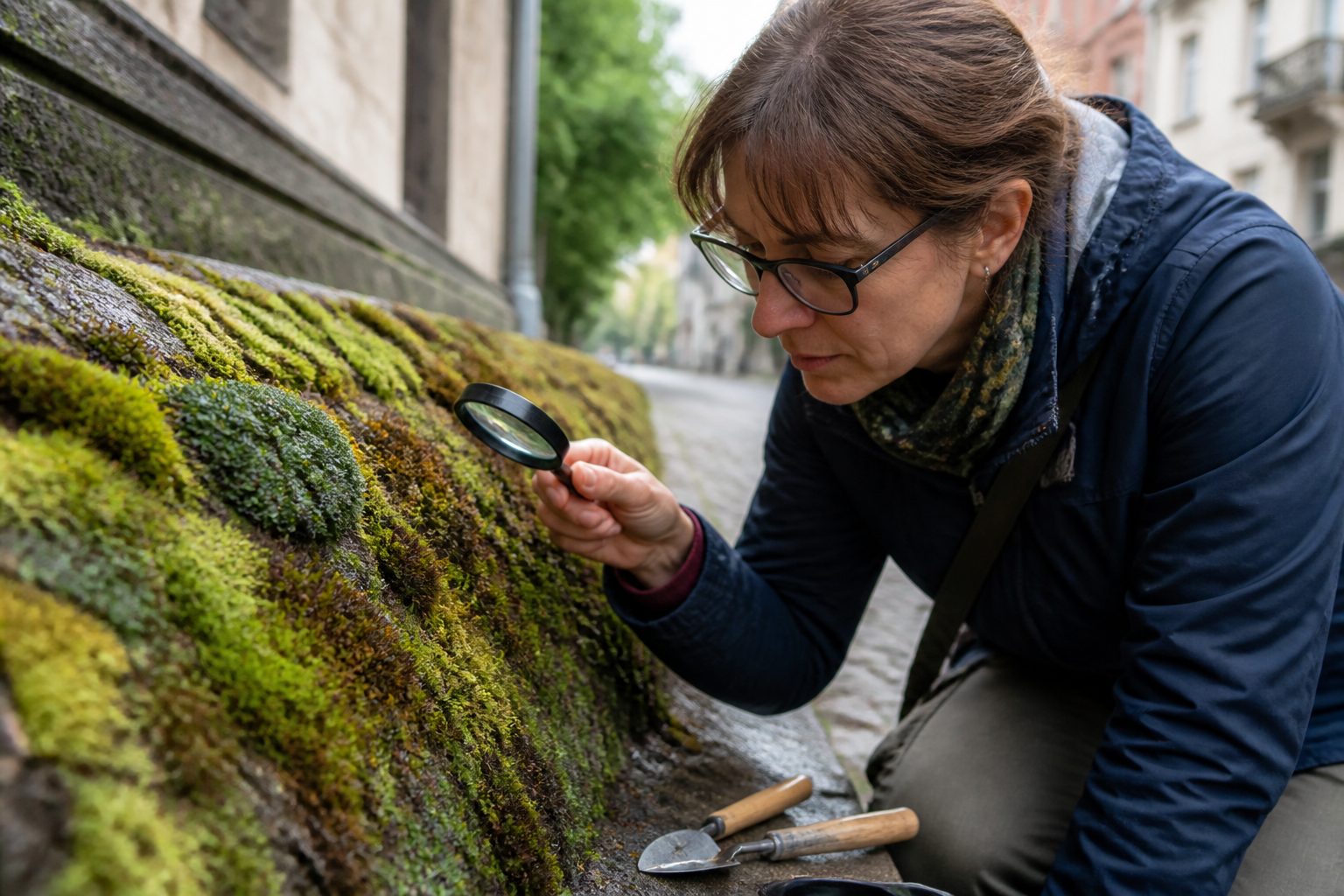
Concrete and mortar push pH upward, especially when they are newer and still leaching lime. That chemical bias is why certain urban wall mosses show up like clockwork on sidewalks and retaining walls.
These surfaces also dry quickly because they are exposed and often warmed by sun and reflected heat from streets. When you see crisp, dark green cushions that rehydrate in minutes after rain, you are already narrowing the field.
Look for tight cushions and short turfs in cracks, joints, and the rough “tooth” of weathered mortar. Grimmia and Tortula types are common candidates on exposed concrete, though you still need leaves and capsules to be sure.
Run your eyes along edges where water lingers, like the base of a wall or the low side of a slightly tilted slab. Those damp margins can shift the community toward looser mats and longer stems, even on the same concrete panel.
For moss identification by habitat urban, note whether the patch is in a hairline crack or on open face. Open face growth on concrete often means the moss can cling hard and tolerate repeated drying, while crack dwellers can rely on capillary water.
Brick and stone: crevices, runoff, and temperature swings
Brick and stone behave like a maze of tiny gutters, with crevices that trap dust and hold water longer than you expect. The same wall can have dry, sun blasted bricks and cool, wet mortar lines that act like separate habitats.
Temperature swings are sharper on masonry because the material heats fast and cools fast, especially on south and west exposures. If you keep a mental map of hot faces versus cool faces, your substrate-based moss ID gets a lot easier.
| Masonry microhabitat | What to look for | Common urban moss tendencies |
|---|---|---|
| Mortar line drip path | Dark streaks, dampness after rain | Flatter mats, longer stems, more frequent sporophytes |
| Brick face in full sun | Bleached surface, quick drying | Tight turfs, curled leaves when dry, slow spread |
| Stone crevice with grit | Accumulated dust, tiny soil pocket | Mixed moss and algae, higher species turnover |
| Ledged stone under overhang | Sheltered from direct rain | Patchy cushions, dependence on windblown moisture |
| Base of wall splash zone | Salt marks, muddy splash | Stress tolerant species, frequent dieback and regrowth |
Soil patches and tree pits: compaction and nutrient inputs
Tree pits and sidewalk soil islands look natural, but they are engineered and abused. Compaction, dog urine, road grit, and irrigation overspray create a weird mix of stress and fertility.
Soil mosses in cities often behave like opportunists, popping up when the surface stays open and then vanishing when leaf litter or foot traffic smothers them. That stop and start pattern is a clue in urban ecology moss work.
Watch for thin, flat mats on bare soil near roots where water runs down the trunk during rain. If the soil crust breaks into plates when dry, you may be looking at a community that includes tiny mosses mixed with cyanobacteria.
Nutrient inputs can push mosses toward lankier growth, with greener color and faster spread, but also more algae competition. In a tree pit that gets fertilizer runoff, you might see moss only in the slightly raised edges where drainage is better.
For moss identification by habitat urban, note the disturbance level and whether the soil is shaded by a canopy. Deep shade can keep soil moss lush, while open pits in full sun often favor species that curl tight and brown out between rains.
Mulch beds and planters: disturbance and short-lived colonies
Mulch beds look moss friendly, but they are unstable because chunks shift, decompose, and get topped up every season. That makes many colonies temporary, which is why you often see small patches instead of big carpets.
Planters add another twist because watering is regular but shallow, and potting mixes can be salty from fertilizer. When you see moss hugging the rim or the drainage lip, you are seeing a moisture gradient in miniature.
In fresh mulch, moss tends to colonize the compacted “skin” where rain packs fine particles between chips. In older mulch, the best moss microhabitats are the half rotted zones where the texture turns spongy and stays damp longer.
Do not assume every green fuzz in mulch is a moss, because algae and liverworts love the same spots. If it wipes off as slime, you learned something fast and saved time on substrate-based moss ID.
When you are trying moss identification by habitat urban in planters, check the irrigation pattern first. Drippers create a bullseye of wet and dry, and moss often rings the wet edge rather than sitting directly under the emitter.
Wood and fences: rot stages and moisture gradients
Wood is a moving target because it changes chemistry and texture as it weathers, then rots, then turns punky. A cedar fence board can host one set of mosses at year five and a different set at year fifteen.
Moisture gradients on wood are obvious if you look for them, with wetter zones near the ground and drier zones near the top rail. That vertical shift is one of the cleanest moss microhabitats you can study in a small space.
- Check ground contact for constant damp and splash
- Look under caps and rails for sheltered dry patches
- Note rot level, firm wood versus spongy punk
- Scan nail heads and knots for water pooling
- Compare sun side versus shade side of the same board
- Watch for algae films that signal persistent moisture
Green roofs and rooftop gardens: sun, wind, and shallow substrates
Green roofs sound like moss heaven until you spend a summer up there. Wind strips moisture, sun bakes the surface, and the substrate layer is often only a few inches deep.
That combination favors species that handle repeated drying and fast rehydration, the same kind of toughness you see on concrete. If you are doing moss identification by habitat urban, rooftops often behave like an extreme version of sidewalk cracks.
Edges and parapets create sheltered pockets where dew and runoff collect, and moss often starts there before spreading inward. I have seen mats establish behind HVAC screens where wind drops and shade lasts an extra hour.
Rooftop planters can support moss, but only where irrigation misses just enough to prevent constant saturation. Constantly wet soil on a roof often turns into algae and fungus problems, and moss loses that fight.
Pay attention to substrate composition because lightweight roof media drains fast and can be gritty. Gritty, shallow media can mimic rocky soil, which helps explain why some roof mosses look more like wall species than garden species.
Shade vs. sun: how exposure changes the same species’ look
Exposure can make the same species look like two different plants, and this is where beginners get thrown off. A moss that is lush and flat in shade can turn into a tight, scrubby turf in sun.
Sun exposure often shortens stems, thickens leaves, and increases curling when dry. Shade exposure often stretches stems, spreads leaves wider, and keeps color brighter for longer after rain.
If you rely only on color, you will misread sun stressed plants as a different species. For moss identification by habitat urban, I treat color as a weather report, not a name tag.
Look at where the patch sits in relation to reflective surfaces like white walls, metal railings, and light concrete. Reflected heat can “sun stress” a north facing patch that would otherwise behave like a shade site.
Try comparing the same species on the same block, like a brick wall that turns a corner from south to east. That side by side comparison trains your eye faster than flipping through photos online.
Using habitat to avoid common misidentifications
The most common mistake I see is treating every small cushion on a wall as the same “sidewalk moss.” Habitat gives you a reality check, because a cushion on alkaline mortar is a different short list than a cushion on acidic bark.
Another frequent mix up is calling everything in wet shade “fern moss” or “carpet moss.” In cities, wet shade can mean a leaky downspout line, and the moss community there can be totally different from a wooded ravine.
Substrate-based moss ID also helps you avoid confusing mosses with liverworts on damp brick and planters. Liverworts often spread as thin sheets with a different texture, and they favor consistently wet spots more than many urban mosses do.
Habitat helps with lookalikes inside mosses too, especially among small acrocarps on walls. If the patch grows only in deep mortar cracks that trap dust, you should check soil loving species before you assume a true rock specialist.
When you get stuck, ask a blunt question about water, not about shape. If the site dries in an hour after rain, you can cross off many moisture dependent candidates and focus your microscope time where it matters.
A field checklist to combine habitat with morphology
A good ID comes from pairing the “where” with the “what,” and I write both in my notes. If you only record leaf traits and skip the microhabitat, you lose half the story and make later comparison harder.
Start with the substrate and its chemistry, because concrete, bark, and soil push mosses into different lineups. Then record the microhabitat, such as drip line, splash zone, crevice, or open face.
Next, check growth form with your eyes before you touch anything, because handling can distort a dry patch. Cushion versus turf versus mat is simple, and it narrows options quickly in moss identification by habitat urban.
Then look at leaf behavior when dry and when wet, since curling, twisting, and spreading are often more diagnostic than color. If you can wet a tiny fragment with a drop of water, you can watch the plant “reset” in seconds.
Finally, hunt for sporophytes and take a photo of the whole patch in context, including the wall face or planter edge. A capsule on a seta can settle arguments that leaf shape alone keeps muddy, especially in stressed urban ecology moss sites.
Conclusion
Habitat based moss ID is the fastest way I know to stop guessing and start making good candidates lists. Cities repeat the same surfaces and water patterns, so moss identification by habitat urban becomes a skill you can build on your daily walk.
When you pair moss microhabitats with a few solid morphological checks, you get reliable IDs without needing to memorize every species photo. Treat substrate-based moss ID as your first filter, then let leaves and capsules finish the job.